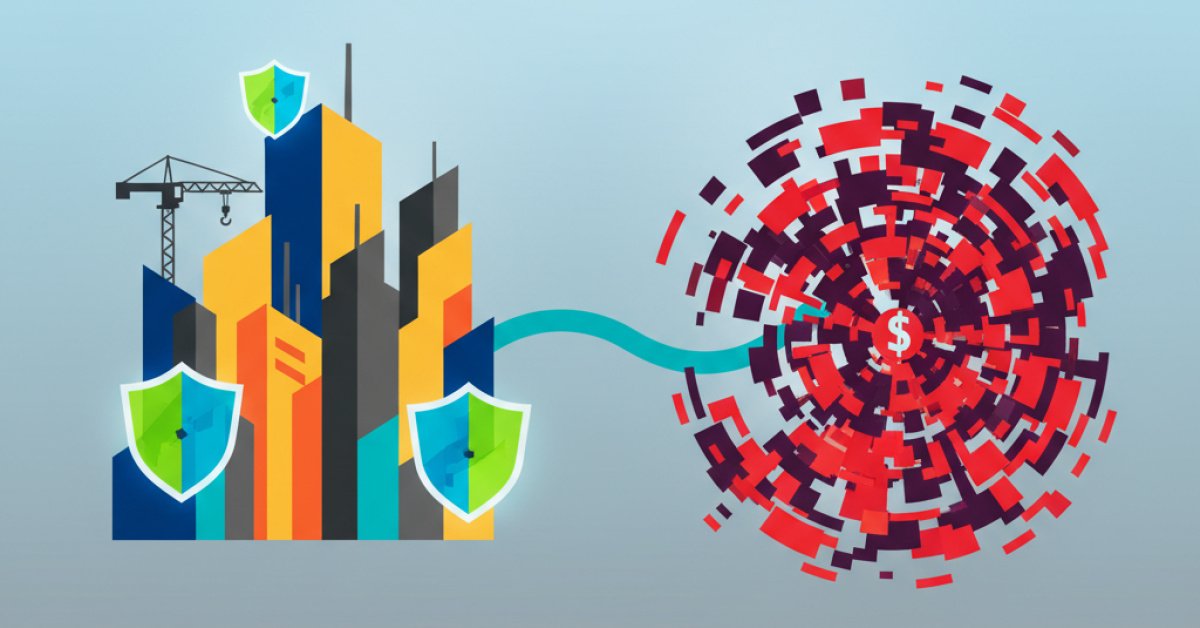
Ever drive past a massive construction site? You see the cranes swinging, sparks flying from welders, and dozens of people in hard hats moving with purpose. It’s an incredible sight. You can almost feel the energy, the progress.
But what you don't see are the invisible forces at play. The complex contracts, the tangled supply chains, the cutting-edge (and sometimes glitchy) technology, and the massive financial risks that could bring the whole thing to a grinding halt. This is where the world of construction insurance lives, and trust me, it’s getting more complicated every single day.
I was chatting about this recently with John Drew over at Alliant Insurance Services, and he really hit on something that’s been on my mind. The role of the insurance broker in construction isn't just changing—it's being completely redefined. If your broker is still just shopping for quotes, you might be in for a rude awakening.
It's Not Just Bricks and Mortar Anymore
Think about a construction project from 30 years ago. It was complicated, sure, but in a way that feels almost simple by today's standards. Now, think about a modern project: a "mega-project" like a new airport terminal, a high-tech manufacturing plant, or a smart stadium.
These aren't just buildings; they're intricate systems. The level of risk has exploded. We’re talking about:
- Mind-boggling complexity: Projects are bigger, more expensive, and have more moving parts than ever before.
- Technological risks: Drones, robotics, sophisticated project management software... it's all amazing until it fails. A software glitch can cause delays that cost millions.
- Supply chain nightmares: Materials are coming from all over the world. One hiccup in a port halfway across the globe can throw your entire timeline into chaos.
- More cooks in the kitchen: You have owners, developers, general contractors, dozens of subcontractors, architects, engineers... the list goes on. Getting everyone on the same page, contractually and financially, is a huge challenge.
Here’s the bottom line: the risks on a construction site today go way beyond a worker slipping and falling. The biggest threats are often buried in a contract, a piece of code, or a shipping container.
So, What Does This Mean for Your Insurance Broker?
This is where the game has truly changed. The old-school broker was a transactional player. You’d call them up, say "I need a policy for this project," and they'd go out and get you a few quotes. Their job was basically to be a matchmaker between you and an insurance company.
That model is completely broken now. It just doesn't work for the level of risk we're dealing with.
According to John Drew, the modern construction broker has to be a genuine risk advisor. They need to be a strategic partner who’s in the trenches with you from the very beginning—long before the first shovel hits the dirt.
Think of it like this: An old-school broker was like a cashier at a grocery store. They just rang up your items. A modern broker is like a personal chef. They help you plan the menu, source the best ingredients, and make sure the entire meal comes together perfectly, avoiding any kitchen disasters along the way.
From Paper-Pusher to Problem-Solver
So what does this new role actually look like in practice? It means your broker needs to be doing a lot more than just talking about insurance policies. They need to be:
- Reading the contracts: They should be poring over project contracts to spot potential insurance gaps or liabilities you might be unknowingly accepting.
- Understanding the financials: They need to get how the project is funded and what the financial stakes are for every party involved.
- Becoming part of the team: A great broker inserts themselves into the project team, attending meetings and advising on risk before it becomes a problem.
- Thinking creatively: Sometimes, the standard insurance product off the shelf isn't the right fit. A top-tier broker works with underwriters to build custom solutions that actually address the unique risks of your project.
They’re no longer just selling a product. They’re providing a service—a really, really valuable one. They are your first line of defense in managing that invisible world of risk.
Who's Training the Next Generation of Risk Experts?
This all sounds great, right? But it begs a really important question: If this job is so complex, how are new brokers learning the ropes?
You can’t just get a degree in "construction risk advising." This is a field where experience is everything. The nuances, the "gut feelings" about a contract, the relationships with underwriters—that stuff isn't taught in a classroom.
This is where mentorship becomes absolutely critical. John Drew emphasized this point, and it’s something I’ve seen firsthand in my own career. The best brokers in this business are the ones who were taken under the wing of a seasoned veteran.
It’s an apprenticeship, really. Younger brokers need to be on the front lines, sitting in on those tough client meetings, learning how to negotiate with underwriters, and seeing how a complex claim is handled from start to finish. They need to learn the art of the job, not just the science.
Without that hands-on guidance, we risk ending up with a generation of brokers who only know how to push buttons on a computer to get a quote. And in today’s construction world, that’s just not good enough. It leaves clients dangerously exposed.
The Takeaway for You
So, let's bring this all back to you. When you're looking at your next project, take a hard look at your insurance broker. Are they a cashier or a chef? Are they a vendor, or are they a true partner?
Ask yourself these questions:
- When was the last time my broker asked to see the project contracts before looking for insurance?
- Do they truly understand the financial and technological risks of my project?
- Are they bringing creative ideas to the table, or just the same old policies?
The world of construction is only going to get more complex. The risks are getting bigger, and the stakes are getting higher. Having a broker who simply gets you a policy is like having a map from 1995 to navigate New York City today. You’re going to get lost, and it’s going to be expensive.
What you need is a guide—an expert who knows the territory, anticipates the roadblocks, and helps you find the safest, most efficient path forward. That’s the modern construction broker. And honestly, in this day and age, you can't afford to settle for anything less.