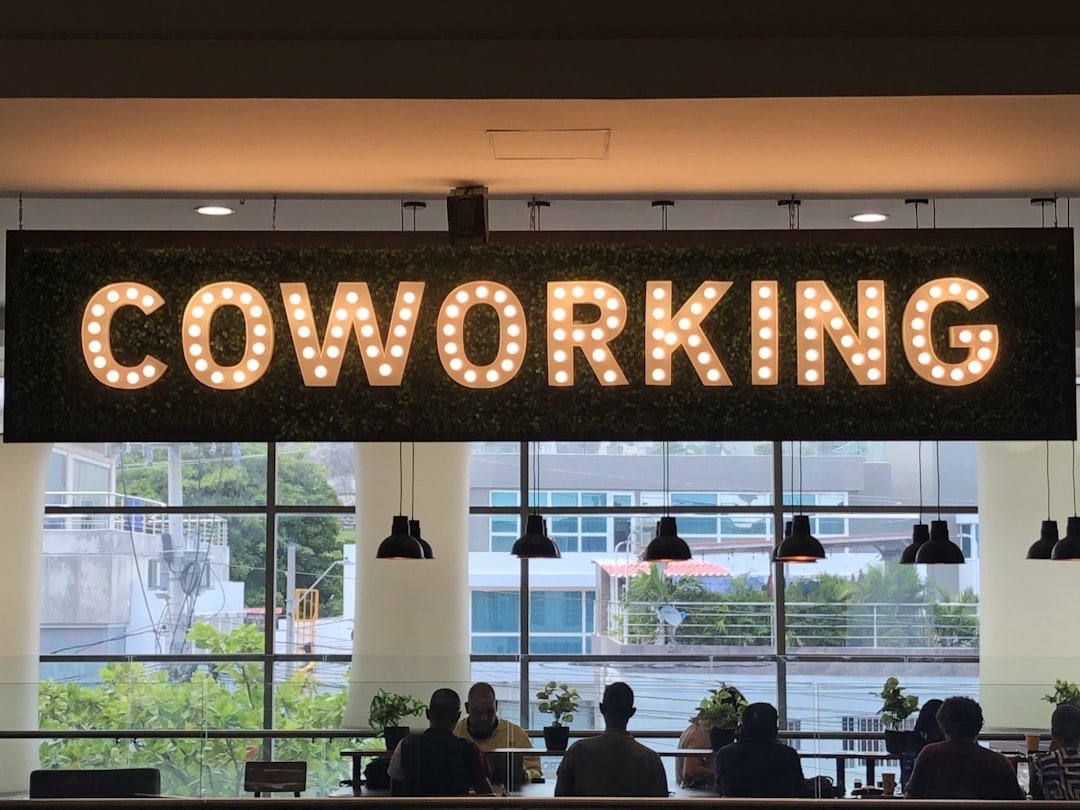
Have you heard the wild story about Palantir? We’re talking about a massive, multi-billion-dollar tech company, the kind you’d expect to see in a gleaming glass tower with its name on the front. Well, they recently announced they were moving their main office from Denver to Miami. The real kicker? Their new "principal executive office" is in a co-working space.
I know, it sounds a little strange. It’s like finding out your favorite five-star restaurant is now operating out of a food truck. But honestly, it’s a sign of the times. The world is getting more flexible, and big companies are starting to see the appeal of spaces that don't require a 10-year lease and a massive capital investment.
But as an insurance person, my mind immediately goes to one place: the risk. When you trade your own four walls for a shared floor plan, you’re also trading a simple insurance setup for a much more complicated one. So, let’s unpack what this trend really means for your business insurance, whether you’re a one-person shop or a team of 500.
So, Why Are Big Players Even Considering This?
First off, let's get why this is happening. It’s not just about saving a few bucks on rent. For a lot of companies, dipping a toe into a new market with a flexible office is way smarter than signing a long-term lease. It’s a way to be nimble, to scale up or down quickly, and to attract talent that might not want to be tied to a single, central headquarters.
Think of it like test-driving a car before you buy it. A co-working space lets a company "test drive" a new city or a new business division without the massive commitment.
But here’s the thing: this “test drive” comes with a whole new set of rules for the road. Your old insurance policy, the one designed for your private office, probably has some serious blind spots in this new environment.
The Big Question: Who's on the Hook When Things Go Wrong?
Imagine this scenario. Your employee is walking through the shared kitchen to grab a coffee, slips on a wet spot, and breaks their wrist. Who pays for that? Is it the co-working company’s responsibility? Or does it fall under your Workers' Compensation policy?
Or what if your top salesperson, while working in a common area, leaves their laptop unattended for two minutes and it gets stolen? A laptop with all your client data on it.
This is where things get messy, fast.
General Liability in a Shared World
In a traditional office, your General Liability insurance is pretty straightforward. It covers bodily injury or property damage that happens on your premises. But in a co-working space, the "premises" are blurry.
The co-working provider will have its own massive liability policy, but don't assume it covers you. Their policy is there to protect them. It typically covers the building's common areas, like the lobby and elevators. But the responsibility for what happens within your designated office or to your employees and guests often falls squarely on your shoulders.
You absolutely need your own General Liability policy. The co-working space’s contract will almost certainly require you to have it and to list them as an "additional insured." This just means their insurance company can come after yours if a claim is traced back to your business's operations.
Your Digital Security is Now a Community Project
Okay, this is the one that really keeps me up at night, especially when I think about a data-heavy company like Palantir. In your own office, you control the internet. You have your own secure, private network, your own firewall, your own IT closet that you can lock.
In a co-working space, you're usually hopping on a shared Wi-Fi network.
Even if they give you a "private" network, it's all running on the same building-wide infrastructure. You have no idea who else is on that network or how secure it truly is. It's like living in an apartment building where everyone shares the same front door key.
This is a massive flashing red light for cyber risk. A Cyber Liability policy isn't a "nice-to-have" in this environment; it's an absolute necessity. It can help you recover from:
- Data breaches: If a hacker exploits a weakness in the shared network to steal your customer data.
- Ransomware attacks: If your systems get locked down, a good policy can help with negotiation and recovery costs.
- Business interruption: It can even cover the income you lose while your systems are down.
Don't ever assume the "free Wi-Fi" is safe. You have to operate as if it's hostile territory and insure your business accordingly.
What About All Your Stuff?
That brings us to your physical property. All those expensive laptops, monitors, printers, and maybe even some specialized equipment your team uses. This is covered by something called Business Personal Property (BPP) insurance.
It's a common misconception that the co-working space's insurance will cover your things if there's a fire or a major theft. It won't. Their policy covers the building, the desks, and the coffee machine. It does not cover the property owned by you, the member.
You need to have a clear inventory of everything your business owns on-site and make sure your BPP coverage is high enough to replace it all if the worst happens. It’s also a good idea to check if your policy covers property "in transit" or "off-premises," since your employees will likely be carrying expensive gear back and forth.
This Isn't a Deal-Breaker, It's a Conversation-Starter
Look, I'm not trying to scare you away from co-working spaces. They can be an incredible tool for growth and flexibility. The move by a giant like Palantir proves that they’re a serious part of the modern business landscape.
The point is that you can't just sign the membership agreement and assume you're covered. This new way of working requires a new way of thinking about your insurance. It's a shift from a simple, one-size-fits-all policy to a more tailored approach that acknowledges the unique risks of a shared environment.
So, if you're thinking about making the move to a more flexible workspace, do it! But make your very next call to your insurance advisor. Walk them through the co-working agreement, talk about the kind of work you'll be doing there, and let them help you spot the gaps. A little bit of planning on the front end can save you from a world of financial pain down the road.