Have you ever felt like you’re hearing about another massive product recall almost every week? One day it’s a car part affecting millions of vehicles, the next it’s a food item being pulled from shelves across the country. It feels like it’s happening more and more, right?
Well, here’s the surprising part: it’s not.
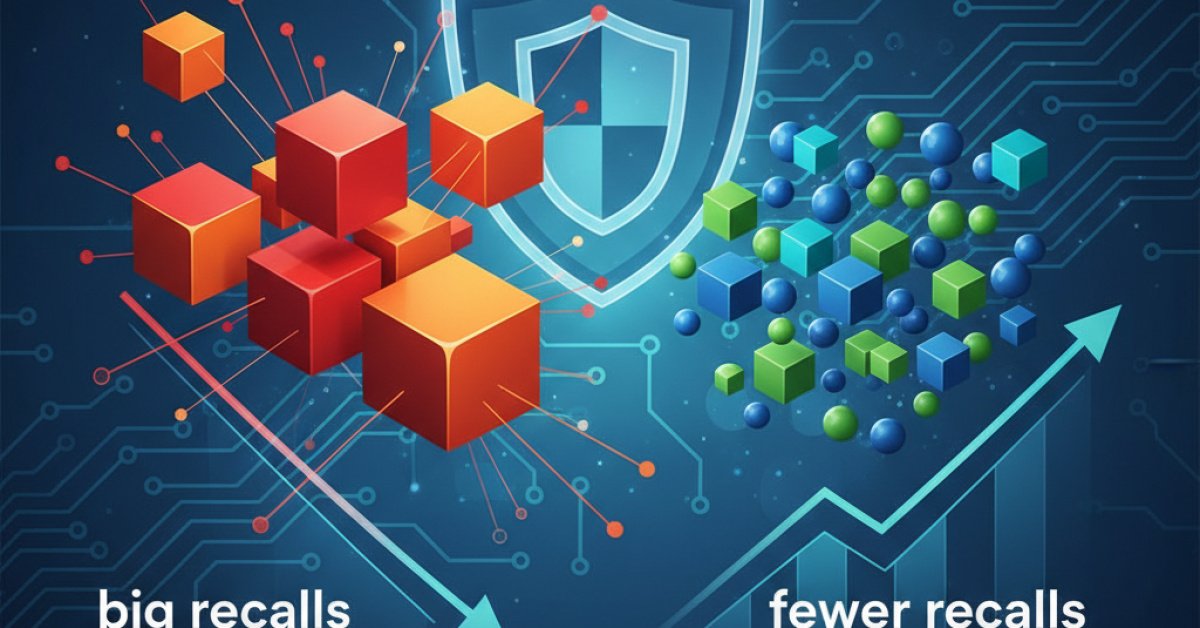
Recent data is showing something really interesting, and frankly, a little concerning. The actual number of recall events has been dropping. But—and this is a huge but—the number of products involved in each recall has exploded. We're talking about a surge to levels we haven't seen in nearly three years.
Think of it like this: instead of a dozen small kitchen fires breaking out across a city, we're now seeing just one or two, but they're massive industrial blazes that threaten entire neighborhoods. The problem isn't the frequency anymore; it's the sheer, staggering scale. And for any business with a product out in the world, this changes everything.
The New Reality: Fewer Recalls, Colossal Impact
Let’s look at the numbers from Sedgwick's latest Product Safety and Recall Index, because they really tell the story. In the third quarter of 2025, the number of recall events actually fell by over 9%. But the number of units affected? It shot up by a mind-boggling 201.6%, hitting nearly 259 million units.
That’s a jump from 86 million products in one quarter to 259 million in the next, even with fewer individual recall announcements.
And this isn't just a blip in one industry. We're seeing this trend everywhere:
- Medical Devices: The number of units recalled here leaped by 237%, reaching over 108 million.
- Food & Drink: The USDA saw recalls affecting over 58 million pounds of products—a 13-year high.
- Pharmaceuticals: Over 44 million units were pulled, the highest count since early 2023.
- Automotive: Even with fewer recall incidents, the number of vehicles and parts affected grew by more than 25%.
When a single mistake can impact millions of customers at once, the fallout is exponential. The logistics, the financial hit, and the damage to your brand’s reputation can be devastating. This isn't just a bigger headache; it's a full-blown migraine that can take a company down.
So, What's Driving This Shift?
A couple of major forces are at play here, and the first one is that regulators are paying much closer attention.
Federal agencies like the FDA, the Consumer Product Safety Commission (CPSC), and the National Highway Traffic Safety Administration (NHTSA) are all getting more assertive. They’re proposing new rules for everything from lithium-ion batteries and kids' toys to the software in our cars. The days of flying under the radar are over.
But it’s not just about traditional product defects anymore. New technology is creating a whole new world of risk that we’re all still trying to figure out.
The Tech Wild West
Think about it. So many products are now "smart" and connected to the internet. This opens the door to risks we never had to consider before, like cybersecurity. We just saw the first-ever medical device lawsuit related to a cyberattack, which ended in a $9.8 million settlement over vulnerabilities in a hospital's equipment.
The FDA is scrambling to keep up. They’ve broadened their definition of "connectivity" to include basically any device that can connect to the internet, even through a simple USB port.
And then there’s AI. Artificial intelligence is being built into more and more medical devices—the FDA has already identified over 1,200 of them. But what happens when an AI device "learns" on the job and changes how it operates? Does it become a different product than the one that was approved? These are the complex questions that manufacturers and regulators are grappling with right now.
How You Can Protect Your Business in This New Era
Alright, so we've established that the stakes are higher than ever. A single quality control slip-up can have a domino effect that you might not recover from. So what can you, as a business owner or risk manager, actually do about it?
The answer is to start thinking about risk management differently.
The smartest companies I see are treating recall insurance as a proactive, strategic tool, not just a financial safety net to catch them after they fall.
Let’s be clear: recall insurance is about so much more than just getting a check to cover your losses. A good policy is like having a crisis response team on speed dial. It gives you immediate access to experts in:
- Crisis Management: People who know exactly what to do in the first chaotic hours.
- Regulatory Affairs: Specialists who can navigate the complex demands of the FDA or CPSC.
- Public Relations: Professionals who can help you manage your message and protect your brand's reputation.
Having this team in your corner before a crisis hits is invaluable. Many policies include pre-incident services to help you develop a solid recall plan and test it, so you're not figuring things out when the pressure is on.
It's Not Just a Good Idea—It's Becoming a Requirement
Here’s another thing I’m seeing more and more: big retailers are starting to demand it. If you want to get your product on the shelves at a major chain, you’ll likely find a clause in the contract requiring you to carry product recall insurance.
For smaller companies trying to break into bigger supply chains, having this coverage is no longer just a bonus—it’s a ticket to play. It shows potential partners that you're serious about risk management and that you won't become a liability for them if something goes wrong.
The game has fundamentally changed. The potential for a single recall to be catastrophic is very real. Preparing for that possibility isn't just good business sense anymore; it’s essential for survival. It's about building a resilient business that can weather the storm, protect its customers, and live to fight another day.