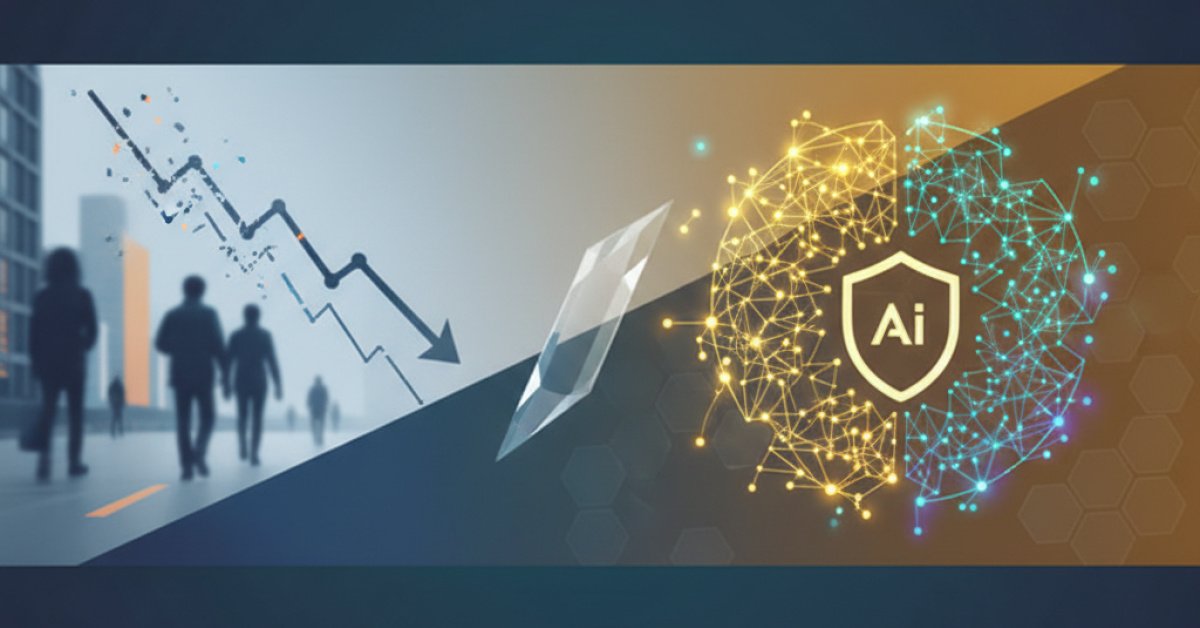
Let’s be honest for a second. Have you ever felt that little knot in your stomach when you see a renewal notice come back unsigned? Or when you pull up a report and see the customer churn numbers ticking up, even just slightly? It’s a feeling we all know in this industry. For years, we’ve told ourselves it’s all about price. “Someone else offered them a better deal,” we’d say, shrugging our shoulders.
But I’m seeing something different now, and I bet you are, too. The real reason we’re losing good customers isn’t just about a few dollars saved on a premium. It’s bigger than that. It’s about experience.
Think about it. We can order groceries from our couch, get a movie recommendation we actually like, and track a pizza to our front door in real-time. Our customers live in a world of instant, personalized service. And then they have to file an insurance claim. Suddenly, they’re thrown back 20 years, filling out forms, waiting on hold, and wondering what’s happening for days on end. That gap between their expectations and our reality is where customer loyalty goes to die.
So, Why Are Customers Really Walking Away?
It boils down to a simple, uncomfortable truth: in many ways, the insurance industry hasn’t kept up. We’re still operating on old systems and old processes while the world outside our office walls has completely changed. Customers today don't just want a fair price; they demand a seamless experience.
They expect:
- Speed: They don’t want to wait a week for a claims adjuster to call them back.
- Simplicity: They don’t want to navigate a clunky website or fill out the same information three times.
- Personalization: They want to feel like you know them, not like they’re just another policy number in a massive database.
When we fail to deliver on these, the frustration builds. A slightly cheaper offer from a competitor doesn’t just look like a good deal; it looks like an escape route. This is the churn crisis we’re facing. It's a battle for relevance, and the old way of doing things just isn't going to cut it anymore.
AI Isn't Just for Robots; It's for Happy Customers
Now, when I say the answer is "AI," I know what you might be thinking. Images of faceless robots and complicated algorithms probably come to mind. But let’s push that aside. Think of AI less as a futuristic robot and more as the world’s most efficient and helpful assistant—one that can supercharge our ability to give customers what they actually want.
This isn't about replacing the human touch. In fact, it's the exact opposite. It's about using technology to handle the tedious, time-consuming stuff so that we, the human experts, can focus on what truly matters: building relationships and solving complex problems for our clients.
Let's talk about claims – the moment of truth.
For a customer, the claims process is everything. It’s the one time they truly need us to come through. It’s also, traditionally, our biggest friction point. This is where AI can make a night-and-day difference.
Imagine this: Your client gets into a minor fender-bender. Instead of calling an 800-number and waiting, they open an app, take a few photos of the damage, and upload them. An AI system analyzes the images in seconds, assesses the damage, and approves the repair estimate. Minutes later, a payment is on its way to their bank account, and a list of approved local repair shops pops up on their phone.
That’s not science fiction; that’s happening right now. For simple, straightforward claims, AI can turn a week-long ordeal into a ten-minute "wow" experience. And for the more complex claims? The AI flags them instantly, sending all the organized information directly to a human adjuster who can now give the case the focused, expert attention it deserves.
From "Dear Policyholder" to "Hi, Sarah"
We all have more data on our customers than we know what to do with. But mostly, it just sits there. AI is brilliant at connecting the dots and helping us use that data to create a truly personal experience.
Instead of sending a generic "don't forget to renew" email, an AI-powered system can see that a customer just had a baby and proactively suggest increasing their life insurance coverage. It can notice they’ve been browsing travel sites and offer a travel insurance policy for their upcoming trip.
This is the difference between marketing at someone and actually helping them. It shows you’re paying attention. It makes the customer feel valued and understood, which is something a rock-bottom price can never buy.
This Isn't Just About the Customer; It's a Win for Us, Too
Making the customer happy is priority number one, but let’s be real—our internal processes can be a nightmare. The burnout from handling mountains of paperwork and repetitive tasks is a huge issue. The beauty of AI is that it makes our own jobs better, which in turn helps us serve our customers better.
Taming the Underwriting Beast
Underwriting is part art, part science, but a huge part of it is just sifting through endless data. It’s time-consuming and, frankly, tedious. AI can take over the heavy lifting here.
It can analyze thousands of data points in the blink of an eye—property records, weather patterns, credit histories, you name it—to assess risk far more accurately and quickly than a human ever could. This doesn't make underwriters obsolete. It frees them up to become true risk experts, focusing their brainpower on the unique, gray-area cases that require human judgment and experience. The result? Better, faster, and more consistent underwriting decisions.
Getting Smarter About Fraud
Fraud costs the insurance industry billions of dollars a year, and that cost gets passed on to everyone through higher premiums. It's a tough problem to solve because fraudulent claims can be incredibly hard to spot.
AI is a game-changer here. It can analyze vast networks of claims data to identify suspicious patterns that would be invisible to the human eye. Things like a specific medical provider appearing on multiple questionable claims, or a repair shop that consistently invoices for the same parts. By flagging these anomalies for human investigators, AI helps us stop fraud in its tracks, saving money and protecting our honest customers.
The Bottom Line: Adapt or Get Left Behind
Look, I get it. Embracing this kind of change can feel daunting. But the reality is, the shift is already happening. The insurers who are leaning into AI are the ones who are pulling ahead. They’re not just becoming more efficient; they’re fundamentally changing their relationship with their customers.
They're turning dreaded processes like filing a claim into positive, loyalty-building moments. They're providing proactive, personalized advice that makes customers feel cared for. And by streamlining their own operations, they’re creating a better, more sustainable business for the long haul.
This isn’t about technology for technology's sake. It’s about survival and, ultimately, about dominance. The insurers who use AI to bridge the expectation gap will be the ones who thrive. The ones who don't… well, they’ll be the ones wondering why their churn rate just keeps climbing. The train is leaving the station, and it's moving fast. The only question left is whether you'll be on it.