Have you ever stopped to think about how much of our world is already run by artificial intelligence? It’s not just about asking Alexa for the weather anymore. AI is quietly working behind the scenes, making decisions that affect our daily lives, especially when it comes to our money.
It’s in the app that approves your credit card, the algorithm that suggests stocks, and increasingly, the system that calculates your insurance premium. And that’s a little unsettling, isn't it? What happens if these complex systems, which are designed to be smarter than us, have a really bad day?
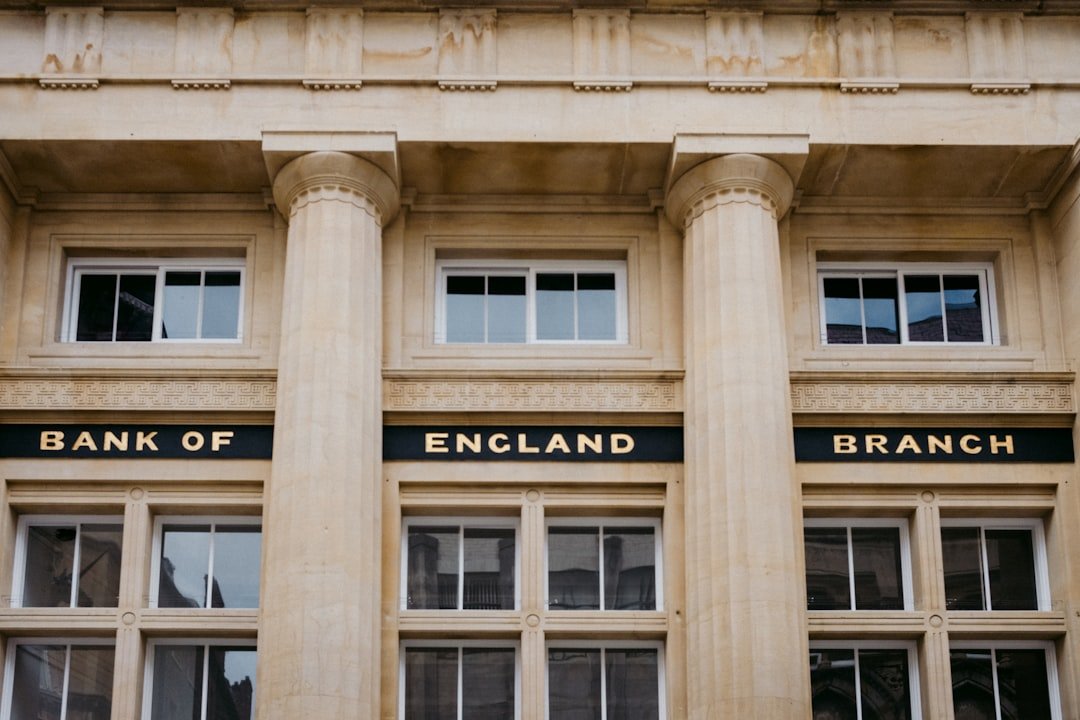
Well, it seems the folks at the Bank of England (BoE) have been asking themselves the exact same question. And frankly, I’m glad someone is. They’ve recently announced that they’re actively testing the risks AI poses to the entire UK financial system. Think of it as a fire drill, but for a financial world increasingly reliant on algorithms.
So, What Exactly Are They Doing?
Let me break it down. According to a letter they sent to lawmakers, the BoE is running a series of "scenario analyses and simulations." That might sound a bit technical, but the idea is actually pretty simple.
They’re essentially playing a game of "what if?"
Imagine the financial system is a complex Jenga tower. The BoE is poking and prodding it, but instead of using their fingers, they're using hypothetical crises cooked up specifically to challenge the AI systems. What if an AI-driven lending platform makes a catastrophic error and denies thousands of valid loans overnight? What if a trading algorithm gets spooked by fake news and starts a market panic?
They are stress-testing the system to see where the weak points are before something actually breaks. It’s the same logic we use in the insurance world when we model for hurricanes or earthquakes. You want to know how the building will hold up long before the storm hits.
This is a huge deal. For the first time, one of the world's most important central banks is formally trying to get ahead of the potential chaos AI could cause. They’re not waiting for a disaster; they’re trying to prevent one.
A New "AI Police Force"? Not So Fast.
Now, here’s where things get interesting. Some politicians, specifically in the House of Lords, suggested that we need a brand new regulatory body—a kind of "AI police"—just to oversee this technology.
But the Bank of England pushed back on that idea. And I have to say, I think they have a point.
Their argument is that the existing regulators (like themselves and the Financial Conduct Authority) are already in the best position to handle this. They believe the people who understand the intricacies of finance and insurance should be the ones regulating how AI is used within those fields.
Think of it this way: if you have a problem with the new self-driving features in your car, who do you want to look at it? A general tech expert who knows a lot about code, or a master mechanic who understands how that code actually interacts with the brakes and steering?
The BoE is arguing for the master mechanic. They believe that financial regulation is a specialized skill, and simply creating a new "AI authority" would add another layer of bureaucracy without the deep industry knowledge needed to be effective. It’s better, in their view, to equip the current experts with new tools than to bring in a whole new team that doesn't know the playbook.
Why This Matters for Your Wallet and Your Insurance
Okay, so why should you care about what a central bank is doing with AI simulations? Because the stability of the entire financial system is the bedrock upon which your personal financial security is built.
When the banking system is stable, your savings are safe. When the markets are stable, your pension has a better chance to grow. And when the financial system is stable, insurance companies can operate effectively.
Insurers rely on a stable economy to invest the premiums we all pay. That investment income is what allows them to have the cash on hand to pay out claims when disaster strikes. If a rogue AI were to cause a major financial wobble, it would send shockwaves through every corner of the economy, including the insurance industry.
And let’s not forget, insurers are becoming huge users of AI themselves. It’s being used for:
- Underwriting: Deciding how risky you are and what your premium should be.
- Claims Processing: Analyzing photos of a car crash or a flooded basement to speed up payments.
- Fraud Detection: Spotting patterns that a human might miss.
These are all fantastic innovations that can make insurance cheaper and faster. But what if the AI gets it wrong? What if an underwriting algorithm develops a hidden bias and starts penalizing people unfairly? What if a claims system denies a whole batch of legitimate claims during a crisis?
The work the Bank of England is doing is crucial because it sets a precedent. It signals that we can't just plug this technology in and hope for the best. We need guardrails. We need oversight. We need to be asking the tough questions now.
It’s reassuring to know that the people in charge of keeping our economy on the rails are taking this seriously. AI is an incredibly powerful tool, but like any tool, it can be dangerous if we don't understand its limits and potential for failure. This isn't about stopping progress; it’s about making sure our race into the future is a safe one.