We’ve all heard the chatter, right? The hushed warnings in news articles and the bold predictions on social media: “AI is coming for our jobs.” For most of us, it feels a bit like a sci-fi movie plot—something that’s happening out there, but not necessarily to us, not tomorrow.
But what if you could actually see it happening? What if there was a way to watch the data in real-time and spot the first tremors of a potential earthquake in the job market?
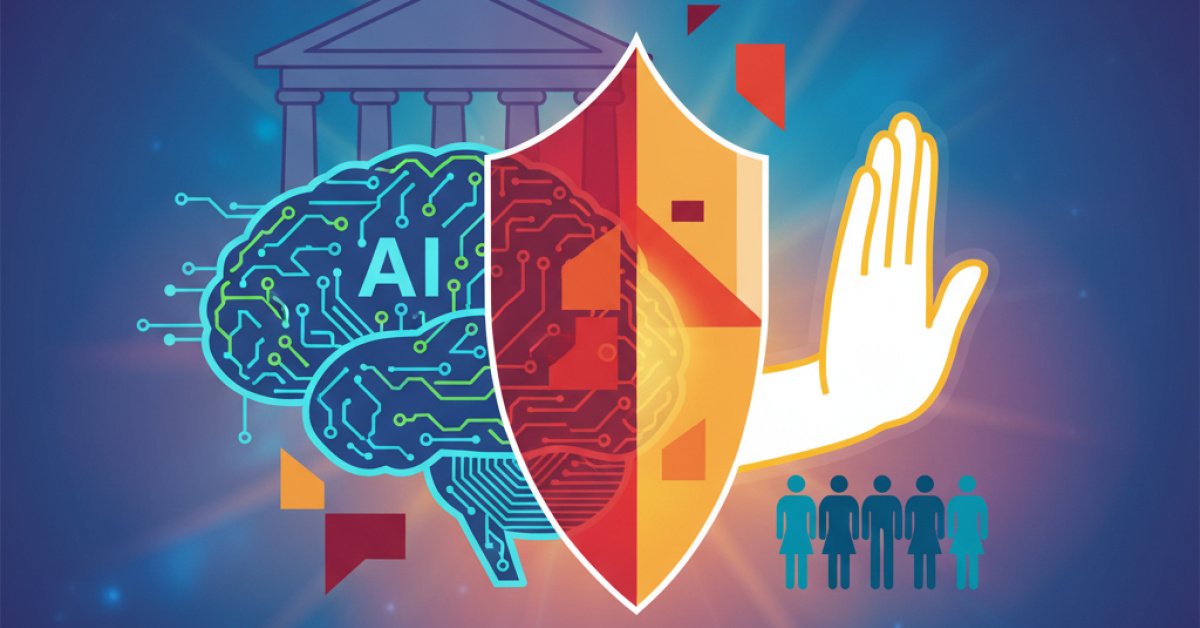
Well, that’s exactly what California is trying to do. The state government just launched a new tool designed to be an “early warning system” for AI-driven job loss. And for those of us in the insurance world, this is a really big deal. It’s a fascinating look at how a state is trying to get ahead of a risk that could reshape our entire economy and the safety nets, like unemployment insurance, that we rely on.
So, What Exactly is This AI Job Tracker?
First off, let’s be clear: this thing isn’t a crystal ball. It can’t tell you with 100% certainty that your cousin Bob, the graphic designer, got laid off because his company started using an AI image generator.
Instead, think of it more like a smoke detector for the job market. It’s called the California AI-Unemployment Tracker, and its job is to sniff out the earliest signs of trouble.
Here’s the simple version of how it works. The tool takes two giant pools of information and mashes them together:
- AI Exposure Data: This is all the academic research and data that predicts which types of jobs are most likely to be impacted by artificial intelligence. Think roles with repetitive tasks, data analysis, or content creation.
- Unemployment Insurance Claims: This is the real-world, up-to-the-minute data on who is actually filing for unemployment benefits in California right now.
By layering these two sets of data, the state can start to see patterns. Are they suddenly seeing a spike in unemployment claims from, say, paralegals or copywriters—jobs that researchers have flagged as having high AI exposure? If so, that’s a red flag. The smoke detector starts beeping.
Why This is a Huge Deal for Unemployment Insurance
This is where it gets really interesting from an insurance perspective. Our entire unemployment insurance (UI) system was built to handle predictable cycles. It’s designed for recessions, for seasonal industries where layoffs happen every year, and for the normal churn of a healthy economy.
But a massive, rapid wave of AI-driven job displacement? That’s not a predictable cycle. That’s a potential tsunami.
The UI system is essentially a giant insurance pool funded by employer taxes. It works great when claims are manageable. But if a technological shift suddenly makes millions of jobs obsolete in a short period, it could put an unimaginable strain on that system. We saw a preview of this during the pandemic when state UI systems were completely overwhelmed.
California’s tracker is an attempt to get a view of the horizon. If state officials can see the wave forming long before it hits the shore, they have a fighting chance to prepare. They can start asking critical questions, like:
- Do we need to adjust funding for the UI system?
- Should we be proactively creating job retraining programs for people in high-risk fields?
- Can we direct resources to specific regions or industries before a crisis hits?
It’s about moving from a reactive position—helping people after they lose their jobs—to a proactive one. And in the world of risk management, that’s always the goal.
Is This Just a California Thing, or Should We All Be Watching?
Honestly, we should all be paying very close attention to this. California is often the canary in the coal mine for the rest of the country, especially when it comes to technology and labor. It has a massive, diverse economy and is home to Silicon Valley, the epicenter of the AI boom.
What happens here is a test case. Other states, and almost certainly the federal government, are going to be watching this experiment to see if it works. Can you really use data to predict and mitigate the economic shock of AI?
This raises even bigger questions for the private insurance industry, too. How do we, as an industry, prepare for this kind of systemic risk? Will we start to see new insurance products emerge? It’s not crazy to imagine a future with policies designed to protect individuals against career disruption from technology. This California tracker is one of the first real, government-backed steps into that new territory.
Let’s Be Real: Is It a Perfect System?
Of course not. And it’s important to be honest about its limitations.
The biggest challenge is telling the difference between correlation and causation. Let’s go back to Bob the graphic designer. If he gets laid off, the tracker might flag it as a potential AI-related job loss. But maybe his company just lost a huge client and had to make cuts across the board. The tracker can’t know the why. It just sees the what—a person in a high-risk job filing for unemployment.
So, it's not a definitive diagnostic tool. It’s a signal that tells officials, “Hey, you might want to look a little closer at what’s happening in this particular industry or occupation.”
Still, even with those limitations, it’s a pretty remarkable step. For years, the conversation about AI and jobs has been purely theoretical. This is one of the first attempts to ground that conversation in real, hard data.
It’s not about causing a panic. It’s about being smart and prepared. This tool is a clear signal that policymakers are starting to take the potential disruption of AI seriously. And for anyone whose job it is to think about risk—and that includes all of us in the insurance field—it’s a sign that the ground beneath our feet is shifting. We need to be ready to shift with it.