Have you noticed how much "AI" gets thrown around lately? It feels like every tech vendor, every carrier, every keynote speaker is talking about artificial intelligence. And for good reason. It’s already quietly changing how we do our jobs, from underwriting and pricing to claims processing and fraud detection.
But here’s the thing that’s been bubbling under the surface, the part that gives compliance officers and C-suite execs a low-grade headache: the rules. Or, more accurately, the lack of consistent rules.
So when news dropped that the White House was planning an executive order to create a single, national rule for AI, you can bet a lot of folks in our industry sat up and paid attention. This isn’t just some tech-world news. For insurance, this could be a massive deal. Let’s unpack what’s really going on here and what it could mean for all of us.
First, Why Is This Even a Problem?
Before we get into the potential new rule, let's talk about the current situation. Imagine you're a national carrier. You've just invested millions in a sophisticated new AI-powered underwriting system. It’s designed to analyze thousands of data points to give you a more accurate risk assessment than ever before. Sounds great, right?
Now, imagine you have to get that system approved and make sure it’s compliant in all 50 states.
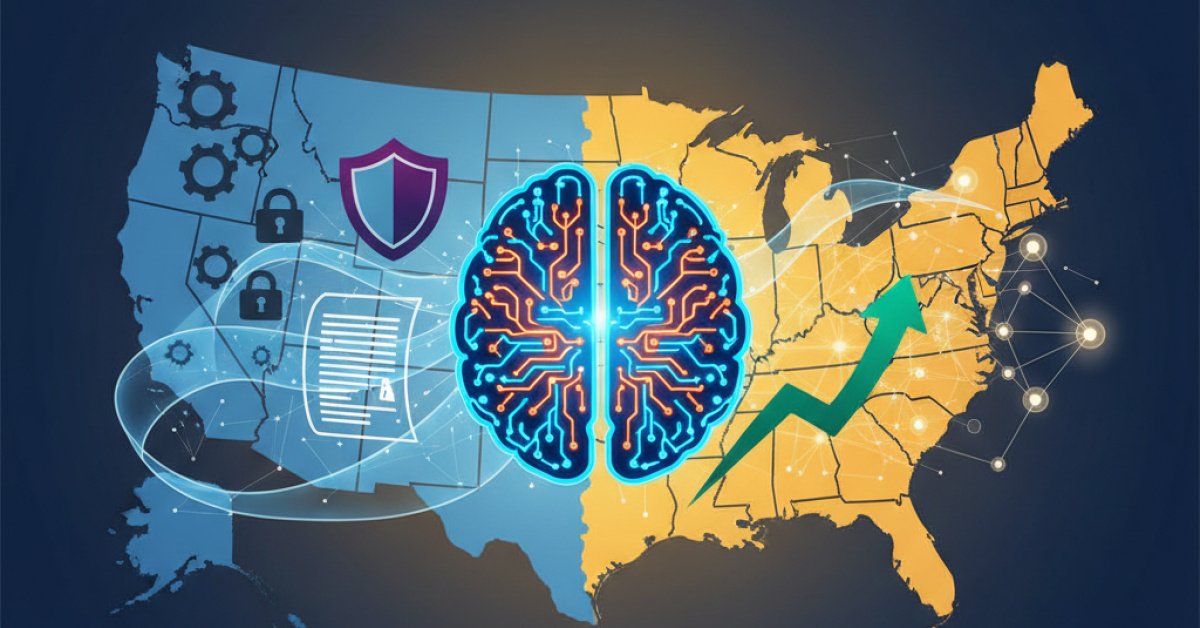
The problem is, there’s no single playbook. California has its own strict data privacy laws. New York’s Department of Financial Services has its own circulars and expectations about algorithmic bias. Colorado has passed laws specifically targeting AI bias in insurance. Other states are working on their own versions.
It’s what we call a “patchwork” of regulations. And frankly, it’s a nightmare. It’s like trying to build a car that has to meet 50 different sets of safety standards simultaneously. It’s expensive, it’s slow, and it stifles innovation because you’re constantly worried about stepping on a regulatory landmine in one state or another.
This is why the industry has been quietly—and sometimes not-so-quietly—asking for some kind of federal guidance. A single, clear set of rules would be a whole lot easier to follow than 50 different, and sometimes conflicting, ones.
The Dream of a Single National Rule
So, what would this executive order actually do? The goal, as stated, is to create a unified national approach to AI regulation, overriding that messy patchwork of state laws.
For insurers, the potential upside is huge. Think about it:
- Clarity and Consistency: You’d finally have one set of rules to play by. Your legal and compliance teams could focus on meeting one standard, not trying to interpret and juggle dozens.
- Faster Innovation: With a clear path forward, carriers might be more willing to invest in and roll out new AI technologies. You could deploy that new claims-processing bot or underwriting algorithm nationwide without a state-by-state approval marathon.
- A Level Playing Field: A national standard could ensure that all carriers, big and small, are held to the same expectations regarding fairness, transparency, and data security.
In a perfect world, this national rule would be a godsend. It would provide the guardrails we need to use AI responsibly while removing the roadblocks that are slowing us down. It would be the holy grail of regulatory simplicity.
But, as we all know, we don’t live in a perfect world.
Let's Be Real: What Are the Risks?
A single national rule sounds great on paper, but the devil is always in the details. What if that one rule isn’t a good one?
This is where the optimism gets a dose of reality. There are a few ways this could go sideways for the insurance industry.
The "Too Restrictive" Problem
What if the federal government, in an attempt to be thorough, creates a rule that’s incredibly strict and burdensome? It could be so restrictive that it makes it nearly impossible to use AI in meaningful ways. We could end up with a national standard that’s even tougher than the strictest state laws, effectively grinding innovation to a halt everywhere.
The "Too Loose" Problem
On the flip side, what if the rule is too vague or weak? If it’s just a set of high-level principles with no real teeth, it won’t solve the core issues of bias and transparency. This could lead to a "wild west" scenario where consumer trust erodes, and we eventually face a massive regulatory backlash down the road. States might even find legal loopholes to enact their own rules anyway, and we’d be right back where we started.
The One-Size-Fits-All Trap
Insurance is complicated. The AI used for personal auto telematics is very different from the AI used to underwrite a complex commercial liability policy. A one-size-fits-all rule might not account for these nuances. We could end up with regulations that make perfect sense for social media algorithms but are completely impractical for insurance pricing models.
The biggest fear is that we trade a complex problem (50 state rules) for a simple, but much worse, problem (one bad federal rule).
So, What Should We Be Watching For?
This executive order is just the starting point. The real work will happen in the agencies tasked with writing the actual regulations. As insurance professionals, this is where we need to pay close attention.
The conversation will revolve around a few key themes:
- Bias and Fairness: How do we ensure that AI models don't inadvertently discriminate against protected classes? This is the number one concern for regulators, and any national rule will have to address it head-on.
- Transparency: Can you explain how your AI made a decision? If an algorithm denies someone coverage or gives them a high premium, you need to be able to explain why. This is a huge technical and ethical challenge.
- Data Privacy: What data can you use to train your models, and how do you protect it? This ties into a whole universe of privacy laws that are also in flux.
- Accountability: When the AI gets it wrong, who is responsible? Is it the insurer? The software developer? The data provider? A national rule will need to clarify this.
This isn't just a D.C. policy debate; it’s a conversation that will shape the future of our industry. A single, well-crafted national AI rule could unlock incredible efficiency and better products for customers. A poorly crafted one could set us back years.
For now, all we can do is watch, listen, and get ready. The AI train has already left the station. The big question is whether we're all about to get on the same track.