You’ve probably heard the buzz. Artificial intelligence, or AI, is changing just about everything, and the insurance world is no exception. It’s the quiet engine working behind the scenes, helping to set your car insurance premium, flagging a potentially fraudulent claim, or even powering the chatbot that answers your questions at 2 a.m.
It’s happening fast. And with any powerful new technology, the big question always follows: Who makes the rules?
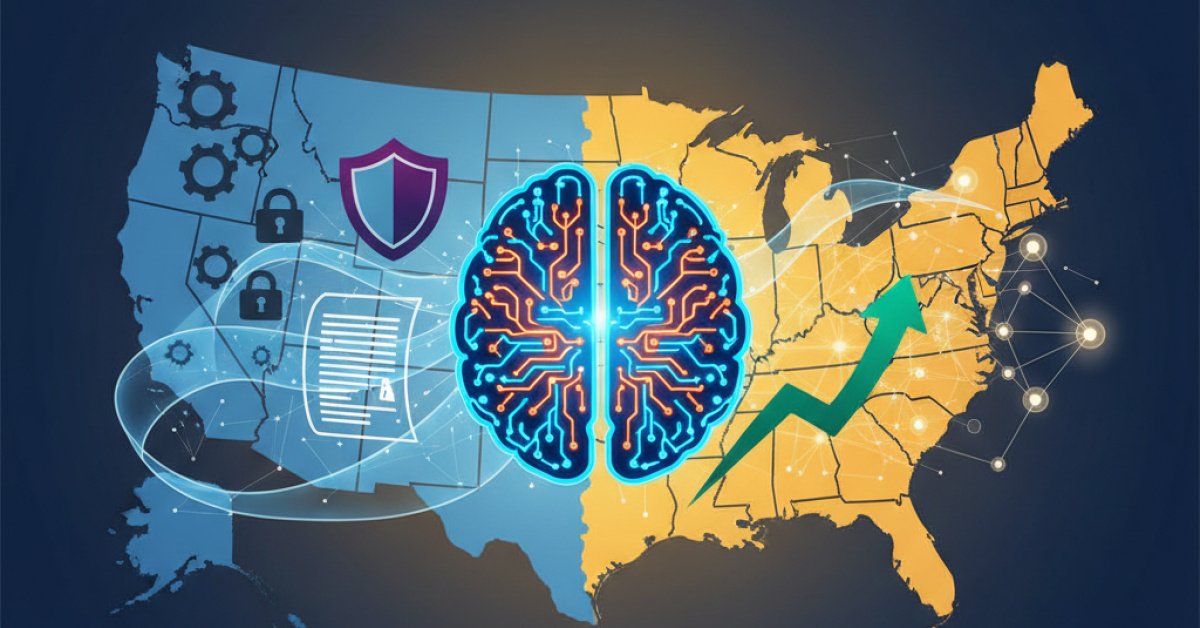
Recently, a presidential order was signed that took a firm stance on this question. The goal was to pump the brakes on states creating their own individual AI regulations, essentially telling them to fall in line with a national approach. For a lot of people in tech, this was a huge win. But for us in the insurance industry, it’s a development we absolutely need to pay attention to. It’s not just some political news item; it could fundamentally change how we operate for years to come.
Let's Talk About AI in Our World
First, let's be real about what AI in insurance actually looks like. It’s not sci-fi robots taking over underwriting departments. It’s much more practical than that.
We’re using sophisticated algorithms to analyze massive amounts of data to price risks more accurately. Think about telematics in auto insurance—that little device or app that tracks driving habits. That’s AI at work, turning data on braking and acceleration into a personalized premium.
When you file a claim, AI can scan the documents, photos, and adjuster notes in seconds to spot patterns of fraud that a human might miss. It helps speed up simple claims, getting money into the hands of policyholders faster than ever. It's a powerful tool for efficiency and accuracy.
But with great power comes… well, a lot of questions about fairness, transparency, and bias. And that’s where the regulators come in.
The Nightmare Scenario: A "Patchwork Quilt" of 50 Different AI Rules
Imagine you're a national insurance carrier. You operate in all 50 states. Now, imagine California passes a strict law about how you can use AI in underwriting. Then Texas passes a slightly different one. Florida comes up with its own version, and New York’s is completely different from all the others.
Suddenly, you’re facing a compliance nightmare.
Your algorithm for pricing home insurance would need to be tweaked and re-validated for every single state. The data you're allowed to use in one place might be forbidden just across the state line. It would be like trying to drive across the country if every state had its own unique traffic lights—some with green on top, some with purple, and some that just blink randomly. It would be chaotic, expensive, and incredibly inefficient.
This "patchwork quilt" of regulations is exactly what big tech companies and, frankly, most national insurers are desperate to avoid. It stifles innovation because you can't build one system and scale it. Instead, you spend all your time and money just trying to keep up with 50 different rulebooks.
Washington Steps In: What This Order is Really About
This is the context for the executive order. The directive was designed to push for a more unified, federal approach to AI governance. The idea is to prevent that patchwork from ever being stitched together.
How? By using the federal government's influence. The order hinted at a couple of powerful tools:
- Challenging state laws: It signaled that the federal government might legally challenge state-level AI rules that it deems overly restrictive or inconsistent with national policy.
- The power of the purse: It also suggested that federal funding could be withheld from state or local projects that don't align with the federal vision for AI.
Essentially, it was the federal government planting a flag and saying, "We're going to lead on this." The message to the tech industry and other national players like insurers was clear: we want one set of rules for one national market.
Is a Single, National Rulebook a Good Thing?
So, is this a clear-cut win? Like most things, it’s complicated. There are some really strong arguments in favor of a federal approach.
For insurers, the biggest pro is predictability. A single set of guidelines means you can invest in new AI-driven tools with confidence, knowing the rules won't change dramatically from one state to another. It encourages innovation and allows companies to operate more efficiently, which can theoretically lead to better products and prices for consumers.
But there’s another side to this coin.
States have often been called "laboratories of democracy" for a reason. They can be more nimble and responsive to the specific needs and concerns of their citizens. State insurance commissioners, for example, have a deep understanding of their local markets. They might see a problem—like an algorithm that seems to be unfairly penalizing a certain neighborhood—and be able to act on it much faster than a massive federal agency.
Many of the strongest consumer protection laws we have today started at the state level. Think about data privacy. California’s laws have pushed the entire country to take privacy more seriously. There's a real fear that a single federal standard might be a "one-size-fits-none" solution, or worse, a weaker standard that prioritizes business interests over consumer protection.
What This All Means for You and Me
For those of us on the ground—agents, brokers, underwriters, and claims professionals—this debate isn't just academic.
A federal standard could make our lives simpler. The software we use, the underwriting guidelines we follow, and the compliance training we have to do would be consistent everywhere.
But we also have a duty to our clients. We need to be able to explain to them why their premium is what it is. If an AI makes a decision, we need to be confident that the decision was fair and unbiased. The big question is whether a federal or state-by-state approach does a better job of ensuring that fairness and transparency.
This story is far from over. The executive order was just one move in a very long chess match between federal and state regulators. But it was a significant one. It signaled a clear preference for a top-down approach, and that’s something everyone in the insurance industry needs to keep a close eye on as AI becomes more and more central to everything we do.