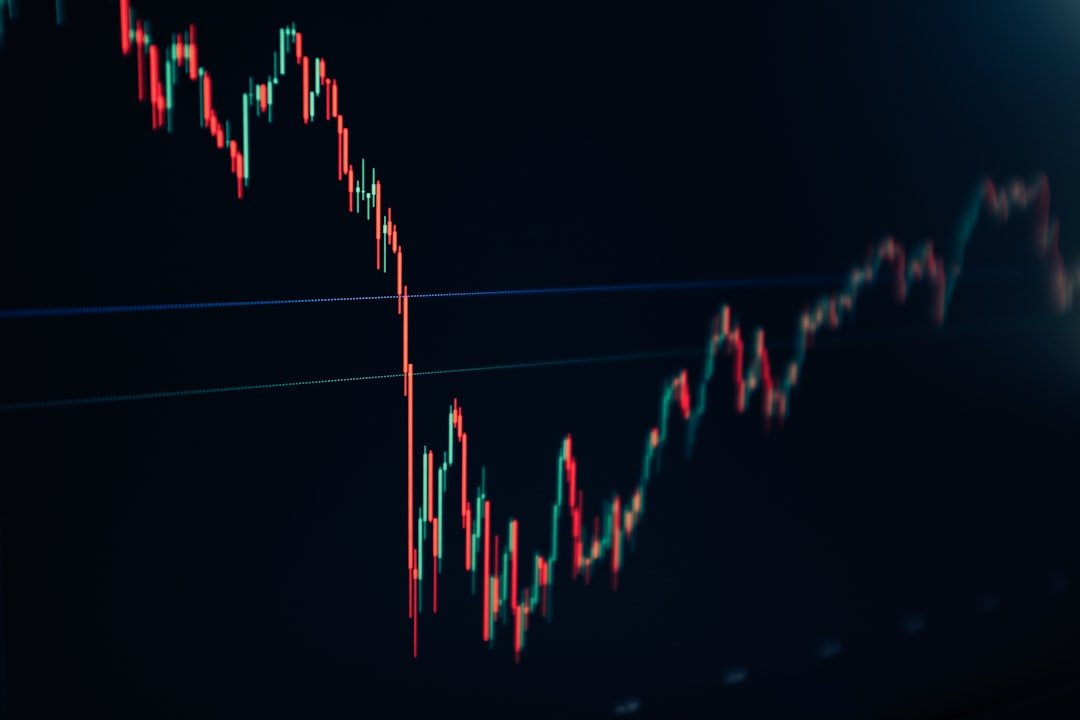
Have you ever found yourself in a debate so certain you were right, you’d be willing to put money on it? Well, welcome to the wild world of prediction markets.
These aren't your grandpa's stock tickers. We're talking about platforms where you can place wagers on almost anything you can imagine. Will JD Vance clap more than 50 times during the State of the Union? Will Elon Musk finally be revealed as the mysterious creator of Bitcoin? If you have an opinion, there's probably a market for it.
It sounds a bit like a high-tech betting parlor, and in some ways, it is. But these markets are also powerful tools for gauging public sentiment and forecasting future events. The thing is, whenever money, technology, and uncertainty get together, another guest inevitably shows up to the party: risk. And that gets people like us in the insurance world thinking. Could you actually insure something this… weird? Let's talk it through.
Okay, So What Exactly Are We Talking About?
Before we dive into the insurance side of things, let's get on the same page. Think of a prediction market as a stock market for events.
Instead of buying a share of Apple, you buy a "share" of a specific outcome. For example, you could buy a "Yes" share on "Will it rain in London tomorrow?" If the price of a "Yes" share is 60 cents, it means the market collectively thinks there's a 60% chance of rain. If you buy it and it does rain, your share becomes worth $1. If it stays dry, your share is worth zero.
It’s the wisdom of the crowd, quantified and traded. These markets exist for politics, sports, finance, and even pop culture nonsense. And while some are just for fun, others involve millions of dollars. That’s where things get interesting, and frankly, a little scary.
Where It All Could Go Wrong: The Big Risks
When you’re dealing with decentralized platforms and real money, a lot can go sideways. It’s not like insuring a house against a fire, where the risks are well-understood. Here, we're venturing into uncharted territory.
So, what keeps the operators (and users) of these platforms up at night?
- Market Manipulation: What if someone with incredibly deep pockets decides to artificially inflate the price of an outcome? They could potentially warp the market's predictive power or cause chaos just for the fun of it.
- Regulatory Nightmares: Let's be honest, regulators are still trying to figure out what to do with cryptocurrency, let alone markets that let you bet on political events. A sudden government crackdown could shutter a platform overnight, leaving users with worthless digital assets.
- The Oracle Problem: How does a market know what the real-world outcome was? It relies on a data source called an "oracle." But what if that oracle is hacked, fed bad information, or the outcome is just plain ambiguous? (How do you definitively prove the identity of a pseudonymous person, for instance?) A faulty oracle could trigger the wrong payout, leading to massive losses.
- Cybersecurity Threats: Many of these platforms are built on smart contracts and blockchain technology. A single bug in the code or a clever hack could drain the entire system of its funds in minutes. We’ve seen it happen time and time again in the crypto space.
It’s a minefield of modern risks. And when there's a minefield, people start looking for a minesweeper—or in our case, an insurance policy.
Could Insurance Actually Step In Here?
This is the million-dollar question. At first glance, it seems impossible. How do you underwrite the risk of a pseudonymous crypto founder being unmasked?
But if you break it down, it’s not so different from the early days of insuring other new technologies, like satellites or the first commercial websites. Insurers are experts at pricing the unknown. It just requires a different way of thinking.
So, what could coverage even look like?
I don’t think you’d see a standard, off-the-shelf policy. It would have to be highly specialized, probably focusing on the platform operators rather than individual users. You might see things like:
- Tech E&O (Errors & Omissions): This seems like the most obvious fit. If a bug in the platform's code causes a financial loss for its users, this policy could help cover the platform's liability. It’s for when your tech doesn't do what it was supposed to do.
- Cyber Insurance: This would be crucial. It could cover the platform's losses from a direct hack, help with the costs of responding to the incident, and maybe even cover ransomware demands.
- Parametric Insurance: Now this is where it gets really interesting. Instead of a traditional policy that pays out based on a proven loss, a parametric policy pays out automatically when a specific, pre-defined trigger occurs. For example, you could design a policy that instantly pays out if a specific government body officially declares the platform illegal. The trigger is clear, the payout is fast, and you avoid endless arguments over the exact amount of the "loss."
The key is to move away from insuring the outcome of a bet (which is just gambling) and focus on insuring the operational integrity of the market itself. We’re not insuring whether it rains; we’re insuring the weather station that reports the rain.
Why Insurers Are Treading Carefully
So if these products are possible, why isn’t every major carrier jumping in? Well, because it's incredibly difficult. The challenges are massive.
For one, there’s virtually no historical data. How do you price the risk of a smart contract exploit when the technology has only been around for a few years? Underwriters build models based on decades of data, and here, we have almost none. It's like trying to predict a hurricane's path with a barometer from the 1800s.
Then there’s the issue of moral hazard. If a platform is fully insured against hacks, will they invest as heavily in their own security? It’s a classic insurance dilemma.
And finally, the biggest hurdle is the legal and regulatory fog. Insurers are fundamentally conservative. They build their business on stability and predictability. Investing in and insuring a market that a regulator could wipe out with the stroke of a pen is a massive gamble. Most carriers would rather wait and see how the dust settles.
So, what’s the verdict? Can prediction markets be insured?
My gut says yes, eventually. But it won't be easy, and it won't look like any insurance we've seen before. It will take innovative insurers, probably working out of Lloyd’s of London or specialized InsurTech firms, who are willing to take a calculated risk on a new frontier.
It will require a deep understanding of blockchain technology, a stomach for regulatory volatility, and a new way of modeling risk. But as these markets become more mainstream and the money involved grows, the demand for a financial backstop will only get louder. And where there's demand, the insurance industry, sooner or later, always finds a way.