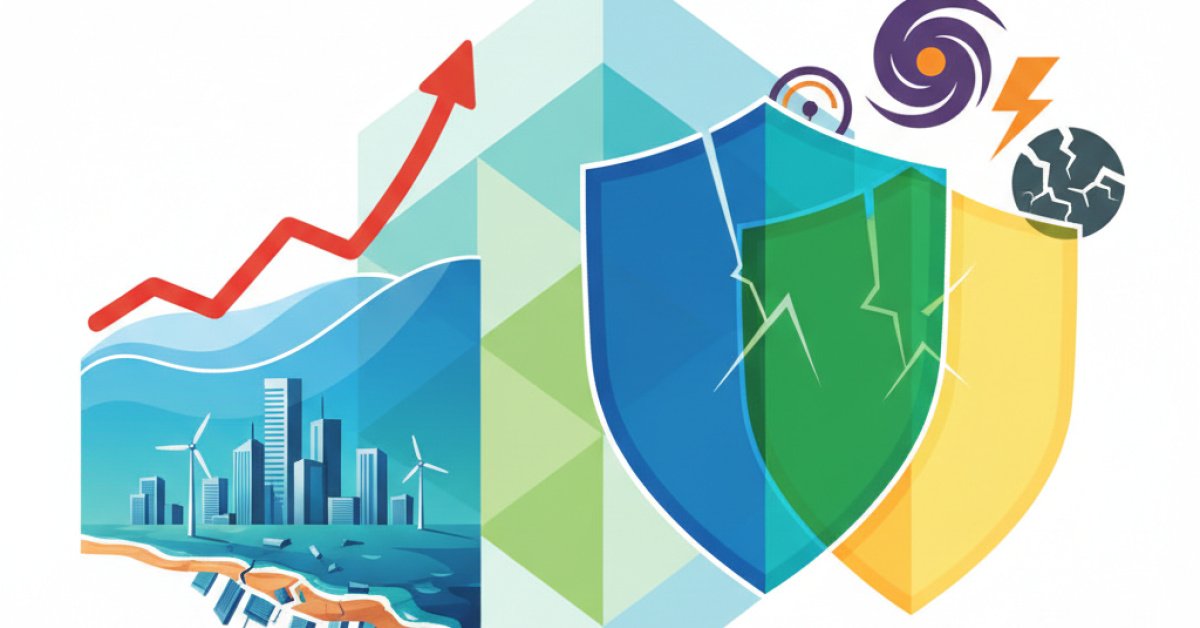
Have you ever looked at the news—another record-breaking heatwave, another "100-year" flood happening for the third time in a decade—and just wondered, "Is this just bad luck, or is this something bigger?" We all have. As insurance professionals, that question isn't just a passing thought; it's at the very core of our business. Our entire industry is built on predicting the future by looking at the past.
But what happens when the past is no longer a reliable guide?
Well, the European Union is about to give us a much clearer, and frankly, more intimidating answer. They're launching a new service designed to do something that’s been incredibly difficult until now: to measure, in near real-time, exactly how much of a role climate change played in a specific extreme weather event.
This isn't just an academic exercise. For those of us in the insurance world, this is a seismic shift. It's like we've been trying to solve a puzzle with half the pieces missing, and someone just walked in and dumped the rest of the box on the table. Let’s talk about what this means for us.
So, What Is This New "Weather Detective" Service?
Think of it as a kind of rapid-response forensics team for the weather. When a major heatwave, drought, or downpour hits, scientists will be able to quickly analyze the event and say things like, "This heatwave was 30 times more likely to happen because of climate change."
This field is called "attribution science," and while it's not brand new, building an operational, on-demand service around it is a huge step. It takes the concept out of the research lab and puts it into the hands of policymakers, financial institutions, and, yes, insurance companies.
Instead of waiting months or years for a complex academic study, we could get answers in a matter of weeks. This speed changes everything. It means we can't just write off a catastrophic flood as a freak event or an "act of God" anymore. Now, we'll have data that points to a specific, measurable cause: a warming planet.
The Crystal Ball We've Been Waiting For? How This Changes Risk Modeling
Let's be honest, our current risk models are already straining at the seams. Actuaries and underwriters are brilliant at what they do, but they rely heavily on historical data to price policies. The problem? Climate change is rewriting the rulebook. The "1-in-100-year" event is becoming the "1-in-10-year" event, and our models are struggling to keep up.
This new EU service could be the key to building better, more forward-looking models.
Here's how it could work:
- More Accurate Pricing: Instead of just looking at past flood maps, an underwriter could use this data to see how climate change is increasing the probability of extreme rainfall in a specific region. This allows for pricing that reflects the future risk, not just the past. It’s a move from reactive to proactive risk assessment.
- Identifying Uninsurable Zones: This is the tough part. The data might make it painfully clear that certain coastal areas or floodplains are becoming so high-risk that they are simply uninsurable at any reasonable price. It could accelerate difficult conversations about managed retreat and building codes.
- Informing Reinsurance Decisions: For reinsurers, who take on the biggest risks, this level of data is gold. It will allow them to better model their own portfolio exposure and price the coverage they provide to primary insurers like us.
Essentially, this tool helps us answer the billion-dollar question: How much of the recent surge in catastrophic losses is just a string of bad luck, and how much is a permanent, systemic shift in risk?
From "Act of God" to "Act of Carbon": The Legal Fallout
This is where things get really interesting, especially for anyone in liability. For centuries, insurance has relied on the concept of an "act of God" to define unforeseeable, unpreventable natural disasters. This new data blows a hole right through that defense.
Imagine this scenario: A city experiences a devastating flood. The new EU service releases a report stating the rainfall was 50% more intense due to climate change. Suddenly, you have a basis for litigation.
Could residents sue the municipal government for failing to upgrade storm drains, arguing that the increased risk was foreseeable?
Could shareholders sue a corporation for not disclosing the climate-driven risks to their supply chain?
This service provides the scientific evidence needed to connect the dots between emissions and damages. It moves the conversation from the theoretical to the specific. For liability and D&O (Directors and Officers) insurers, this opens up a whole new world of potential claims and litigation that we need to start planning for right now.
It’s Not Just About Insurance—It's About Policy
While we're focused on our industry, we can't ignore the bigger picture. This data will put immense pressure on governments. When you can directly link a disaster that cost billions and displaced thousands to climate change, it becomes much harder for politicians to delay action.
This could lead to:
- Stronger Building Codes: Mandating that new infrastructure be built to withstand the climate of the future, not the past.
- Smarter Land-Use Planning: Restricting development in areas proven to be at a much higher risk.
- Investment in Resilience: Funneling money into things like sea walls, better drainage systems, and early-warning technology.
For us, this is actually good news in the long run. Every step governments take to reduce risk and build resilience helps make our world more insurable. It helps keep our products affordable and available.
This new service isn’t a magic bullet. It’s a tool. And like any powerful tool, it brings both incredible opportunities and significant challenges. It will force us to have difficult conversations about pricing, affordability, and what it truly means to be resilient in a world that is fundamentally changing. But one thing is for sure: ignorance is no longer an option. The data is coming, and we'd better be ready for it.