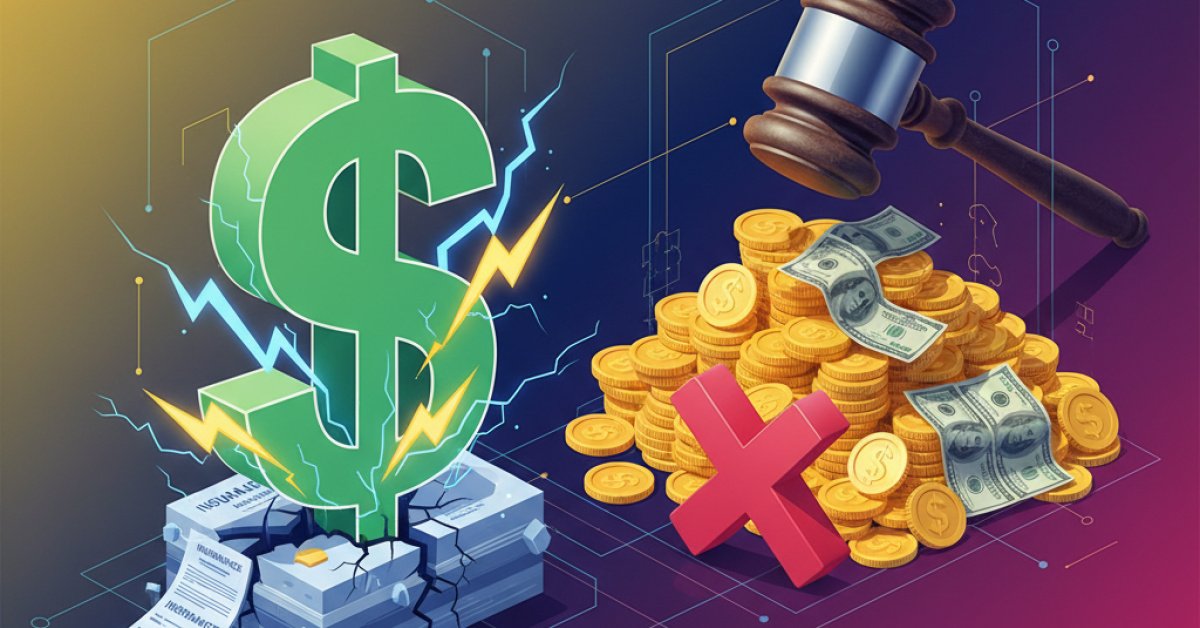
You see these kinds of headlines every now and then, and they almost feel like something out of a movie. A massive corporation, a sweeping bribery scandal, and a jaw-dropping penalty. But this isn't Hollywood; it's happening right in Ohio, and the numbers are very, very real.
Akron-based utility company FirstEnergy was just handed a bill for more than a quarter of a billion dollars by state regulators. That’s right—over $250 million in fines and refunds. It’s the latest chapter in a political corruption saga that has been unfolding for five years, and honestly, it’s a story that anyone in the world of risk and insurance needs to pay attention to.
This isn’t just about one company’s bad choices. It’s a powerful, and frankly, expensive, lesson in corporate governance, accountability, and the limits of what insurance can—and can’t—fix.
So, What Exactly Went Down?
Let’s break this down without getting lost in all the legal jargon. At its heart, this is a story about a massive bribery scheme. FirstEnergy got caught up in a huge scandal involving Ohio’s state government, and the fallout has been shaking out ever since.
The whole thing was a pretty audacious attempt to influence legislation, and when it all came crashing down, it created a political firestorm. For years now, regulators and investigators have been peeling back the layers of misconduct.
And now, we're seeing the financial consequences come home to roost. This isn't some slap on the wrist. This is a significant financial blow delivered by the state’s utility regulators, who are making it crystal clear that this kind of behavior comes with a hefty price tag.
A Quarter-Billion Dollar Price Tag
When you hear a number like "$250 million," it can be hard to wrap your head around. It’s not just one giant fine. The regulators broke it down into a mix of penalties and customer refunds, which I think is an important detail. It’s a punishment designed to hit the company’s bottom line and give something back to the people who were ultimately affected.
Think of it this way: part of the money is a direct penalty for the misconduct, a clear signal to the market that this won't be tolerated. The other part, the refunds, is about making things right—or as right as they can be—for the customers who were footing the bill for a utility wrapped up in scandal.
It’s a two-pronged approach: one part punishment, one part remediation. And it shows that regulators are thinking not just about the corporation, but about the public it’s supposed to serve.
The Big Question: Where Does Insurance Fit In?
Okay, so whenever a corporation faces a massive financial hit like this, our minds in the insurance world immediately jump to one place: Directors & Officers (D&O) insurance. Did they have it? Will it cover this?
Here’s the thing, and it’s a crucial point. D&O policies are designed to protect corporate leaders from claims of mismanagement or wrongful acts in their official capacity. But they almost always have a very clear exclusion for intentional criminal acts and fraud.
You just can't buy insurance for deliberate law-breaking.
So, while shareholder lawsuits that arise from the scandal might trigger some D&O coverage (for things like neglect of duty), the direct fines and penalties for an established bribery scheme? It's highly, highly unlikely that an insurance policy would pay for that. Insurers are in the business of covering unforeseen risks, not funding the consequences of calculated corporate crime.
This is a textbook example of a risk that falls squarely outside the bounds of traditional insurance. It’s a reminder that a D&O policy isn't a get-out-of-jail-free card. It’s a shield, not a sword.
The Fallout is Far From Over
Even with this $250 million order, this story is not finished. Not by a long shot. Five years have passed since this scandal first broke, and the ripple effects continue to spread.
First, there's the reputational damage, which is almost impossible to quantify. How do you rebuild public trust after something like this? That’s a long, uphill battle that no amount of money can instantly fix. It affects everything from customer loyalty to employee morale.
Then you have the continued legal battles. There are likely to be ongoing shareholder derivative lawsuits, further investigations, and who knows what else waiting in the wings. The $250 million is a huge number, but it might not be the final tally when all is said and done.
This whole situation is a sobering case study for any risk manager. It shows how a failure in governance and ethics can spiral into a multi-year, multi-faceted crisis that touches every part of a business.
Ultimately, this FirstEnergy saga is more than just a regional news story. It's a stark reminder that the most effective risk management tool isn't a complex insurance policy or a legal team on retainer. It's a deeply ingrained culture of integrity, transparency, and ethical leadership. When that fails, the cost can be astronomical, and it's a bill you can't just hand off to your insurer.