Have you ever tried to plan a big project—say, a home renovation—when you have no idea what the cost of lumber or labor will be next month? It’s almost impossible, right? You’re stuck in this limbo, unable to commit to a budget or a timeline because of all the unknowns.
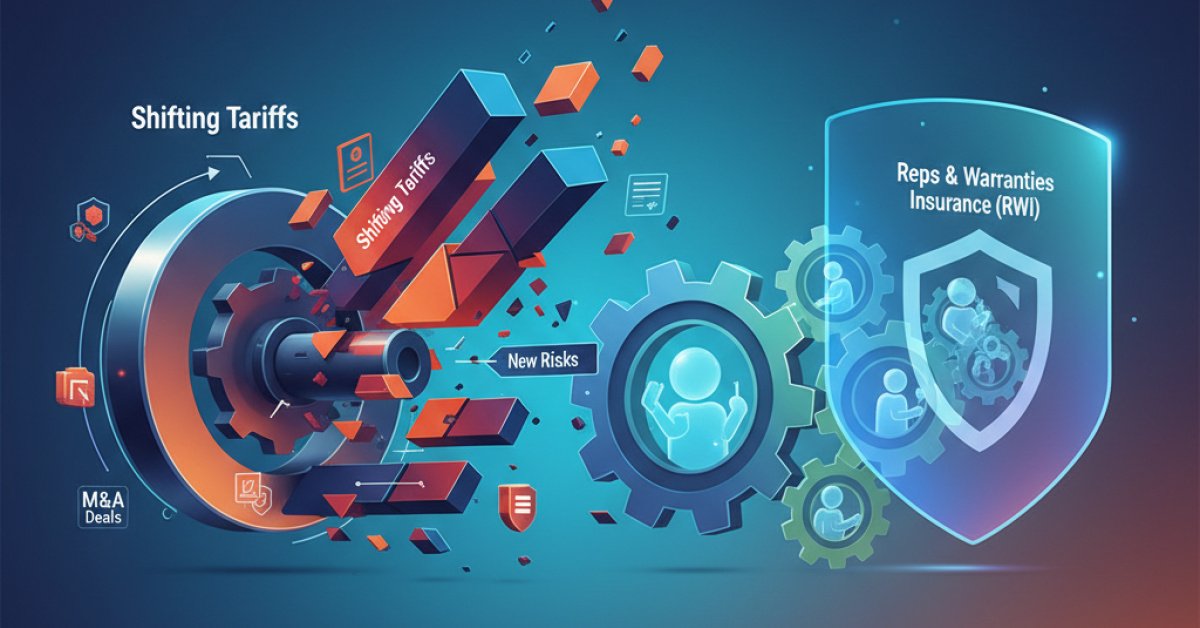
Well, that feeling of frustrating uncertainty is something the insurance industry has been grappling with on a massive scale for years, especially when it comes to tariffs.
Insurers, at their core, are in the business of prediction. They use mountains of data to figure out the likelihood of future events so they can price their policies correctly. But when huge, sweeping tariffs can be imposed seemingly overnight, it throws a giant wrench into all of that careful calculation.
That’s why a recent U.S. Supreme Court ruling limiting the president's authority on this front is such a big deal. The major industry rating agency, AM Best, basically said the decision will help to “ease uncertainty across the insurance industry.” And trust me, in the world of insurance, "easing uncertainty" is music to everyone's ears.
So, What's the Big Deal with Tariffs, Anyway?
Let's quickly break this down. A tariff is just a tax on goods imported from another country. The idea is to make foreign products more expensive to encourage people to buy domestic ones.
But it’s never that simple.
Think of it like a ripple in a pond. A tariff on steel doesn't just affect steel mills. It makes cars more expensive to build and repair. It drives up the cost of new construction, from skyscrapers to your backyard shed. It even makes household appliances cost more.
Now, put on your insurance hat. If you’re an auto insurer, your claims costs just went up because fixing a dented fender now requires more expensive parts. If you’re a property insurer, the cost to rebuild a home after a fire just skyrocketed. All of your models and pricing assumptions suddenly look shaky.
The Real Problem: It’s Not Just the Cost, It’s the Not Knowing
Here’s the thing that really keeps insurance executives up at night. It’s not just that costs are rising—they can usually model for inflation. The real problem is the unpredictability of it all.
When tariffs can be enacted broadly and without a clear, established process, the market becomes incredibly volatile. It’s like trying to drive in a thick fog. You don’t know what’s coming, so you have to slow way down, and you’re constantly worried about hitting something you can’t see.
For an insurer, this fog of uncertainty clouds everything:
- Pricing Risk: How can you accurately price a commercial property policy for next year if you have no idea whether a trade war will double the cost of rebuilding materials?
- Managing Claims: A sudden spike in repair costs can wreck an insurer’s financial projections and eat into the reserves they need to pay out claims.
- Investing Premiums: Insurers don't just sit on your premium dollars; they invest them to help pay for future claims. Widespread economic uncertainty makes those investment decisions much, much riskier.
AM Best put it perfectly. They said that “managing through unknowns is a challenge to any industry.” And for an industry built entirely on managing known risks, a flood of new, unpredictable ones is a nightmare scenario.
A Little More Clarity on the Horizon
So, what did the Supreme Court actually do? Without getting lost in the legal weeds, the ruling essentially put some guardrails on the president's power to impose these kinds of sweeping tariffs.
This isn't really a political statement for or against tariffs themselves. From an insurance perspective, it's about process and predictability. The ruling signals a move back toward a more stable, rules-based approach to trade policy.
Insurers can now operate with a bit more confidence that the rules of the game won't be completely rewritten without warning. They can look at their models for construction costs, supply chain disruptions, and economic growth with a little less fear of a sudden, policy-driven shock.
This decision helps lift some of that fog. It doesn’t eliminate all the uncertainty in the world, of course, but it removes one massive, unpredictable variable from the equation.
What This Means for the Rest of Us
Okay, this might all sound like high-level industry talk, but it does trickle down to all of us who buy insurance.
When insurance companies can operate in a more stable and predictable environment, it’s good for everyone. It means they can price their products more accurately and confidently, which can help temper wild swings in premiums.
More importantly, it helps ensure that the insurance companies we rely on remain financially strong. The last thing anyone wants is for the company that holds their homeowner's or business policy to be caught off guard by massive, unexpected costs. We need them to be stable so they can be there to pay claims when we need them most.
Ultimately, this court ruling is a step back toward a bit of normalcy. And in a world that feels increasingly unpredictable, a little bit of stability in an industry as fundamental as insurance is something we can all be thankful for.