Have you ever been stuck in a massive traffic jam, only to see it was caused by something tiny, like one car pulled over on the shoulder? You get a little flicker of hope when you see the flashing lights, thinking, "Great, they're clearing it, things will get moving now!" But then... nothing changes. The traffic stays just as bad.
That’s a pretty good way to think about the recent news of some offshore oil production starting back up off the coast of California.
When we hear "more oil," our brains immediately jump to "cheaper gas." It's a natural reaction, especially with the prices we've all been paying at the pump. So, when Houston-based Sable Offshore got the green light to restart production—to the tune of about 50,000 barrels a day—it felt like that flicker of hope.
But then California's Attorney General, Rob Bonta, basically came out and said, "Not so fast." In an interview, he stated that this restart will have "no impact" on oil prices. It feels a bit like a letdown, right? But as someone who spends their days looking at risk, I can tell you the real story here is a lot more interesting, and it has some surprising connections to the insurance you and I rely on every day.
So, What's the Real Deal with This Oil?
Let's put this into perspective. Fifty-thousand barrels of oil a day sounds like a massive amount. And for a single operation, it is. But when you zoom out and look at the global picture, it's a different story.
The world consumes something like 100 million barrels of oil every single day.
Think of it like this: Imagine the global oil supply is a giant swimming pool. This new California production is like adding a single bucket of water to it. Sure, it's more water, but it's not going to make the water level rise in any noticeable way.
That’s why the AG can say with confidence that it won't move the needle on prices. The global market is just too vast. It's driven by huge players like OPEC, geopolitical events, and massive economies. A single, relatively small operation in California just doesn't have the power to change the game.
But here's the thing. Just because it won't lower your gas prices doesn't mean it's meaningless. In the world of insurance, this "bucket of water" creates some very real ripples.
The Big Question: What Does This Mean for Insurance?
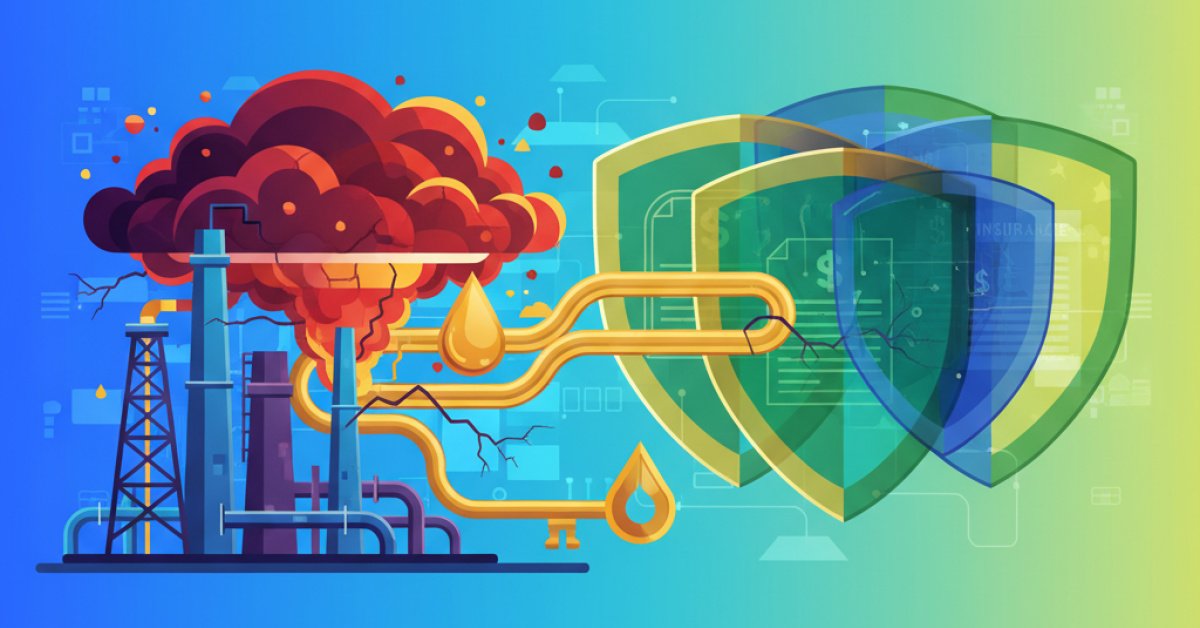
Okay, so if this oil isn't going to save us money at the pump, why should we care? Because the act of drilling itself introduces risk. And where there’s risk, you can bet the insurance industry is paying very close attention.
The Obvious Risk: Spills and Environmental Damage
This is the big one, the one that probably comes to mind first. Offshore drilling is a high-stakes operation. When things go wrong, they can go spectacularly wrong. We all remember the images from disasters like the Deepwater Horizon spill.
For insurers, this isn't just a sad news story; it's a multi-billion dollar catastrophe scenario. They are the ones on the hook for:
- Cleanup Costs: The astronomical expense of trying to contain and remove oil from the ocean.
- Environmental Liability: The cost of damage to marine life, coastlines, and ecosystems.
- Business Interruption: Claims from local businesses—think fisheries, tourism, and restaurants—that lose their livelihoods when a coastline is ruined.
Every time a new rig starts up or an old one is restarted, the potential for one of these massive claims gets switched back on. Underwriters have to calculate the odds and price policies accordingly. More drilling activity, especially with aging infrastructure, can make certain types of commercial liability insurance harder to get and more expensive for the energy companies.
The Hidden Risk: Political and Regulatory Uncertainty
There's another, more subtle layer of risk here. The Attorney General's public statement isn't just a comment on economics; it's a political signal.
It highlights the tension that often exists between state governments, federal regulators, and private companies. When you have powerful officials publicly questioning or opposing these projects, it creates an environment of uncertainty.
What does that mean for insurance? Insurers hate uncertainty. It makes it incredibly difficult to predict the future. Will there be new lawsuits? Will regulations suddenly change, making the operation unprofitable or non-compliant overnight? This is what's known as "political risk."
For the companies involved in the drilling, this uncertainty can drive up the cost of their insurance policies, because the insurer has to price in the chance that a sudden political or legal shift could cause a major financial loss.
Don't Forget the Connection to Your Own Policies
Now, you might be thinking, "Okay, that's interesting for big oil companies, but what about my car insurance?" It’s a fair question. The connection is less direct, but it's definitely there.
While this specific project won't lower oil prices, our continued deep reliance on a volatile global oil market is a major driver of the inflation that does affect your premiums.
Think about it:
- Auto Insurance: The cost to repair a car after an accident is skyrocketing. Why? Because the plastic parts are made from petroleum, the paint is petroleum-based, and it takes a lot of fuel to transport all those parts around the country.
- Home Insurance: The cost to rebuild a home has also shot up. Asphalt shingles for your roof? Petroleum. The fuel for the trucks that bring lumber and materials to your site? All of it is tied to the price of oil.
When the cost of everything goes up, the amount an insurer has to pay out for a claim also goes up. And unfortunately, that eventually gets passed on to all of us in the form of higher premiums.
So, while the Sable Offshore restart is just a drop in the bucket, it's a drop in a bucket we're all still very much dependent on. It's a reminder that the bigger economic forces are still at play, keeping pressure on the costs that ultimately determine our insurance rates.
The next time you see a headline about a new oil project, you'll know to look a little deeper. It's rarely as simple as "more oil, lower prices." From an insurance perspective, it's a complex web of environmental, political, and economic risk. And understanding that is the first step to really understanding the forces that shape the costs of keeping our world protected.