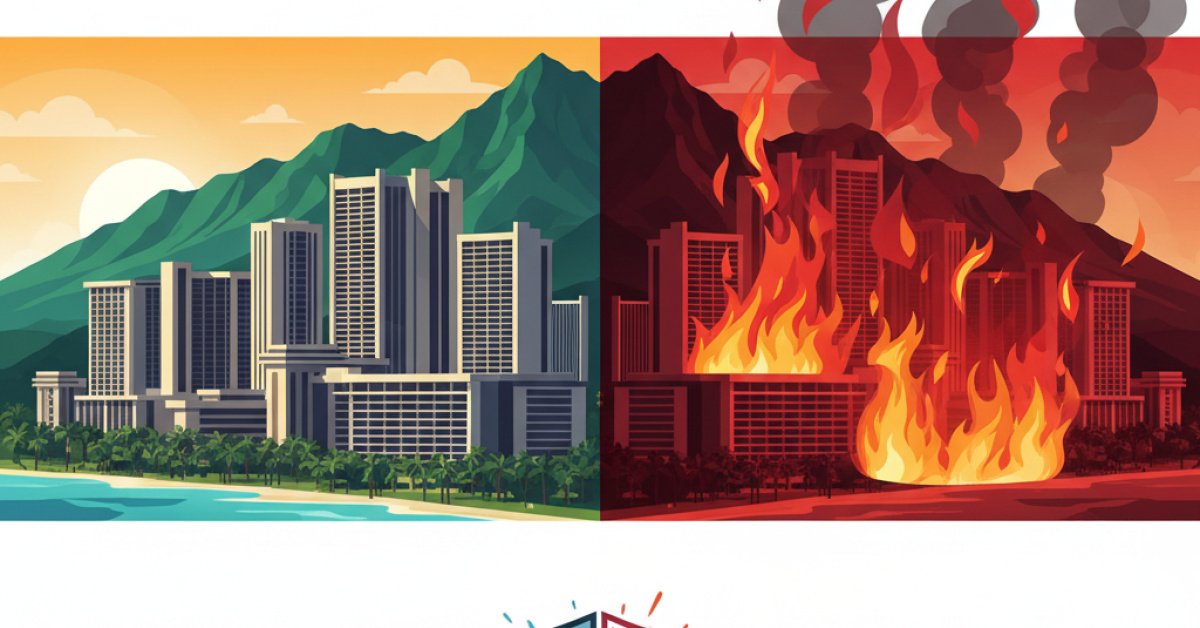
When you picture Hawaii, you probably think of postcard-perfect beaches, lush green mountains, and the gentle strum of a ukulele. It's a place we all dream of. What you don't picture is a fire alarm blaring in your hotel hallway in the middle of the night.
But lately, that nightmare scenario is becoming a more pressing reality. There’s a troubling trend bubbling just beneath the surface of paradise, and it’s something we need to talk about. Recent, tragic fires are exposing a serious gap in the system designed to keep people safe.
And honestly, it’s a bit of a wake-up call for all of us, whether you own property there, plan to visit, or work in the insurance world like I do.
So, What’s Really Going On?
Here’s the thing: Hawaii has state laws that require regular fire safety inspections for places like hotels, condos, and other accommodations. You’d assume that means someone is regularly walking through these buildings, checking sprinklers, making sure fire exits are clear, and generally kicking the tires on safety protocols.
But that assumption might be a dangerous one.
It turns out that across most of the state's counties, these critical inspections are being done inconsistently, if at all. It’s a systemic problem that’s been flying under the radar, but the consequences are starting to become tragically clear.
Just last fall, in October and November, two separate structure fires in Hilo on the Big Island claimed three lives. These weren't just random accidents; they were stark reminders of what can happen when safety systems fail. And it begs the question: could they have been prevented?
A System Under Strain
You might be wondering, why is this happening? It’s not a simple answer, but it seems to boil down to a classic case of resources not meeting requirements. The county fire departments are the ones tasked with these inspections, and many of them are simply stretched too thin.
Think of it like a single lifeguard trying to watch a beach that’s a mile long. They can do their best, but they’re inevitably going to miss things.
This isn’t just a paperwork problem. It’s a life-and-death issue. When a building hasn't been properly inspected, it becomes a black box of risk.
- Are the fire suppression systems actually working?
- Are the escape routes clearly marked and unobstructed?
- Has new construction or renovation introduced unforeseen fire hazards?
Without regular inspections, nobody really knows the answers until it’s too late. And for an insurer, underwriting a property with that many unknowns is a massive gamble.
The Insurance Ripple Effect
Okay, let's talk about how this all connects to the world of insurance. Because when risk goes up, you can bet that insurance is going to be right in the middle of the conversation.
When an insurance company decides to cover a hotel or a large condo building, they’re not just guessing. They use a mountain of data to calculate the risk, and a huge piece of that puzzle is the building's safety record. A clean, up-to-date inspection report is like a gold star. It tells the insurer, "Hey, this property owner is doing their part. The risk here is managed."
But what happens when those reports are missing or years out of date?
The insurer is now flying blind. They have to assume the worst. This "assumed risk" can lead to a few things, and none of them are good for property owners:
- Skyrocketing Premiums: If the risk is higher (or simply unknown), the price to insure it is going to go up. It’s that simple. We could see significant premium hikes for commercial properties across Hawaii if this trend continues.
- Stricter Underwriting: Insurers might start demanding their own private inspections before they’ll even offer a policy. They might also add specific exclusions or require property owners to install expensive new safety systems.
- Carriers Pulling Back: In a worst-case scenario, some insurance carriers might decide the risk in Hawaii is just too unpredictable. We’ve seen it happen in places like Florida and California with hurricanes and wildfires. When carriers leave a market, it creates a crisis, leaving property owners with fewer, and far more expensive, options.
It’s a ticking time bomb, and the recent fires are the sound of the clock getting louder.
What Can You Do About It?
This all sounds pretty grim, I know. But feeling helpless doesn’t solve anything. Whether you're a property owner or a traveler, awareness is the first step toward safety.
For Property and Business Owners
Don't wait for the county inspector to show up—they might be a long time coming. You need to be proactive.
- Self-Audit: Hire your own certified fire safety inspector to do a thorough review of your property. It's an expense, but it pales in comparison to the cost of a fire.
- Document Everything: Keep meticulous records of your safety checks, maintenance on sprinkler systems, fire drill logs, and any upgrades you make. If you ever have to file a claim, this documentation will be your best friend.
- Talk to Your Agent: Have an honest conversation with your insurance agent about the situation. They can help you understand your policy and make sure you have the right coverage in place for this evolving risk landscape.
For Travelers
Your vacation safety is ultimately in your hands. You can’t just assume the hotel you booked is 100% compliant.
- Do a Quick Check: When you get to your room, take two minutes. Locate the two nearest fire exits. Make sure your smoke detector has a little blinking light. It’s a small thing that can make a huge difference.
- Ask Questions: It's perfectly okay to ask the front desk about their last fire inspection. Their answer (or lack thereof) might tell you a lot.
- Have a Plan: Talk with your family about where you would meet outside if you had to evacuate. It might seem like overkill, but a 30-second conversation can prevent a panic-filled search in a real emergency.
This situation in Hawaii is a powerful reminder that safety regulations are only as good as their enforcement. It’s not just about a government process; it’s about protecting properties, businesses, and most importantly, human lives. It's a story we'll be watching closely, as it will undoubtedly shape the insurance market in the islands for years to come.