Have you ever really thought about who your insurance company is? For a lot of us, it’s just a name on a bill—one of the big national players you see on TV. But for generations, many people, especially in rural areas, have been covered by smaller, local companies like their state’s Farm Bureau.
These aren’t giant, faceless corporations. They’re often “mutual” insurance companies, which is a fancy way of saying they’re owned by the policyholders themselves. Think of it like a member-owned co-op.
So, when news breaks that a company like Louisiana Farm Bureau is being sold, it’s not just another corporate merger. It’s a sign of a much bigger, more troubling trend that’s putting these local insurers in a fight for their lives. Regulators just gave the green light for this sale, and frankly, it’s a story we need to pay attention to.
Let’s break down what’s really going on here.
First Off, What is a "Demutualization"?
Okay, that’s a mouthful of a word. "Demutualization." It sounds complicated, but the idea is actually pretty simple.
Imagine you’re a member of a local credit union. You’re not just a customer; you’re technically a part-owner. The credit union exists to serve you and the other members. Now, imagine that credit union decides to become a regular bank. It sells itself, and suddenly it’s owned by stockholders who are looking for a profit. As a member, you might get a one-time payout, but the entire structure and mission of the organization has changed.
That’s basically what demutualization is in the insurance world.
A mutual insurer like Louisiana Farm Bureau is owned by its policyholders. When it demutualizes and sells itself, it converts into a stock company, owned by shareholders. The primary reason a company does this? To get a huge injection of cash and access to capital markets.
And right now, companies like Louisiana Farm Bureau desperately need that cash.
The Real Problem: A Shrinking Financial Cushion
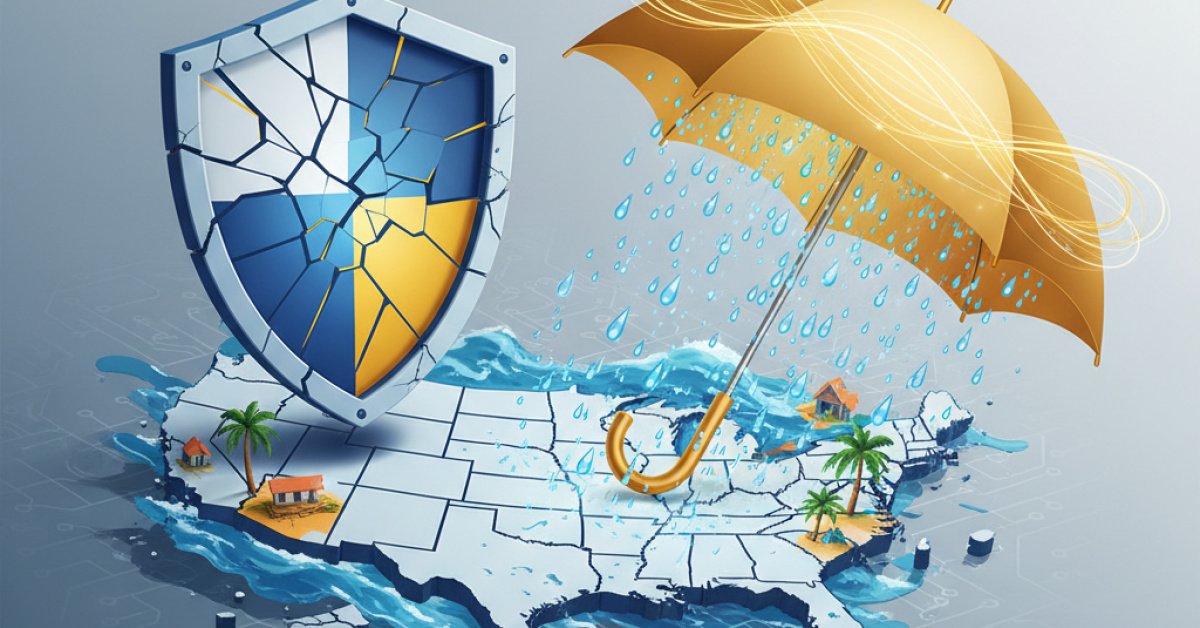
Every insurance company has something called a "surplus." You can think of it as the company’s ultimate rainy-day fund or its financial shock absorber. It’s the money left over after they’ve paid all their claims and expenses. This surplus is absolutely critical—it’s what allows them to pay out claims after a massive catastrophe without going bankrupt.
Here’s the thing: for insurers in coastal states like Louisiana, it hasn’t just been raining. It’s been a relentless series of hurricanes.
Year after year, storms have been getting stronger and more frequent. Each one brings a tidal wave of claims—for ruined homes, flooded cars, and damaged businesses. An insurer pays out those claims from its surplus.
After one bad storm, the surplus takes a hit, but it can usually recover. But what happens when you get hit by major storms again, and again, and again?
That surplus starts to shrink. And when it gets too low, the company gets into very dangerous territory. They risk not having enough money to pay future claims, and regulators start getting very nervous. This is exactly the situation that has been unfolding in Louisiana and other coastal states. The financial cushion has worn dangerously thin.
Why Small, Single-State Insurers Are So Vulnerable
You might be wondering, why don’t the big national carriers have this same problem? It’s a great question, and the answer comes down to one simple word: diversification.
A giant national insurer writes policies in all 50 states. If a hurricane devastates Louisiana, it’s a huge financial blow, no doubt. But at the same time, they’re still collecting premiums from calm, sunny California, from a quiet year in the Midwest, and from a blizzard-free winter in New England. Their risk is spread out. The good years in one place help offset the bad years in another.
Now think about a single-state mutual like Louisiana Farm Bureau. All of their eggs are in one basket. Their entire book of business is concentrated in one state that happens to be a magnet for hurricanes.
When a storm hits, it doesn’t just affect a small piece of their business—it can impact their entire business. There’s nowhere to hide. They don’t have premiums coming in from Ohio or Oregon to soften the blow. This geographic concentration is their Achilles' heel, and in an era of intense climate events, that heel is being targeted relentlessly.
The Inevitable Result: Sell or Sink
So, what do you do when you’re a smaller company, your financial cushion is nearly gone, and you see more storms on the horizon?
Your options are grimly limited. You can try to raise rates dramatically, but regulators might not approve it, and customers might flee. You can pull out of coastal areas, but that might be your entire market. Or, you can look for a lifeline.
And that lifeline is often consolidation.
By selling to a larger, better-capitalized company, the smaller mutual ensures its policyholders are protected. The new parent company comes in with a much, much larger surplus, stabilizing the ship and guaranteeing that claims can be paid.
It's a survival move. This sale of Louisiana Farm Bureau isn't a sign of failure in the traditional sense; it's a sign of the overwhelming financial reality of insuring a hurricane-prone state. It reflects a difficult, but necessary, choice to ensure promises made to policyholders are kept.
What we’re seeing is a culling of the herd. The market is forcing these smaller, geographically concentrated insurers to find a safe harbor with a bigger partner. This isn't the first deal of its kind, and I guarantee you it won’t be the last. Keep an eye on other single-state insurers in Florida, Texas, and the Carolinas. They are all facing the very same storm.