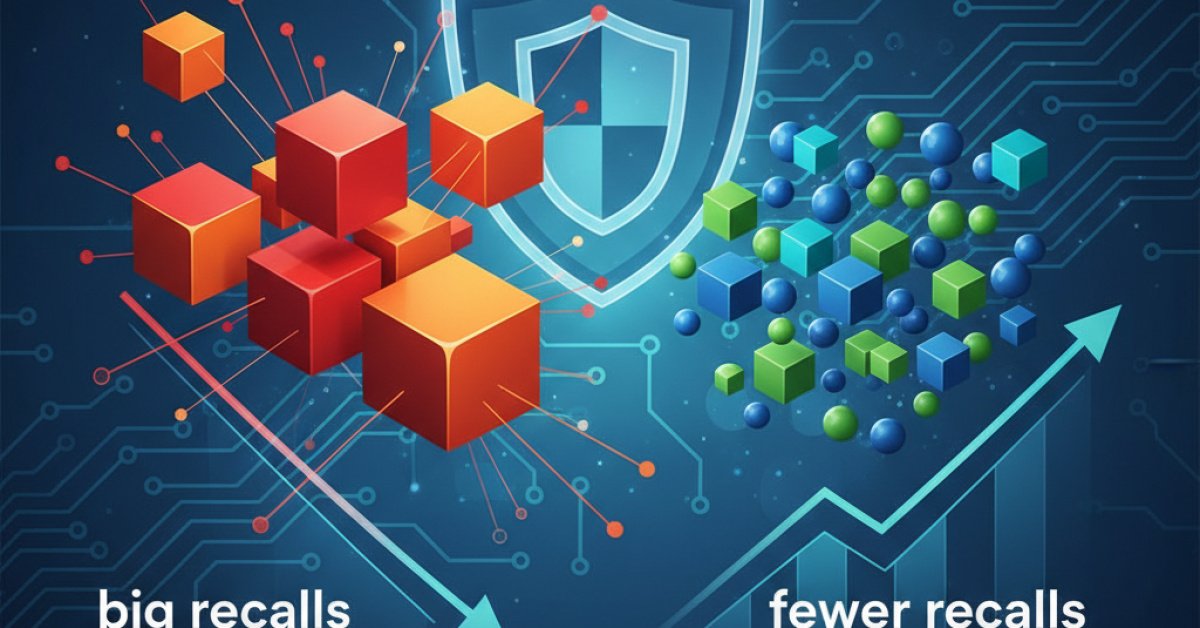
If you felt like you were hearing about a new product recall almost every day last year, you weren’t imagining it. 2025 was, to put it mildly, a chaotic year for manufacturers and anyone selling physical goods. The sheer volume of products pulled from shelves was staggering.
Let’s just look at the raw numbers for a second. According to a recent deep dive by the folks at Sedgwick, we saw almost 3,300 separate recall events. But the real headline is the number of individual items affected: nearly 858 million units. That’s a 26% jump from the year before, and it’s a clear signal that the ground is shifting under our feet.
This isn’t just some abstract statistic. For businesses, this is a five-alarm fire. A recall can be devastating, hitting everything from your bottom line to your hard-earned reputation. So, let’s talk about what really happened in 2025 and, more importantly, what it means for you moving forward.
A Tidal Wave of Recalls: Who Got Hit Hardest?
This surge wasn’t spread evenly across the board. It was more like a series of targeted storms that slammed into specific industries, and some of the numbers are just eye-popping.
Think about the stuff you buy every day. The consumer products sector had its highest number of recalls in nearly two decades, with 414 separate events. The FDA also had its hands full, logging 571 food and drink recalls—the most we’ve seen in nine years.
And it gets even crazier when you look at the volume:
- Pharmaceuticals: The number of recalled drug units shot up by a jaw-dropping 140%.
- Agriculture: The USDA saw a 239% jump in the weight of recalled products, hitting an 11-year high of over 67 million pounds.
- Medical Devices: More than 490 million units were recalled, the second-highest total in 20 years.
Interestingly, it wasn't bad news for everyone. The auto industry actually saw a dip in recalls, with both the number of events and affected vehicles hitting a 13-year low. It just goes to show how volatile and unpredictable this environment has become.
More Than Just Recalls: The Watchdogs Are Biting Harder
Here’s the thing that really gets my attention as someone who watches this space closely: it’s not just that more products are being recalled. The government agencies responsible for oversight are getting much, much more aggressive.
We’re not just talking about strongly worded letters anymore. The Consumer Product Safety Commission (CPSC) pursued its first-ever criminal prosecution. Let that sink in. Executives at a dehumidifier company were sentenced to more than three years in prison. This is a massive shift.
And the financial penalties are becoming astronomical. One portable air conditioner manufacturer was hit with a $16 million civil penalty—the maximum allowed by law. We also saw multi-million dollar settlements with smartwatch and dry shampoo companies, all for the same reason: failing to report product defects quickly enough.
The message from regulators is crystal clear: "We are not messing around."
So Why Is All This Happening Now?
A huge part of this story is the political climate. The priorities of the Trump administration in 2025 completely reshuffled the deck for businesses.
On one hand, there was a big push to reduce regulations, which led to budget cuts at federal agencies. But on the other hand, things like tariffs on imported materials, vehicles, and parts created massive uncertainty in supply chains. You can’t be sure of your product’s safety if you’re not even sure where you’ll be getting your components next month.
This created a strange and challenging environment. For example, the administration actually proposed eliminating the CPSC entirely. Yet, at the same time, the agency went on one of its most aggressive enforcement sprees ever, even as its leadership was in flux. It's a classic case of the right hand not knowing what the left is doing, and businesses are caught in the middle.
How Different Industries Are Feeling the Squeeze
Let's zoom in a bit, because the pressures are unique depending on what you make or sell.
Food and Beverage: The Rules Are Changing
For anyone in the food business, two big things are on the horizon. The FDA is finally looking to close a loophole for ingredients that are "generally recognized as safe" (or GRAS), which could force a ton of companies to re-evaluate their recipes. On top of that, the USDA now requires gluten verification during inspections. These aren't minor tweaks; they're fundamental operational changes.
Pharmaceuticals: Pulled in Two Directions
If you're in the pharma world, you're probably getting whiplash. The FDA is trying to speed up drug approvals, which sounds great. But at the same time, they're cracking down on advertising, expanding remote inspections, and pushing for lower drug prices. It's a real balancing act between moving faster and being more careful than ever.
Medical Devices: The Future is Watching
For medical device makers, the focus is shifting to what happens after a product hits the market. The FDA expects robust post-market surveillance. And with AI-powered software becoming more common in devices, regulators want to see a plan for managing that technology throughout the product's entire lifecycle.
What's Coming in 2026? It's Time to Prepare.
If you’re hoping for things to calm down in 2026, I wouldn’t hold your breath. All signs point to another dynamic year. Regulatory agencies, especially the FDA, are expected to keep rolling out new rules and priorities.
Here’s what you should be watching for:
- Automotive: Get ready for new rules on electronic recall notifications and a rapidly changing framework for autonomous vehicles.
- Food and Drink: Expect draft regulations on ultra-processed foods and a continued focus on allergen labeling. Supply chain safety will remain a hot-button issue.
- Pharma & Medical Devices: Keep an eye on ongoing investigations into imported products. More tariffs could be on the way, which would directly impact your supply chain and costs.
So, what can you actually do about all this? Hiding your head in the sand is not a strategy. The advice from experts like Sedgwick is to get proactive. When agencies release draft regulations, submit your comments. This is your chance to have a voice in the rules that will govern your business.
Internally, it's time for a serious check-up. Are your product safety protocols and recall management plans truly ready for this new reality? Because in this environment, having a rock-solid plan isn't just a competitive advantage anymore. It's essential for survival. It's how you protect your brand, avoid crippling financial penalties, and show your customers you’ve got their back.