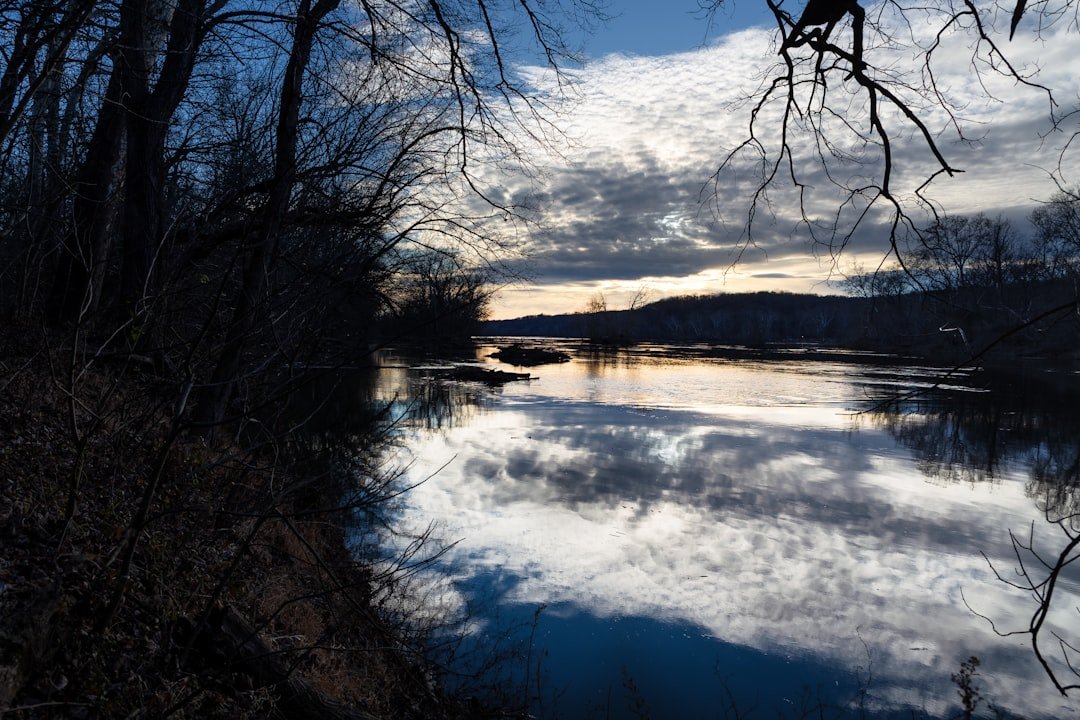
Imagine not being able to open your windows at night. Not because it’s cold, but because the air smells like rotten eggs and chemicals. Imagine watching a strange, toxic-looking foam bubble up in the river near your home.
This isn't a scene from a movie. For people like Steve Egger, a 72-year-old living in Southern California, it's a daily reality. He and his wife live near the Tijuana River, and for them, the constant stench is more than just an annoyance. They, along with thousands of their neighbors, believe it's making them sick.
We're talking about a constant flow of raw sewage, industrial waste, and chemicals coming across the border from Mexico and emptying right into their backyards and, eventually, the Pacific Ocean. It’s a full-blown environmental crisis, but today, I want to talk about something that often gets overlooked in these situations: the absolute nightmare it creates for your insurance.
Because when your home and your health are under attack from an invisible enemy like pollution, you’d think the safety nets you pay for every month—your homeowners and health insurance—would be there to catch you. Right?
Well, it's not that simple. Not even close.
More Than Just a Bad Smell: The Real Health Toll
Let's be clear about what's happening here. This isn't just about a foul odor ruining a backyard barbecue. We're seeing a legitimate public health crisis unfold.
People are reporting a whole host of recurring, frustrating, and sometimes scary symptoms:
- Stomach problems
- Headaches
- Sore throats
- Respiratory issues that just won't go away
Think about the constant, low-level stress of that. You're feeling sick, your family is feeling sick, and the very air you breathe in your own home feels contaminated. It’s a constant battle, and the costs start adding up quickly. Doctor's visits, prescriptions, missed days of work... it's a huge financial and emotional drain.
This is where you'd normally lean on your health insurance. And for the immediate costs, you can. A co-pay for a doctor's visit, the cost of an inhaler—that's what it's for. But it doesn't solve the root problem, and it doesn't compensate you for the chronic nature of the issue or the diminished quality of life.
The real insurance headache, the one that can feel like a punch to the gut, comes when you look to your homeowners policy for help.
So, Does Your Homeowners Insurance Even Cover This Mess?
This is the million-dollar question, and I hate to be the bearer of bad news, but the answer for most people is a resounding "no." It’s incredibly frustrating, but here’s why.
Homeowners insurance is built on a simple premise: it covers "sudden and accidental" damage. A pipe bursts and floods your kitchen? Sudden and accidental. A tree falls on your roof during a storm? Sudden and accidental.
But a slow, creeping, ongoing sewage problem that’s been happening for years? That falls into a completely different category. Insurance companies see this as "gradual damage," and it's almost universally excluded from standard policies.
The Dreaded "Pollution Exclusion"
If the "gradual damage" clause doesn't stop a claim in its tracks, the "pollution exclusion" almost certainly will.
Flip through your own homeowners policy (I know, it's not exactly beach reading), and you will almost certainly find a section that excludes damage caused by pollutants. This is a broad, catch-all term that can include everything from industrial chemicals to, you guessed it, raw sewage.
Think of it like this: your car insurance covers you for a crash, but it won't cover slow, progressive rust damage. In the eyes of the insurer, this cross-border sewage flow is the equivalent of environmental rust. It’s not a single event; it's a chronic condition.
For homeowners, this is a devastating realization. You’re left with a property that might be decreasing in value, a home that feels unsafe, and a policy that offers no help. You can't file a claim for the smell, the potential health risks, or the simple fact that your home is now in the middle of a toxic zone.
The Impossible Burden of Proof
Let’s say you wanted to fight it. Let's say you believe you can prove the sewage has caused tangible damage to your property. The burden of proof on you, the homeowner, is massive.
You would need to hire environmental experts to test your air and soil. You'd need to scientifically link the specific contaminants from the river to the specific damage in your home. And you'd have to prove this damage wasn't a pre-existing condition or the result of poor maintenance.
It’s an uphill, incredibly expensive battle against an insurance company with a team of lawyers whose entire job is to enforce the exclusions written into your policy. For the average person, it’s simply not a fight they can win.
What Can You Actually Do?
It's easy to feel powerless in a situation like this, but there are a few things you should always do when you're facing a complex insurance situation, whether it's pollution or something else.
- Read Your Policy (Seriously): I know it’s dense, but you have to know what you’re working with. Look for the exclusions section. Pay special attention to words like "pollutant," "contaminant," "gradual damage," "seepage," and "leaks." Knowing what isn't covered is just as important as knowing what is.
- Talk to an Independent Agent: Don't just call the 1-800 number for your insurance company. Talk to an independent agent or broker who works with multiple carriers. They can help you decipher your policy and explore if there are any special add-ons (endorsements) that might offer some sliver of coverage, though for widespread pollution, this is a long shot.
- Document Everything: This is crucial. Keep a detailed log of every health symptom, every doctor's visit, every day you smell the odor, and every complaint you make to a local authority. If there's ever a class-action lawsuit or a government relief fund, this documentation will be your most powerful tool. It creates a paper trail that proves you’ve been affected over time.
This situation in Southern California is a heartbreaking example of where traditional insurance falls short. It’s a reminder that our policies are designed for specific, definable risks—not for large-scale, slow-moving environmental disasters that cross international borders.
It highlights a massive gap in the system. When the very environment around your home becomes the source of the problem, the financial and health safety nets we rely on can completely unravel, leaving families like the Eggers to fend for themselves. It’s a tough lesson, but a vital one for every homeowner to understand.