Have you ever felt that sense of dread right before you open a big bill? You know it’s coming, but you’re just not sure how bad it’s going to be. Well, it feels like the entire U.S. health care system is about to open a bill like that, and frankly, it’s not looking good.
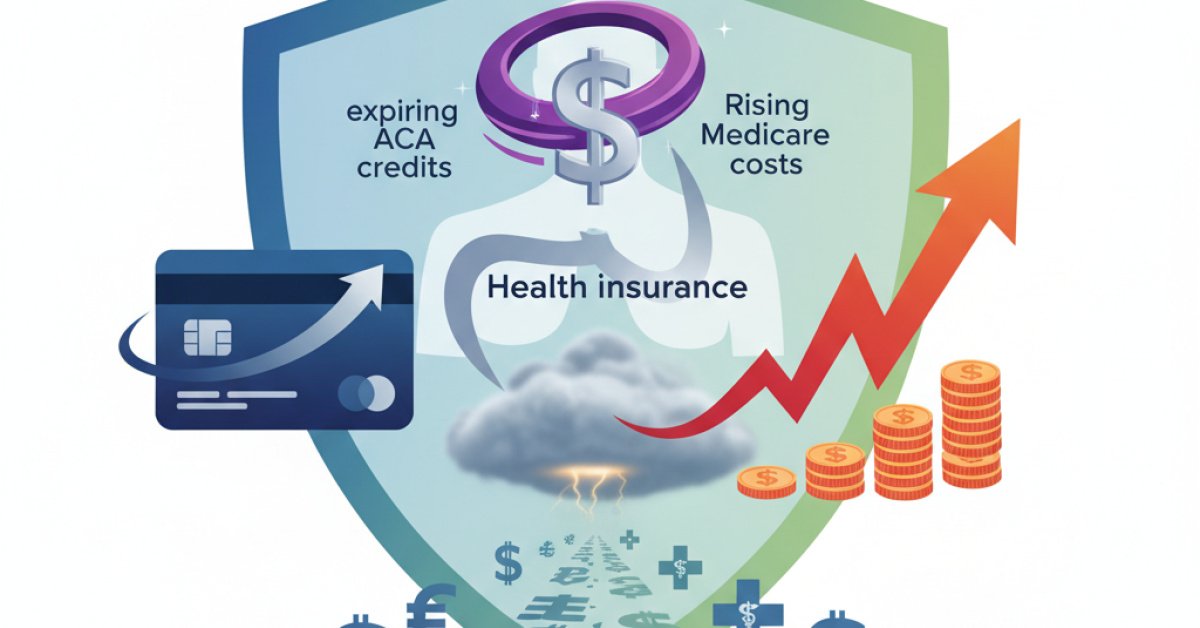
One analyst I was talking to, Brian O’Connell from InsuranceQuotes.com, called it “a triple shock.” I think his other term, “a three-headed monster,” is even more fitting. It’s not just one thing making your health insurance feel more expensive and complicated; it’s a perfect storm of three major issues hitting us all at once.
So let’s grab a coffee and talk about what’s really going on. Because when you understand what’s happening behind the scenes, you can be better prepared for what’s coming.
What Exactly Is This "Triple Shock"?
Alright, let's break down this three-headed monster. It’s not some mythical beast; it's a very real combination of financial pressures squeezing our healthcare system from every direction.
Here are the three big problems hitting at the same time:
- Expiring ACA Tax Credits: Those enhanced subsidies that have made Affordable Care Act (ACA) plans more affordable for millions are set to disappear at the end of the year.
- Skyrocketing Medicare Costs: It’s not just premiums going up; the entire structure is under strain, making it harder for seniors to get care.
- Inflation and Tariffs: The rising cost of everything, from cotton swabs to critical medications, is finally hitting the medical supply chain. Hard.
As O’Connell put it, "You have this perfect storm right now... they’re all bleeding through the medical supply chain and causing a lot of problems.” Let’s look at each of these a little closer.
The Squeeze on Medicare: It's More Than Just Higher Premiums
If you or your parents are on Medicare, you’re probably already bracing for costs to go up. And you’re not wrong. The Medicare Part B premium is projected to jump by a whopping 11.6% in 2026, going from about $185 a month to over $206. The deductible is also expected to climb to around $288.
But here’s the thing O’Connell really stressed: those rising premiums are just the tip of the iceberg.
The real story is what’s happening with doctors.
Why It Might Get Harder to See Your Doctor
Imagine your favorite local restaurant suddenly decides to stop accepting your credit card. You can still go there, but you have to pay out of pocket, which might make you think twice. That’s essentially what’s happening with some doctors and Medicare.
Physician networks for Medicare Advantage plans are getting tighter. Why? Because doctors are getting squeezed. O’Connell pointed out that physician practices are seeing their operating costs jump by 40% over the last 20 years, but the payments they get from Medicare haven’t kept up.
When you’re a doctor running a business and your costs are soaring but your income from a huge portion of your patients is flat, you have to make tough choices. Sadly, for some really good doctors, that choice is to stop accepting new Medicare patients or to leave the network entirely. This directly impacts seniors, limiting their access to the care they need and deserve.
The ACA Cliff: What Happens When Extra Help Vanishes?
For millions of families, the Affordable Care Act (ACA) has been a lifeline, and the enhanced tax credits passed a few years ago made that lifeline even stronger. But that extra help is scheduled to expire on December 31st, and if Congress doesn’t act, things could get ugly.
A recent analysis from KFF (Kaiser Family Foundation) showed that without these credits, families could see their monthly premiums more than double.
We’re not talking about a small jump here. Depending on their income, a household could suddenly face a monthly health insurance bill that’s anywhere from $378 to $1,479 higher. That’s a car payment. For some, that’s a mortgage payment.
As O’Connell said, “That's a lot of money. People are going to have a tough time affording it.”
This isn’t just a cost problem; he rightly calls it a "financial planning issue." How can you budget for that kind of increase overnight? The ripple effects are terrifying. The Congressional Budget Office estimates that 4.2 million Americans will simply become uninsured by 2035 if these credits aren’t renewed.
It begs a scary question O’Connell raised: “If households feel they can't afford it because it's just too much, and they walk away, what happens to the whole program?” It’s a cliff we’re walking toward, and no one seems sure if there’s a bridge.
Don't Have an ACA or Medicare Plan? You're Not in the Clear.
If you’re one of the majority of Americans who gets health insurance through your job, you might be thinking this doesn’t affect you. Unfortunately, this storm has a wide reach.
Employers are feeling the exact same pressures. Their healthcare costs are going up, and they have to figure out how to pay for it.
Think about it from your boss’s perspective. They want to provide great benefits to keep you and your talented colleagues happy. But there’s only so much money to go around. When their insurance provider tells them the company’s renewal rate is going up by a huge percentage, they’re stuck.
So, what do they do? O’Connell says some are already limiting coverage or reducing the number of plan options they offer. It’s an era of tough choices. They’re pinching pennies and trying to make it work without hurting their employees, but as he said, "it's not easy."
So, What Can We Do to Prepare?
Hearing all this can feel overwhelming, I get it. It feels like a huge, out-of-control problem. But there are things you can do to protect yourself and your family.
O’Connell’s advice to insurance agents is actually great advice for all of us: prepare for narrowing networks and rising premiums. Don’t let it be a surprise.
This is the time to be proactive. If you have a trusted insurance agent, schedule a planning review before your open enrollment period. Talk to them about what’s happening and what your options are. Ask the tough questions:
- Is my doctor still going to be in-network next year?
- What will my premium look like?
- Are there any supplemental plans that could help me cover rising out-of-pocket costs?
With costs going up, we're seeing more people look into things like short-term health plans or supplemental plans to fill the gaps. It’s all about knowing your options.
This isn’t a pretty picture, there’s no sugarcoating it. But being informed is your best defense. Instead of waiting for that shocking bill to arrive in the mail, you can start planning now for how you’ll handle it. It’s not just about managing costs anymore; it’s about smart financial planning for your health.