You do everything you’re supposed to do. You’ve got a job, you work hard, and you make sure to have health insurance. You pay that premium every single month, right on time. It’s that little piece of security, that safety net you count on just in case.
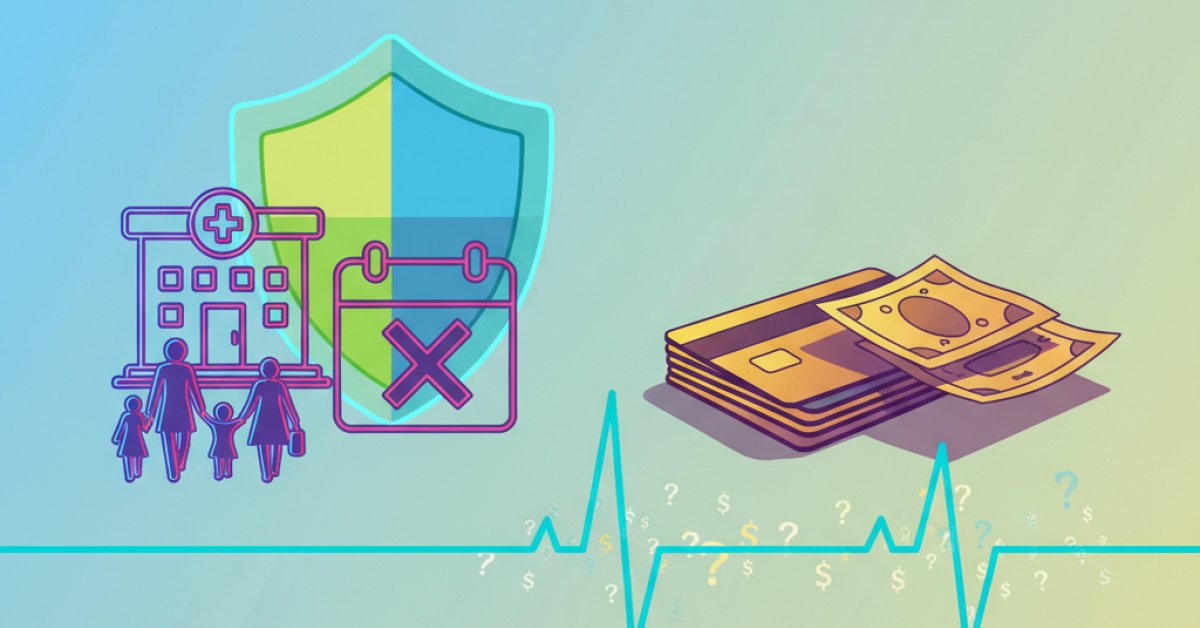
But here’s a question that might hit a little too close to home: when was the last time you skipped a doctor's visit because you were worried about the bill? Not the big, scary emergency room visit, but the routine stuff? That annual check-up, the recommended screening, or that weird ache you’ve been meaning to get looked at?
If you just winced a little, you are far from alone. There’s a quiet crisis happening in America, and it’s not just affecting the uninsured. It’s hitting people just like you—people with insurance cards in their wallets who are still being forced to choose between their health and their finances.
So, You Have Insurance. Why Are You Still Worried About Medical Bills?
It feels like a paradox, doesn't it? For decades, the message has been simple: get health insurance and you'll be okay. But the game has changed. Having an insurance card is no longer the golden ticket to affordable healthcare that it once was.
The problem is what’s hiding in the fine print: deductibles, copays, and coinsurance.
Think of it like this: you bought a top-of-the-line umbrella to protect you from the rain. But when the storm hits, you realize your umbrella has a bunch of tiny holes in it. You’re not getting completely soaked, but you’re definitely not staying dry. That’s what having a high-deductible health plan can feel like.
You’re covered for a catastrophe, sure. But for everything else—the day-to-day stuff—you’re on the hook for thousands of dollars before your insurance even starts to seriously pitch in. And for millions of families, coming up with an extra $5,000 or $8,000 for a deductible just isn't in the budget.
This is what we call being "functionally uninsured." You have a policy, but the out-of-pocket costs are so high that you avoid using it unless you absolutely have to.
The First Thing to Go: Preventive Care
When money gets tight and you’re staring down a massive deductible, you start making tough choices. And what’s the first thing to get cut from the health budget?
Preventive care.
It makes a certain kind of sense, right? A broken arm is an emergency. A high fever in your child is an emergency. But that annual physical? The colonoscopy your doctor recommended because you turned 45? The mammogram you know you should schedule? Those don’t feel urgent. They feel like something you can put off until next month, or maybe next year, when things are a little less tight.
This is the dangerous trade-off so many are forced to make. We’re gambling with our future health to solve a present-day financial problem.
Here’s the thing about preventive care: its entire purpose is to catch small problems before they become big, expensive, and life-threatening ones.
- That routine blood test can catch high cholesterol before it leads to a heart attack.
- That screening can find pre-cancerous cells when they’re easy to remove.
- That physical can spot the early signs of diabetes, giving you a chance to manage it with lifestyle changes instead of costly medications.
Skipping these appointments is like ignoring the "check engine" light in your car. Sure, you save the mechanic’s fee today. But you might be setting yourself up for a complete engine failure down the road, which will cost you ten times more to fix. The stakes are just so much higher when it’s your health.
Let's Be Honest About Why This Is Happening
This isn't a problem of personal responsibility. This is a system-level issue. The rise of High-Deductible Health Plans (HDHPs), often paired with Health Savings Accounts (HSAs), has fundamentally shifted the financial burden from insurance companies to you, the patient.
These plans were sold to us as a way to give consumers more "skin in the game," encouraging us to be smarter shoppers for healthcare. In theory, it sounds good. In reality, it has just made people afraid to go to the doctor.
It’s incredibly difficult to "shop around" for healthcare. Can you easily find out what a procedure will cost ahead of time? Rarely. Do you know if the anesthesiologist at your in-network hospital is also in-network? Probably not, until you get a surprise bill for thousands of dollars.
The system is confusing, opaque, and frankly, overwhelming. And when faced with that kind of uncertainty, the easiest and safest financial decision often feels like doing nothing at all.
It's More Than Just Money—It's a Constant Source of Stress
This isn't just a financial story; it's a human one. The constant stress of worrying about a potential medical bill takes a massive toll on our mental and emotional well-being.
It’s the anxiety of opening mail from the hospital. It’s the guilt of putting off a check-up you know you need. It’s the impossible conversations around the dinner table: "Do we pay for your prescription this month, or do we fix the car so I can get to work?"
These aren't hypothetical scenarios. They are real choices people with health insurance are making every single day. The cost of healthcare is no longer just a line item in a budget; it's a source of chronic stress that impacts our quality of life, our relationships, and our ability to plan for the future.
So, what can we do? There’s no magic wand here. The problem is big and systemic. But that doesn’t mean you’re powerless. Start by getting intimately familiar with your own insurance plan. I know, it’s about as fun as reading a phone book, but you have to. Know your deductible. Understand your copays. Ask your doctor's office for a cost estimate before a procedure. Don't be afraid to ask if there are less expensive alternatives.
And maybe, just maybe, we can start talking about this more openly. This isn't a personal failure; it's a shared struggle. The more we acknowledge that even "good" insurance isn't enough, the sooner we can start pushing for a system that actually puts our health first.