Let's talk about the Affordable Care Act (ACA) marketplace. If you work with clients who get their health insurance there, you know the enhanced premium tax credits have been a total game-changer. They’re the reason millions of people can actually afford their monthly premiums.
But here’s the thing that’s keeping a lot of us up at night: those enhanced credits are set to expire at the end of December. Poof. Gone. And without them, we’re looking at a world where premiums could shoot up for around 20 million Americans.
So, what happens next? Well, a new idea is being floated out of Washington that could completely change how we think about ACA affordability. Senator Bill Cassidy from Louisiana just introduced a plan that’s… well, it’s different. He’s suggesting we scrap the tax credits and give people something else entirely: a prepaid Health Savings Account (HSA).
This is a big deal, and if you’re advising clients, you absolutely need to get your head around what this could mean.
Let's Break Down This "Tax Credit for an HSA" Swap
Okay, so what’s actually on the table?
Right now, the ACA tax credits work like a discount coupon you apply directly to your monthly health insurance bill. It makes that premium payment smaller and more manageable. Pretty straightforward.
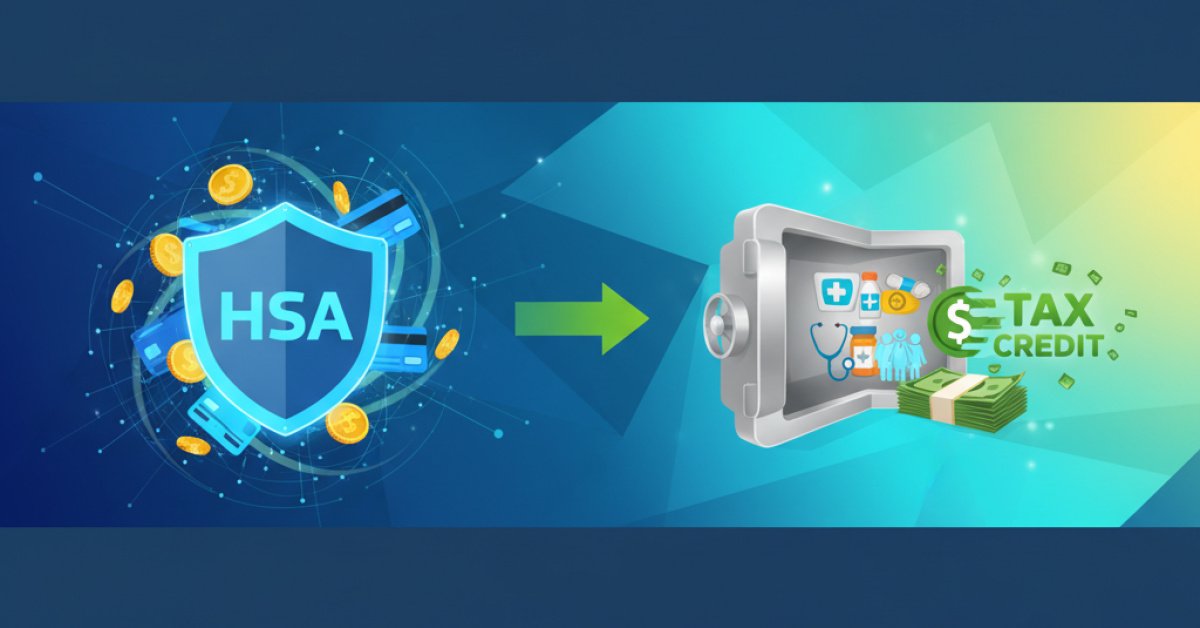
Senator Cassidy’s proposal would take the money that funds those "coupons" and do something else with it. Specifically, for people who choose a Bronze-level ACA plan, the government would instead deposit that money into a prepaid HSA for them.
Now, here's the critical difference: You can't use an HSA to pay your monthly premiums. That money is strictly for your out-of-pocket medical expenses—things like your deductible, copayments when you see a doctor, or coinsurance for a procedure.
Think of it this way: The current system helps you afford the entry ticket to the theme park (your premium). The new proposal would stop helping with the ticket price and instead give you some spending money to use on rides and food once you're inside (your medical costs). It's a fundamental shift in where the financial help is directed.
Why Focus on Bronze Plans, Anyway?
You might be wondering, "Why single out Bronze plans?" It’s a great question, and it gets to the heart of the debate.
Bronze plans are the high-deductible option on the ACA marketplace. They famously have the lowest monthly premiums, which makes them look really attractive on the surface. But the trade-off is huge. They typically only cover about 60% of your total healthcare costs, leaving you on the hook for the other 40%.
This means if you actually need to use your insurance, you could be facing a mountain of out-of-pocket costs before the plan really kicks in. We’re talking deductibles that can easily run into the thousands.
Senator Cassidy's argument is that for these specific plans, maybe it’s better to put money for those out-of-pocket costs directly into people's hands. His thinking seems to be that it's preferable to giving the money to insurance companies to lower premiums. It’s a bold take, and it’s definitely got people talking.
The Million-Dollar Question: Does This Actually Help People?
So, is this a good deal for your clients? Honestly, the jury is out, and experts are pretty divided.
On one hand, giving people an HSA gives them more direct control over their healthcare dollars. That’s a plus. But on the other hand, critics are raising some serious red flags about affordability.
Larry Levitt, who is a top policy expert with KFF (Kaiser Family Foundation), put it pretty bluntly on X (formerly Twitter). He pointed out that the enhanced ACA tax credits average about $1,000 per person. That’s a significant chunk of help for your monthly bill.
Now, compare that to the average deductible for a Bronze plan, which is a staggering $7,476 per person.
Levitt’s point is simple: "A health savings account is not going to make that deductible affordable for low-income people." He argues that while an HSA could help with out-of-pocket costs, it doesn't do you much good if you can't even afford the monthly premium to have the insurance in the first place.
It's like someone offering you a $50 gas card for a car you can't afford the monthly payment on. The gas card is nice, but it doesn't solve the core problem.
Interestingly, Levitt did add that he doesn't think this specific proposal would trigger a "premium death spiral"—that scary scenario where healthy people flee the market, leaving only sicker, more expensive people behind and causing costs to skyrocket. So, that's at least one small piece of good news.
Don't Forget the Political Mess Behind It All
We can’t talk about this without touching on the politics, because it’s messy.
The whole reason we’re even having this conversation is because the future of the current tax credits is so uncertain. You might remember the recent government shutdown drama. A big sticking point was that Senate Democrats refused to pass a funding bill unless it extended these enhanced credits. That stalemate lasted 43 days.
They eventually reached a deal to hold a vote on the extension by mid-December, but nobody is holding their breath. Getting enough Republican support for a straight extension is going to be a tough, uphill battle. The party has a long history of trying to limit or repeal the ACA, not expand its subsidies.
This political gridlock is exactly why alternative ideas like Senator Cassidy’s are starting to surface.
So, What Should We Be Telling Our Clients?
Look, this is all still in the proposal stage, but it’s a flashing sign of the kinds of changes that could be coming down the pike. As advisors, our job is to be ready.
The biggest takeaway for us is that we need to be prepared to have a very different kind of conversation with our clients. We’ll have to clearly explain the difference between premium support (tax credits) and out-of-pocket support (HSAs). We'll need to help them understand their total potential healthcare spending for the year, not just that shiny, low monthly premium.
It’s a lot to keep track of, I know. But staying on top of these conversations in Washington is how we can give our clients the best possible advice, no matter which way the political winds blow.