Have you ever felt that little ping of anxiety when a security alert pops up on your screen? For a lot of business owners, it’s a constant stream. Is this one a real threat, or just another false alarm? It’s exhausting. You’ve got a business to run, and playing cybersecurity detective wasn’t supposed to be part of the job description.
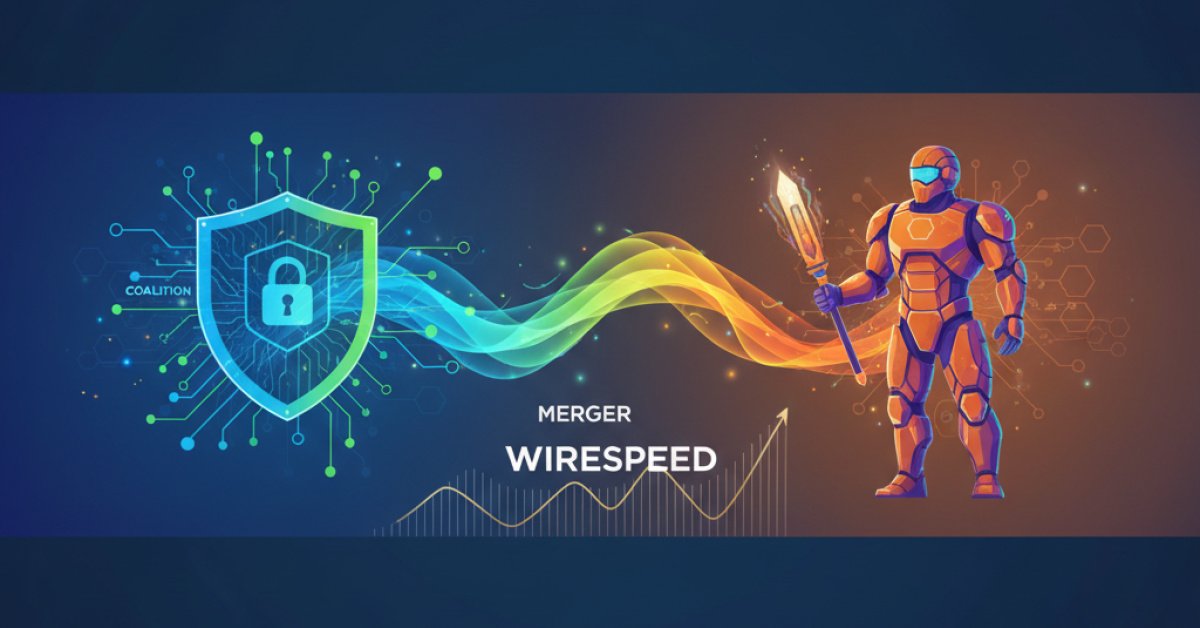
Well, some interesting news just crossed my desk that speaks directly to this problem. Coalition, a name you probably know if you’ve looked into cyber insurance lately, just announced they’ve acquired a company called Wirespeed.
Now, I know what you’re thinking. “Another acquisition? So what?” But stick with me, because this isn’t just boring corporate news. This is a huge signal about where cyber insurance is heading. It’s moving from being a simple safety net to being an active partner in your security. And honestly, it’s about time.
So, What’s This Deal All About?
Let’s break it down in simple terms.
First, you have Coalition. They’ve made a name for themselves by not just selling cyber insurance policies, but by also giving their customers tools to scan for vulnerabilities and monitor their digital footprint. Think of them as the company that sells you a great fire insurance policy, but also throws in a top-of-the-line smoke detector and fire extinguisher.
Then you have Wirespeed. These guys are the specialists. They built a platform that’s incredibly good at one thing: sifting through all those security alerts at lightning speed—we’re talking milliseconds—and figuring out which ones are the real deal. They provide what’s known in the industry as MDR, or Managed Detection and Response.
Imagine you have a hundred security cameras around your building. Wirespeed is like the hyper-caffeinated, super-intelligent security guard who can watch all one hundred screens at once and instantly spot the one person who’s actually trying to pick a lock, while ignoring all the squirrels, passing cars, and falling leaves.
By bringing Wirespeed into the fold, Coalition is basically adding that expert security guard to their package.
Why This is a Bigger Deal Than It Looks
Okay, so they’re combining forces. Why should you or I care? Because it fundamentally changes the value proposition of cyber insurance.
For years, the model was pretty simple:
- You pay your premium.
- You get hacked.
- You file a claim.
- The insurance company pays out (hopefully).
It was a reactive process. The insurance was there for you after the disaster.
But that model is getting crazy expensive. Ransomware attacks are through the roof, and the costs to clean up the mess are astronomical. Insurers realized they can’t just keep writing bigger and bigger checks. It’s not sustainable.
So, the smart ones, like Coalition, started shifting their focus. They asked a different question: “What if we could help our clients not get hacked in the first place?”
This is what they call “Active Insurance.” It’s about preventing the fire, not just paying to rebuild the house. And this acquisition of Wirespeed is a massive step in that direction.
It’s All About Speed
In a cyberattack, every second counts. The longer a hacker has inside your network, the more damage they can do. They can steal more data, encrypt more files, and burrow deeper into your systems.
The problem for most businesses isn’t a lack of alerts; it’s a flood of them. It’s called “alert fatigue,” and it’s a real thing. When you’re getting hundreds of notifications a day, it’s easy to miss the one that actually matters.
Wirespeed’s technology is built to cut through that noise instantly. By integrating this directly into their offerings, Coalition can now offer a service that doesn't just tell you there might be a problem, but can help pinpoint the real threat and start responding before you even know it’s happening.
Think of it this way:
- Old Way: Your alarm goes off. You call the security company. They try to figure out if it's a real alarm. They call you back. By the time someone gets there, the burglar is long gone with your stuff.
- New Way: The system detects a window breaking, identifies it’s a real person (not a bird), locks the internal doors, and dispatches help, all in the blink of an eye.
That’s the kind of difference we’re talking about.
What Does This Mean for the Future of Your Policy?
This move by Coalition is a bellwether for the entire industry. I truly believe we’re going to see more and more of this. Your cyber insurance provider is going to look less like a traditional insurer and more like a managed security services provider (MSSP).
In the near future, when you buy a cyber policy, you won’t just be buying financial protection. You’ll be buying an active defense system. The line between your insurance coverage and your cybersecurity stack is going to get blurrier and blurrier, and in my opinion, that's a good thing for everyone (except the hackers, of course).
For business owners, this means you get access to sophisticated security technology that you probably couldn't afford or manage on your own. For the insurer, it means they have fewer catastrophic claims to pay out. It’s a win-win.
So, the next time you hear about an insurance company buying a tech firm, don’t just dismiss it as corporate shuffling. It’s a sign that the ground is shifting beneath our feet. The idea of "insurance" is evolving, and it’s becoming a much more hands-on, proactive partnership. And in the wild world of cybersecurity, that’s exactly the kind of partner you want in your corner.