Let’s be honest for a second. When you hear about massive cyber-attacks on the news, it’s easy to think of them as something that happens to other people. You know, the huge multinational corporations or government agencies. It feels distant, like a problem for a well-staffed IT department to handle.
But what if I told you that right here in the UK, businesses just like yours are under siege? And we now have the numbers to prove it.
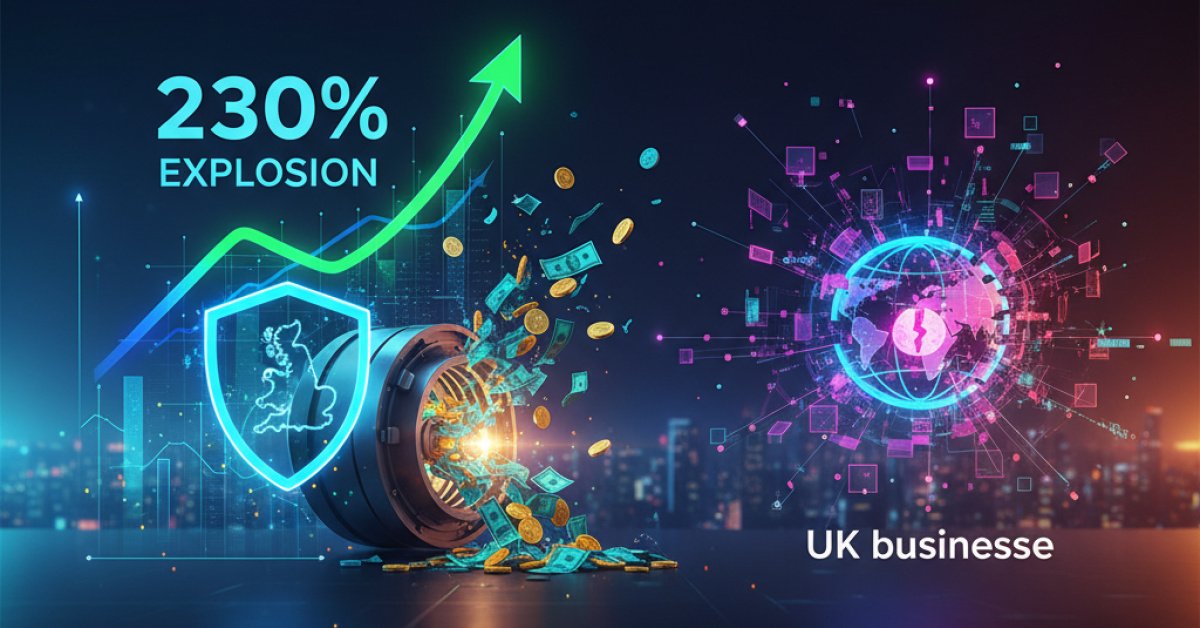
The Association of British Insurers (ABI) just dropped some figures that genuinely made me sit up and take notice. In 2024, insurers paid out a staggering £197 million in cyber claims to UK businesses. That’s a huge number on its own, but here’s the part that really tells the story: it’s a 230% increase from the year before.
Let that sink in. Not 23%. Two hundred and thirty percent. That's an extra £138 million that insurers paid out to help businesses get back on their feet after a digital disaster. This isn't just a statistic; it's a massive red flag waving for every single business owner in the country.
So, Just How Big Was This Jump?
It’s one thing to see a percentage, but it’s another to really feel its weight. Imagine your weekly grocery bill suddenly jumping from £100 to £330 for the exact same items. That’s the kind of gut-punch shock we’re talking about here.
This isn’t a slow, steady increase we’ve been seeing over a decade. This is an explosion. It tells us that the threat landscape has changed dramatically and quickly. The cybercriminals have gotten more aggressive, their tools have become more sophisticated, and UK businesses are feeling the pain.
What we're seeing is a direct reflection of a brutal reality: cyber-attacks are more frequent, more severe, and more costly to fix than ever before. And insurers are the ones on the front lines, writing the checks to clean up the mess.
What's Driving This Cybercrime Wave?
So, where is all this coming from? Is it just random bad luck? Not at all. The ABI’s data points a very clear finger at two major culprits: malware and ransomware.
You’ve probably heard these terms thrown around, but let’s quickly break down what they mean for a real business.
Imagine you’re an accountant in the middle of tax season. You click on what looks like a legitimate email from a client, and suddenly, everything freezes. A terrifying message pops up on every computer in the office: "Your files are encrypted. Pay us £50,000 in Bitcoin within 48 hours, or they will be deleted forever."
That’s ransomware. It’s digital extortion, plain and simple.
Your entire business grinds to a halt. You can't access client records, you can't file returns, you can't even send an email. Every minute you’re offline, you’re losing money and trust. This isn't an IT headache; it's a full-blown business crisis. And it’s happening to businesses of all sizes, every single day.
Okay, But What Does This Mean for My Business Insurance?
This is the million-dollar question, isn't it? When claim costs skyrocket like this, it sends ripples through the entire insurance industry. And those ripples will eventually reach your shore.
Here’s what you can likely expect:
- Tougher Questions: Getting cyber insurance used to be a relatively simple process. Now? Insurers are digging deep. They want to know everything about your security. Do you use multi-factor authentication? Do you train your staff to spot phishing emails? Do you have regular backups? If you can't answer "yes" to these questions, you might find it harder—and more expensive—to get coverage.
- Rising Premiums: This one is just simple math. When insurers pay out way more in claims, they have to adjust their pricing to remain stable. The days of cheap, catch-all cyber policies are likely behind us. The price will start to more accurately reflect the very real risk.
- A Focus on Prevention: Insurers are realizing it’s better to help you prevent a fire than to pay to rebuild the house. Many are now offering resources, tools, and partnerships to help their clients improve their cybersecurity before an attack happens. Think of it as a partnership, not just a policy.
Essentially, the insurance world is adapting. They’re no longer just willing to write a check after the fact; they want to be confident that you’re doing your part to lock the digital doors and windows first.
It’s Not Just About the Ransom Payout
One of the biggest misconceptions about cyber insurance is that it’s just “ransomware insurance.” People think its only job is to pay the criminals if you get hacked. But that’s just one small piece of the puzzle.
When a business makes a claim, the payout often covers a whole host of incredibly expensive services. Think of your cyber policy as an emergency response team on retainer. When you make that call, they swoop in to manage the crisis.
The claim payout—that £197 million we’re talking about—is often spent on things like:
- Business Interruption: This is huge. The policy can cover the income you lose while your systems are down and you can’t operate. For many businesses, this is the part that truly saves them from bankruptcy.
- IT Forensics: You need experts to figure out how the hackers got in, what they took, and how to kick them out for good. These specialists are not cheap.
- Data Recovery: Trying to restore your systems and data from backups (if you have them!) is a complex and costly process.
- Legal and Regulatory Costs: If customer data was stolen, you have legal obligations to notify them. You could also face hefty fines from regulators (like under GDPR). Your policy can help cover these legal bills and penalties.
- Crisis Management & PR: A cyber-attack can destroy your reputation. A good policy will provide funds for a public relations team to help you manage communication with your customers, suppliers, and the media to rebuild trust.
When you look at that list, you start to see why the claim amounts are so high. The ransom itself is often just the tip of the iceberg. The real cost is in the cleanup and recovery, and that’s where a solid cyber insurance policy truly proves its worth.
These numbers from the ABI aren't meant to scare you. They're meant to be a wake-up call. The threat is real, it's growing, and it's hitting businesses right here at home.
Having the right insurance is no longer a "nice-to-have"; it's a fundamental part of a modern business's survival kit. But it's also a two-way street. You need to take your own cyber hygiene seriously, too. The conversation you have with your broker about your cyber coverage today might just be the most important one you have all year. It could be the one that keeps your doors open tomorrow.