Let’s be honest for a second. If you’re a business owner, the thought of an OSHA inspector showing up unannounced is probably enough to make your stomach do a little flip. We’ve all heard the stories, right? The surprise visits, the clipboards, the potential for hefty fines. It’s a common fear.
But what if I told you that, for most businesses, that fear is based on a huge misconception? What if the real danger isn’t the inspector who might show up, but the one who won’t?
A tragic story out of West Virginia recently brought this into sharp focus. Two workers died in a violent chemical reaction at a facility near Charleston. It’s a heartbreaking situation, and when you dig into the details, you find something startling. The facility had been cited for safety violations back in 2018. But that didn't mean inspectors were keeping a close eye on them. Why? Because they simply can't.
The Shocking Math Behind OSHA Inspections
Here’s the number that should make every business owner pause: In West Virginia, there are roughly 60,000 workplaces under OSHA’s jurisdiction. And to inspect all of them? They have a team of just six compliance officers.
Six.
Let that sink in. That’s one inspector for every 10,000 workplaces.
Think of it like this: Imagine trying to patrol an entire major city with just a handful of police officers. It’s impossible, right? They can’t be everywhere at once. They can really only respond to emergencies after they’ve already happened. That’s the reality of the situation with workplace safety oversight in many places. The idea that a government agency is proactively checking up on every business to make sure it’s safe is, frankly, a fantasy.
So, Who Is Actually Minding the Store?
This isn't a knock on the inspectors themselves. These are dedicated people doing a tough job with incredibly limited resources. The problem is the sheer scale. They are spread so thin that they primarily operate in a reactive mode, investigating after a catastrophe, a worker complaint, or in industries they’ve specifically targeted as high-risk.
For the average business, the chances of seeing an OSHA inspector for a random spot-check are incredibly slim.
And this is where the conversation shifts from public policy to your bottom line and, more importantly, the well-being of your people. If OSHA isn't the day-to-day watchdog we might imagine, then who is?
The answer is simple: you are.
Moving from a "Compliance" Mindset to a "Culture" Mindset
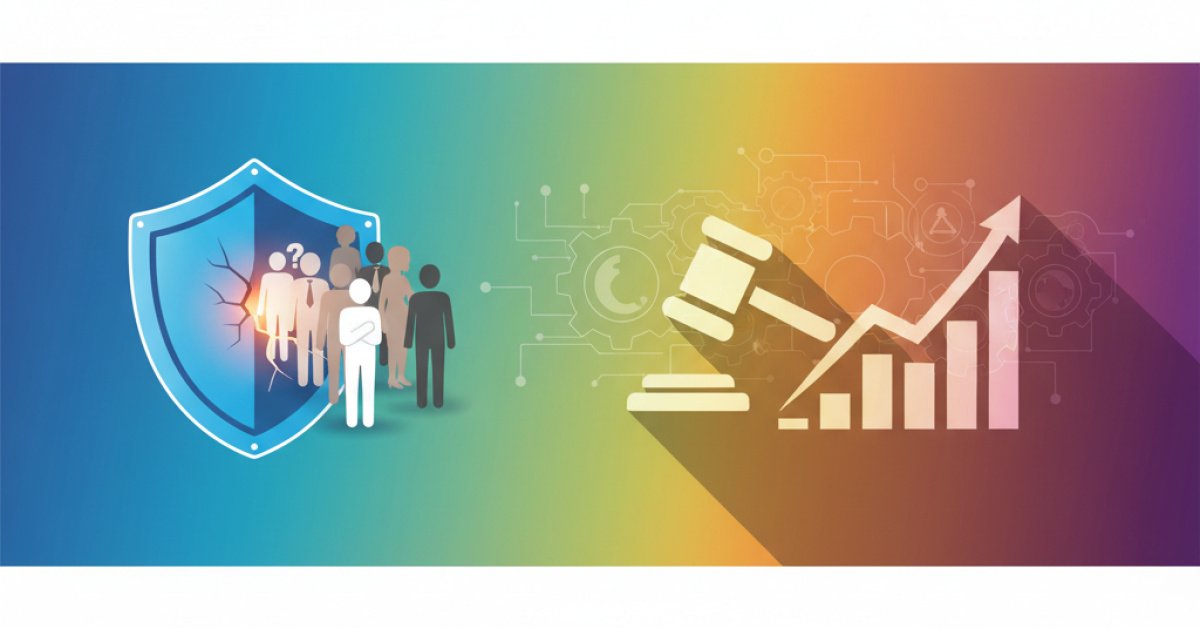
For years, many businesses have viewed safety through the lens of compliance. The goal was to check the boxes, meet the minimum requirements, and avoid getting fined. But the numbers tell us that’s a dangerous and flawed strategy.
Relying on OSHA to catch your safety gaps is like relying on a lightning strike to tell you it’s time to fix your roof. By the time it happens, the damage is already done.
The real cost of a workplace accident is rarely the OSHA fine. Think about it:
- Workers' Compensation Claims: A serious injury can lead to massive medical bills and indemnity payments, sending your insurance premiums skyrocketing for years.
- Operational Downtime: How much does it cost your business to shut down a production line or a job site, even for a few hours? What about for a few days while an investigation is conducted?
- Reputational Damage: Word travels fast. An accident can damage your reputation with customers, the community, and even your ability to attract and retain talented employees.
- Legal Liability: Beyond workers' comp, you could face lawsuits from third parties or, in the worst cases, criminal charges.
When you add it all up, any potential fine from a rare OSHA visit pales in comparison to the true, gut-wrenching cost of a preventable accident.
Your Best Safety Partner Might Surprise You
So if you can't rely on a government agency for proactive oversight, where do you turn? This is where your insurance carrier can, and should, become one of your most valuable partners.
Most people think of their insurance company as the people who send the bills and pay the claims. But a good carrier is so much more than that. Their loss control and risk management departments are full of experts whose entire job is to help you prevent claims from happening in the first place.
Unlike an OSHA inspector who shows up looking for violations, a loss control consultant shows up with a shared goal: to make your workplace safer and your business stronger. They can help you:
- Identify hazards you might have overlooked.
- Develop effective safety training programs.
- Create a return-to-work program that helps injured employees recover and get back on the job sooner.
- Stay up-to-date on best practices and safety regulations.
They’ve seen what works and what doesn’t across hundreds of businesses just like yours. They have the data, the expertise, and a vested interest in your success. After all, fewer accidents for you means fewer claims for them. It’s a true win-win.
The tragedy in West Virginia serves as a sobering reminder. The two workers who lost their lives weren't just statistics. They were people with families and futures, and their deaths were preventable. Waiting for an understaffed regulatory agency to point out your problems is a gamble you can’t afford to take.
The responsibility for building a safe workplace rests squarely on the shoulders of business owners and their leadership teams. It’s about creating a culture where everyone, from the front-line worker to the CEO, feels responsible for their own safety and the safety of their colleagues. It's not about avoiding a fine; it's about making sure every single person goes home safely at the end of the day. And that's a job no one can do for you.