I was grabbing coffee the other day, chatting with the owner of the shop. She’s brilliant—knows every regular's order, runs a tight ship, and makes the best latte in town. I asked her offhandedly about her cyber insurance, and she just laughed. "We're a coffee shop, not a bank. Who would hack us?"
And honestly, I get it. It feels like something that happens to other people. To giant corporations with servers full of secret data.
But here’s the scary part: that way of thinking is exactly what cybercriminals are counting on. And it’s creating a massive, invisible problem in the insurance world. On the surface, the cyber insurance market looks like it’s booming. Policies are being written left and right, and numbers are going up. But if you scratch just a little bit beneath the surface, you find a troubling secret: most small and medium-sized businesses are walking around with a huge target on their backs, either with no protection at all or with insurance that’s full of holes.
That Booming Market? It’s Not What You Think
When you see headlines about the explosive growth of cyber insurance, it’s easy to assume everyone is getting covered. It feels like a success story, right? More businesses are getting protected from hackers, ransomware, and data breaches.
But let’s be real for a minute. That growth is incredibly misleading.
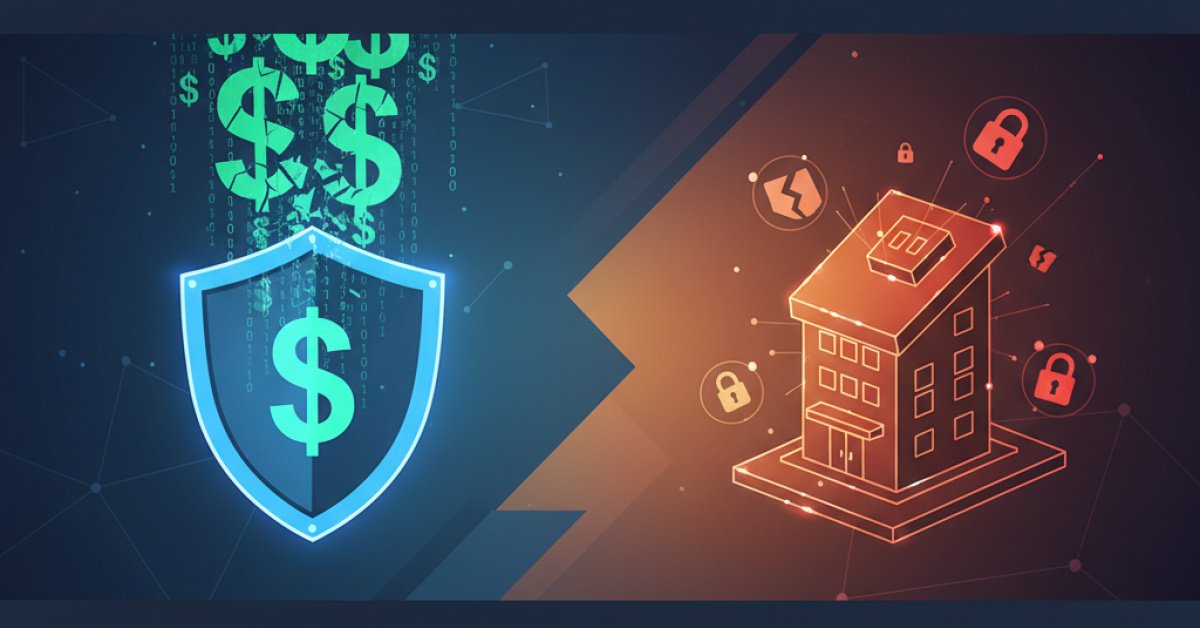
Think of it like a new apartment building going up in your city. From the outside, it looks amazing—shiny windows, sleek design, and a "fully leased" sign out front. But what you don't see is that all the luxury penthouses were snapped up by wealthy corporations, while the smaller, more affordable units for regular folks have faulty plumbing and paper-thin walls.
That’s what’s happening in cyber insurance. The big players—the Fortune 500 companies with massive IT budgets—are getting robust, comprehensive policies. The growth numbers we see are largely driven by them. But the small businesses, the local shops, the marketing agencies, the contractors… they’re being left behind. They're the ones stuck in the apartments with the leaky faucets, thinking they’re protected when they’re really not.
The Real Gaps in Your "Coverage"
So, what does this "faulty plumbing" actually look like? When we talk about coverage gaps, we’re not just talking about businesses that have no insurance at all. The more dangerous problem, in my opinion, is for the business owner who thinks they’re covered but is in for a rude awakening when they actually need to file a claim.
Here are the most common—and costly—gaps we see all the time.
"It Won't Cover That Kind of Attack"
This is the biggest one. You buy a policy thinking "cyber insurance" is a magic blanket that covers any and all digital bad things. But it's not.
Many basic, off-the-shelf policies have very specific definitions of what constitutes a "cyber event." For example:
- Social Engineering: What if an employee gets a clever phishing email and wires $20,000 to a scammer? Many standard policies won't cover that because a "system" wasn't technically breached. The employee was tricked, and that’s often excluded.
- Ransomware Payments: Your policy might cover the cost of restoring your data from a backup, but will it cover the actual ransom payment if that’s your only option to get back online? Sometimes yes, sometimes no. And it almost certainly won't cover the full cost of your business being down for a week while you sort it out.
- Reputational Harm: A data breach can destroy your customers' trust. The cost of hiring a PR firm to manage the crisis and the loss of future business can be devastating. This is almost never included in a bare-bones policy.
It's like having car insurance that only covers collisions on Tuesdays when the sky is clear. When you get into a fender bender on a rainy Friday, you’re out of luck.
The Problem of "Silent Cyber"
This one is a bit more technical, but it’s a huge headache. "Silent cyber" refers to potential cyber-related losses hiding within other insurance policies that weren't designed for them—like a general liability or property policy.
For years, insurers didn't specifically exclude cyber events from these policies. Now, they're scrambling to add explicit exclusions. What does this mean for you? It means a policy you relied on last year to maybe, possibly cover a cyber incident will almost certainly not cover it next year. Insurers are closing these loopholes, pushing everyone toward dedicated (and often more expensive) cyber policies.
Why Are Small Businesses Getting the Short End of the Stick?
It’s easy to get frustrated and think insurers just don’t care about small businesses. But it’s a bit more complicated than that. From an underwriter's perspective, insuring a small business against cyber threats is genuinely tough.
Think about it. A huge corporation has a Chief Information Security Officer (CISO), a dedicated IT team, and sophisticated security protocols. An underwriter can look at their setup and make a pretty good guess about their level of risk.
But a 15-person accounting firm? Or a local restaurant? Their "IT department" is probably the owner's nephew who comes in on weekends. They might not have multi-factor authentication, regular employee training on phishing, or a formal incident response plan.
For an insurer, trying to accurately price the risk for millions of unique small businesses is a massive challenge. It’s often easier and more profitable for them to either offer a stripped-down, one-size-fits-all policy with lots of exclusions or just avoid the market altogether.
So, What Are You Supposed to Do?
Okay, so the situation can feel a little bleak. But I promise, it's not hopeless. You just have to be smarter and more proactive than the average business owner. You can’t just click "buy" on the first policy you see.
Here’s what I tell my friends when they ask for advice:
-
Stop Thinking "If," Start Thinking "When." The first step is a mental shift. A cyber event is a real, tangible risk to your business, just like a fire or a slip-and-fall. Accepting that is half the battle. Don't be the coffee shop owner who thinks she's not a target.
-
Work With Someone Who Knows What They're Doing. Please, please do not just buy a policy online without talking to a human. Find an insurance broker who specializes in cyber coverage for businesses your size. They’ve read the fine print on dozens of policies and can be your translator. They’ll ask you the right questions about your business and find a policy that actually fits, not one that just checks a box.
-
Ask the Tough Questions. When you’re looking at a policy, you need to be your own best advocate. Ask pointed questions like:
- "Does this policy explicitly cover funds transfer fraud if an employee is tricked?"
- "What are the limits for business interruption, and how quickly does that coverage kick in?"
- "If we get hit with ransomware, what services do you provide? Do we get access to a breach coach or forensic team?"
If the person selling you the policy can't answer these clearly, walk away.
Protecting your business in today’s world isn't just about locking the front door at night. Your digital front door is wide open, 24/7. Taking the time to understand your real cyber risk and finding the right protection isn't just another business expense; it's one of the smartest investments you can make in keeping your dream alive.