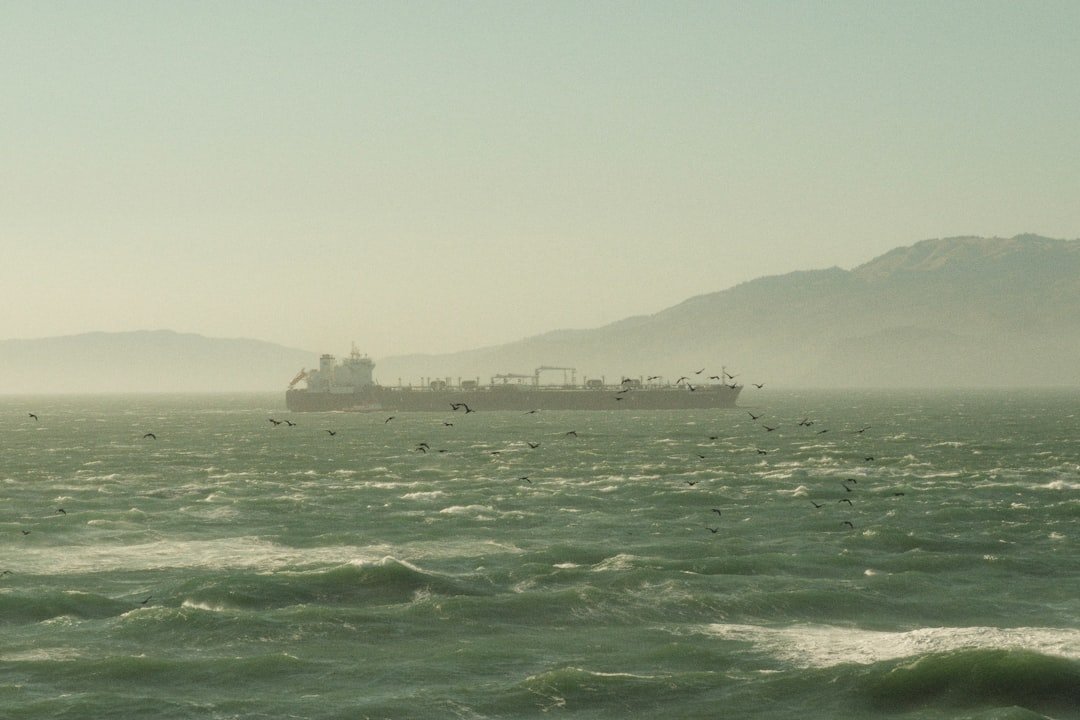
You might have seen a headline floating around that seemed a little… odd. For the first time ever, a shipment of oil from the U.S. Strategic Petroleum Reserve is on its way to California. Ship tracking services, like Kpler, confirmed this isn't something that normally happens.
At first glance, it sounds like a dry, logistical news bite. A tanker is going from point A to point B. Who cares, right?
But here’s the thing. As someone who spends their days deep in the world of risk and insurance, stories like this make my ears perk up. Because this isn't just about one boatload of oil. It’s a symptom of something much bigger. It’s a flashing red light on the dashboard of the global economy, signaling that the trade routes and supply chains we all depend on are being scrambled in real-time. And if you’re a business owner, that’s something you absolutely need to care about.
So, Why Is This One Shipment Such a Big Deal?
Let's break it down. The U.S. has this massive emergency stockpile of oil, right? It's like the country's backup generator. We almost never tap into it, and when we do, sending it all the way to California by sea is unheard of.
The reason for this unusual journey, according to the experts, is a massive redrawing of global shipping routes. Tensions involving Iran are making some of the usual sea lanes riskier and more expensive. So, companies are having to find new, sometimes less efficient, ways to get things where they need to go.
Think of it like your usual route to work. Imagine one day the main highway is shut down because of a major incident. Suddenly, you and thousands of other drivers are flooding tiny back roads. It causes delays, frustration, and a lot of uncertainty. That’s essentially what’s happening on a global scale with shipping.
This single oil shipment is a perfect, tangible example of a supply chain disruption. And these disruptions are the silent killers of otherwise healthy businesses.
When Your Supply Chain Snaps, Who Pays the Bill?
This is where the conversation pivots from interesting news to a critical business discussion. You might be running a manufacturing plant in Ohio, a retail store in Florida, or a tech company in Texas. You might think, "What does an oil tanker going to California have to do with me?"
The answer? Potentially, everything.
Our businesses are all connected in a giant, intricate web. The company that makes your packaging might need a specific chemical that’s delayed on a container ship. The supplier who provides your most critical component might rely on energy from a refinery that’s now facing a shortage because of these shipping woes.
When one part of that web breaks, the vibrations are felt everywhere. This is where insurance stops being a boring piece of paper and becomes the lifeline that keeps your doors open.
The Domino Effect: Contingent Business Interruption
We all know about Business Interruption (BI) insurance. If a fire burns down your factory, BI helps cover your lost income and operating expenses while you rebuild. It’s a lifesaver.
But what happens if your factory is fine, but your main supplier's factory shuts down? Your production line grinds to a halt. You can’t make your product. You can’t fulfill orders. You’re losing money every single day, through no fault of your own.
This is where Contingent Business Interruption (CBI) coverage comes in. It’s designed to protect you from losses caused by a disruption at a key supplier or customer. That oil shipment is a perfect example. If a key supplier in your chain is impacted by that energy disruption, your CBI policy could be what saves you. It’s one of the most overlooked but essential coverages for any business that relies on, well, anyone else.
Protecting Your Goods on the Move: Marine Cargo Insurance
Let's not forget about the stuff that's actually on the boats. That oil is a valuable commodity, and it's on a long, potentially perilous journey.
Marine Cargo insurance is one of the oldest forms of insurance in the world, and for good reason. A lot can go wrong at sea. Storms, accidents, piracy, you name it. This policy protects the value of the goods being shipped from the moment they leave the warehouse until they safely arrive at their destination.
Whether you're shipping crude oil or coffee makers, if your business moves physical products across the globe, this isn't a luxury; it's a fundamental cost of doing business.
Are You Covered for Global Headaches? The World of Political Risk
The original news story points a finger at geopolitical tensions as a root cause for all this reshuffling. When governments make moves, when sanctions are imposed, or when conflicts flare up, it creates enormous uncertainty for businesses.
This is where a specialized type of coverage called Political Risk Insurance becomes incredibly important. It's designed to protect companies operating internationally from losses due to government actions or political instability.
This can cover things like:
- Expropriation: A foreign government seizing your assets.
- Political Violence: Losses due to war, terrorism, or civil unrest that damage your property or disrupt your operations.
- Currency Inconvertibility: You make a profit in a foreign country but the government suddenly prevents you from converting that currency and bringing it home.
It might sound like something only giant multinational corporations need, but as the world gets smaller and more interconnected, businesses of all sizes are finding themselves exposed to these kinds of risks.
So, What Should You Do Now?
Look, I know this is a lot to take in. We started with a simple story about an oil tanker and ended up talking about global political instability. But that's the reality of the world we operate in today.
The key isn't to be scared; it's to be prepared. That weird oil shipment is your cue to take a good, hard look at your own operations and your insurance portfolio.
Don't just assume you're covered. Pull out your policies. Better yet, call your insurance broker and have a real conversation. Ask them these questions:
- Do we have Contingent Business Interruption coverage? Are the limits high enough?
- Who are our most critical suppliers, and are they covered under our policy?
- Are our goods insured door-to-door when we ship them?
- Given the nature of our business, should we be considering Political Risk insurance?
These headlines aren't just noise. They are signals. They are real-world case studies happening right now that show us where the cracks are in the system. The smart move is to use them as a lesson to reinforce your own business, to make sure that when the next unexpected disruption hits, you're not the one left scrambling. You're the one who’s ready.