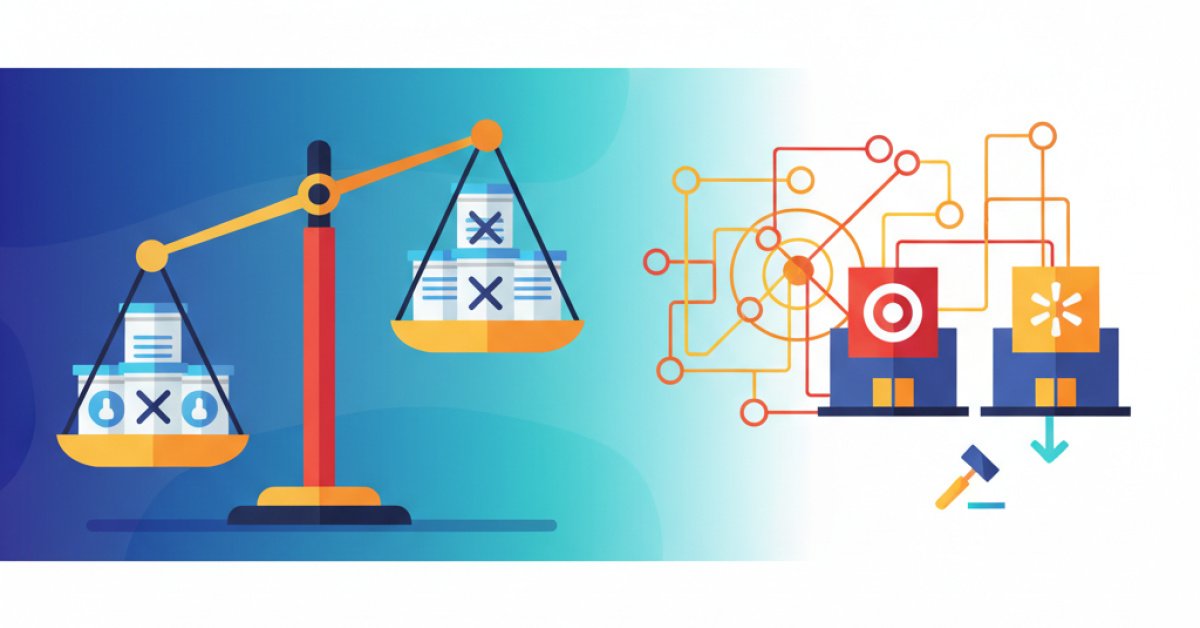
When you walk down the aisle at Target or Walmart, you probably don't think twice about grabbing a product off the shelf. You trust the store. You trust the brand name. It’s a simple, almost unconscious transaction built on years of seeing those logos and relying on them to stock safe, reliable products.
But what happens when that trust is broken? And more importantly, who’s on the hook when something goes terribly wrong?
We’re seeing that exact scenario play out right now in a really scary way. A baby formula maker, ByHeart, is facing lawsuits over products that were potentially contaminated with botulism spores. It’s every parent's worst nightmare. But here's the twist that should get anyone in the business world, especially those of us in insurance, sitting up and paying attention: the lawsuits aren't just targeting the manufacturer.
They're also going after the stores that sold it—Target, Walmart, and Whole Foods are all being pulled into the legal battle. And that, my friends, is a masterclass in how risk and liability work in the real world.
It’s Not Just the Manufacturer’s Problem
You might be thinking, "Wait a minute. If the formula maker messed up, why are the grocery stores getting sued?" It’s a fair question, and the answer gets to the heart of product liability.
Here’s the thing: in the eyes of the law, if you sell a product, you are part of its journey to the consumer. You're a critical link in the supply chain. By placing that item on your shelf, you're implicitly vouching for its safety.
So when a prominent foodborne-illness attorney like Bill Marler decides to add these retail giants as defendants, it’s not random. It's a strategic move based on a legal principle that everyone in the chain of commerce can be held responsible. From the company that made the raw ingredients to the factory that mixed the formula to the store that sold the final can, everyone has a piece of the liability pie.
Think of it like a chain. If one link is weak and breaks, the whole chain fails. In this case, the alleged weak link was the formula itself, but the retailers were the ones who handed that broken chain to the customer.
The 'Deep Pockets' Theory in Action
Let’s be honest for a second. There’s also a very practical, if a bit cynical, reason for suing the big-name stores: they have "deep pockets."
This is a term you hear a lot in legal and insurance circles. It simply means going after the entity with the most financial resources to pay out a potential settlement or judgment. A smaller manufacturer, even one with a decent insurance policy, might not have the funds to cover the massive damages that can arise from a widespread contamination issue, especially one involving infants.
But Walmart? Target? Whole Foods (which is owned by Amazon)? These are multi-billion dollar corporations with massive insurance towers and the ability to cover significant claims. By adding them to the lawsuit, attorneys are ensuring that if they win, there will be money available to compensate the victims.
It’s a stark reminder that in a liability case, it’s not just about who is most at fault; it’s also about who can actually pay.
How Do Big Retailers Even Protect Themselves?
Reading this, you might feel a little bad for the retailers. It seems unfair, right? They didn’t make the formula, they just sold it. But don’t worry, these companies are incredibly sophisticated when it comes to managing this exact type of risk. They don't just put a product on the shelf and hope for the best.
This is where insurance and contracts become the unsung heroes. Here’s a peek behind the curtain at how they protect themselves:
-
Contractual Risk Transfer: Before a single can of ByHeart formula ever hit a Walmart shelf, you can bet there was a mountain of paperwork. Buried in those supplier contracts are clauses called indemnification agreements. In plain English, this is ByHeart promising Walmart, "If we mess up and you get sued because of our product, we will cover your legal costs and any damages." It's a way of contractually passing the risk back up the chain to the manufacturer who is ultimately responsible.
-
Additional Insured Status: This is the big one. The retailers will almost certainly require ByHeart to add them to its product liability insurance policy as an "additional insured." This is huge. It means if a claim arises from ByHeart's product, the retailer can go directly to ByHeart's insurance company for coverage. Their own insurance policy gets to sit on the sidelines as a backup, while the manufacturer's policy takes the primary hit.
-
Strict Vendor Requirements: They don't just let anyone sell products in their stores. Retailers have incredibly strict requirements for their vendors, including demanding proof of a certain level of insurance coverage (often millions of dollars). If a vendor can't show they have a robust policy in place, their product won't see the light of day.
The Lesson for Every Business
You don't have to be a Fortune 500 company for this to matter to you. This lawsuit is a powerful lesson for any business that makes, distributes, or sells anything.
Risk is a hot potato, and it gets passed along the supply chain. Whether you're a small manufacturer, a distributor, or a local shop, you need to understand where you fit in that chain and how you're protecting yourself.
Are your contracts solid? Are you requiring vendors who supply you with parts or products to name you as an additional insured? Do you have your own robust product liability policy in place?
Because as we're seeing with this baby formula case, a problem that starts in a factory can easily end up as a lawsuit on a retailer's doorstep. The best defense is being prepared long before that happens, with the right contracts and the right insurance to make sure someone else's mistake doesn't become your financial ruin.