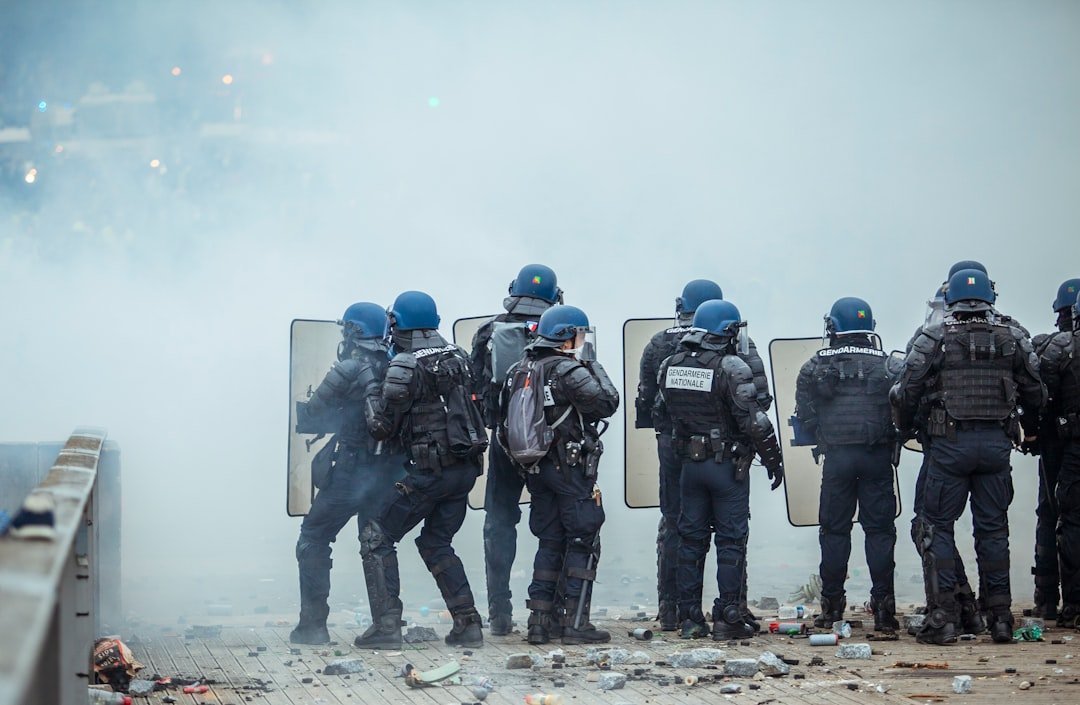
It’s the kind of headline that’s easy to scroll past. A brief flash of news about an explosion on a railway in Poland. It feels distant, like another piece of a geopolitical puzzle that doesn’t directly affect your day-to-day business.
But I’m here to tell you, you need to stop scrolling. That explosion is a huge red flag.
Poland’s own deputy prime minister, Krzysztof Gawkowski, just came out and said what many have been fearing: they expect Russia to ramp up these kinds of sabotage activities. This wasn't a random accident. Authorities are pointing the finger directly at Moscow.
So, why should this send a shiver down the spine of any business with operations, suppliers, or customers in Eastern Europe? Because this isn't a conventional conflict fought with tanks and jets. This is a shadow war being fought on infrastructure—the very railways, ports, and energy grids that keep your business moving. And here’s the kicker: your standard insurance policy probably offers zero protection against it.
What's Really Going On?
Let's break down what this warning from Poland actually means. Poland isn't just another European country; it’s the central hub for military and humanitarian aid flowing into Ukraine. It’s a critical NATO member on the front line.
Think of it like this: if your supply chain is a pipeline, Poland is the main pumping station. If someone wants to disrupt the flow, they don't need to blow up the whole pipeline. They just need to target that one critical station, over and over again.
That’s what we’re seeing. These aren't random acts of vandalism. They are targeted, strategic attacks designed to cause maximum disruption with just enough ambiguity to create confusion. Is it terrorism? An act of war? An industrial accident? This confusion is part of the strategy, and it’s a nightmare for insurance claims.
This isn’t just about Poland, either. It’s a sign of a broader, more aggressive strategy that could easily spill over into other neighboring countries. For any business that relies on the smooth flow of goods through the region, this is a five-alarm fire.
The Giant Blind Spot in Your Insurance Policy
Okay, let's get down to brass tacks. You have Commercial Property insurance. You have Cargo insurance. You’re covered, right?
Probably not.
Almost every standard business insurance policy contains something called a "War Exclusion" clause. It’s been a staple of insurance for decades. In simple terms, it says that the policy will not cover losses or damages caused by war, invasion, acts of foreign enemies, rebellion, revolution, or similar events.
Here’s the million-dollar question: Does a covert act of sabotage, allegedly carried out by Russian agents on Polish soil, count as an "act of war"?
The honest answer? It’s a messy, expensive legal battle waiting to happen. The insurer will have teams of lawyers arguing it falls under the exclusion. You’ll have your own team arguing it doesn’t. While they fight it out for months or even years, your business is left bleeding money from property damage and crippling business interruption. It’s a gray area so vast you could lose your entire company in it.
The Coverage You Actually Need for This "Shadow War"
If your standard policy has a massive hole in it, how do you plug it? This is where you have to move beyond off-the-shelf insurance and look at specialized coverage designed for precisely these kinds of murky, politically-charged risks.
There are two main players you need to get to know:
1. Sabotage & Terrorism (S&T) Insurance
This is the most direct solution. S&T policies are specifically designed to cover physical damage and resulting business interruption from acts of… well, sabotage and terrorism.
The key benefit here is that it sidesteps that whole "is it war?" debate. It focuses on the nature of the act itself, not the political motivation behind it. If your facility is damaged by a deliberately placed explosive device, an S&T policy is designed to respond. It’s a much cleaner trigger for a claim.
2. Political Risk Insurance (PRI)
Think of PRI as the broader, more comprehensive big brother to S&T. It’s designed to protect businesses operating in unstable or unpredictable political climates.
Political Risk coverage is often a package of different protections, but the one most relevant here is for Political Violence. This typically covers damage from a wide range of events, including:
- Sabotage and terrorism
- Riots and civil commotion
- Insurrection or rebellion
- Malicious damage
- War and civil war
A robust PRI policy can provide the clarity that your standard property policy lacks. It’s built for a world where the lines between peace and conflict are blurry.
What You Should Be Doing About This Right Now
Look, I get it. This is heavy stuff, and it’s easy to feel overwhelmed. But paralysis is not a strategy. The threat is real, and it’s growing. Here are four simple, concrete steps you can take today to protect your business.
-
Pull Out Your Current Policies. I mean it. Don't just assume you know what's in them. Find the exclusions section and read the "War Exclusion" clause word-for-word. See what it says. Does it mention "undeclared war" or "hostile acts by a sovereign power"? The specific language matters.
-
Call Your Insurance Broker. Immediately. This is not an email conversation. Get them on the phone and ask very direct questions. "Given the recent events in Poland, are we covered for state-sponsored sabotage?" "What would happen if our key supplier's factory is damaged in an attack?" Don’t let them give you a vague answer. Make them show you the exact language in your policy that provides—or excludes—coverage.
-
Map Your Exposure. Get a map out and trace your supply chain. Where are your physical assets? What routes do your shipments take? Identify every single touchpoint in Poland, the Baltic states, or any other country bordering Russia or Belarus. These are your potential hotspots. Knowing where you're vulnerable is half the battle.
-
Weigh the Cost vs. the Risk. Yes, specialized coverage like S&T or Political Risk insurance costs more. But you have to ask yourself: what is the cost of doing nothing? What would a six-month shutdown of your European distribution hub cost you? What is the value of the cargo you have moving through the region at any given time? When you look at it that way, the premium for the right protection often starts to look like a pretty smart investment.
The world we’re operating in is changing. The risks are becoming more complex, more hidden. This warning from Poland isn't just a news story; it's a wake-up call. It's a clear signal that we need to think differently about risk and resilience. Being prepared for these shadow conflicts isn't about being paranoid—it's about being a prudent, responsible business owner in an increasingly uncertain world.