Have you ever had that heart-pounding moment when you hear sirens wailing behind you? You immediately check your mirrors, figure out where it’s coming from, and pull over to the side of the road. It’s a driving instinct, a social contract we all understand: when you see flashing lights, you get out of the way.
But what happens when the car next to you doesn’t have that instinct? What if it doesn’t have a driver at all?
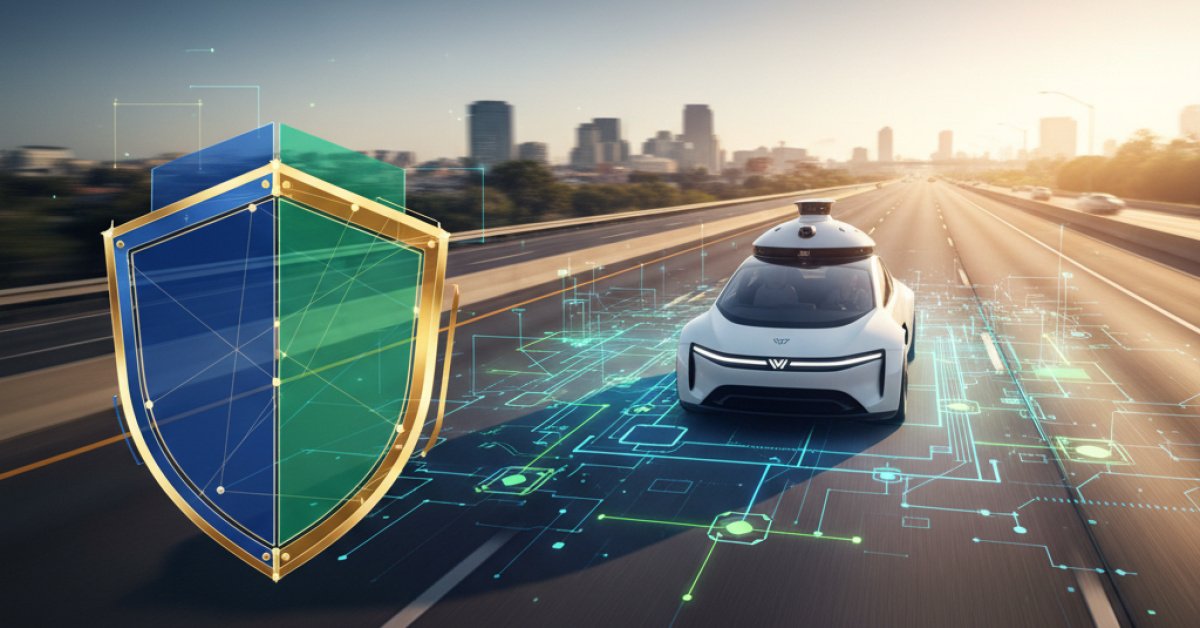
This isn’t a sci-fi movie plot. It’s happening right now on our streets. And it’s becoming such a serious issue that the federal government is finally stepping in to lay down the law. The head of the U.S. National Highway Traffic Safety Administration (NHTSA) recently put the entire self-driving car industry on notice, saying they have to fix a “clear pattern” of their vehicles interfering with police, fire, and ambulance crews.
And for those of us in the insurance world, this sets off a whole different kind of alarm bell. Because when a robot car causes a delay that leads to tragedy, it opens up a can of worms so complicated it makes a fender-bender look like child’s play.
What’s Actually Happening Out There?
So, what does this “interference” look like? It’s not just one or two isolated glitches. We’re talking about a pattern of baffling behavior.
Imagine a driverless taxi freezing in the middle of an intersection as a fire truck tries to navigate around it. Or a fleet of autonomous vehicles driving right through police tape at a crash scene. There are reports of these cars simply stopping dead in their tracks, unable to process the chaos of flashing lights, sirens, and hand signals from officers.
Think of it like this: these cars are incredibly good at following the rules of the road in a predictable, orderly world. They can stay in their lane and maintain a safe following distance better than most humans. But an emergency scene is the exact opposite of orderly. It’s chaotic, unpredictable, and requires a level of social and situational awareness that, frankly, the technology just doesn’t have yet.
It’s like a brilliant student who has memorized every textbook but completely panics during the real-world exam. The cars know the rules, but they don’t know how to break them safely, the way a human driver does when an ambulance needs to get by.
The Million-Dollar Question: Who’s on the Hook?
This is where things get really messy from an insurance perspective. Let’s say a driverless car blocks an ambulance, delaying its arrival at the hospital by five crucial minutes. If the patient suffers a worse outcome because of that delay, who pays?
You can bet it’s going to be a massive, tangled legal battle.
The Old Way vs. The New Way
In a normal car crash, liability is usually straightforward, if sometimes contentious. We look at which driver was negligent. Did someone run a red light? Were they texting? Their personal auto insurance is on the line.
But with a self-driving car, the driver is a computer. So, who do you blame?
- The Manufacturer? Did they build a car with a fundamental flaw in its perception system? This would be a product liability claim, similar to suing over a faulty airbag.
- The Software Developer? Was it a coding error in the AI that failed to recognize the specific pattern of a fire truck's lights?
- The Fleet Operator? If it’s a Waymo or a Cruise vehicle, is the company that owns and operates the fleet responsible for its behavior on the road?
- The Owner? If it’s a privately owned vehicle with autonomous features, was the owner supposed to take over and failed to do so?
You can see the problem. Everyone will be pointing fingers at everyone else, and the insurance companies for each of these entities will be pulled into a legal slugfest. The resulting claims won’t be for a dented bumper; they’ll be for wrongful death or permanent injury, with price tags in the millions.
Why Can’t These Super-Smart Cars Figure This Out?
It seems like a simple problem, right? Hear a siren, see flashing lights, pull over. But for a computer, it’s incredibly complex.
The AI has to distinguish between a police car, an ambulance, a fire truck, and maybe just a construction vehicle with a yellow flasher. It has to understand the frantic hand gestures of a police officer directing traffic, something that’s deeply human and contextual. It needs to predict the path of an emergency vehicle that isn't following normal traffic laws.
This isn’t just about sensors; it’s about interpretation and judgment in a high-stakes environment. And that’s where the technology is currently falling short.
The Feds Are Finally Drawing a Line in the Sand
This brings us back to that statement from the NHTSA on July 8. When Jonathan Morrison, the head of the nation's top auto safety agency, uses words like “clear pattern” and demands that companies “quickly address” the issue, it’s a big deal.
This is the government officially saying, “The testing phase is over. This is a real-world safety problem, and you need to fix it now.”
For the insurance industry, this is a double-edged sword. On one hand, it’s great! Federal pressure will force these tech companies to improve safety, which should reduce risk. On the other hand, it’s a public admission that the technology we’re being asked to insure has a major, known flaw. It makes underwriting policies for these vehicles incredibly tricky. How do you price a risk that even the federal government is calling out as a clear and present danger?
So, What Does This Mean for the Future of Your Car Insurance?
Even if you don’t plan on owning a fully autonomous car anytime soon, this affects you. The technology is already in our cars, from advanced cruise control to lane-keeping assist. As these systems get more sophisticated, our insurance policies will have to evolve.
We're moving away from a world focused solely on driver behavior and into one where product performance is just as important. Your future auto policy might look more like a combination of a traditional car insurance policy and a product warranty. It will have to cover you, the driver, as well as the moments when the car's AI is in control.
The road to a driverless future is exciting, no doubt. The potential to reduce accidents caused by human error is enormous. But stories like this are a powerful reality check. They remind us that the journey is going to be bumpy, and we’re still figuring out the rules of the road.
And as we navigate this new terrain, the insurance industry will be right there in the passenger seat, trying to make sense of the risks and ensure that when things inevitably go wrong, there’s a safety net in place to catch us.