That feature you probably paid a little extra for—the one that lets you cruise down the highway with your hands resting in your lap—feels like a little slice of the future, doesn’t it? It’s the promise of a more relaxed, less stressful commute. We’ve all seen the commercials.
But what if I told you that this convenience might be a wolf in sheep's clothing?
It sounds counterintuitive, I know. How can a system designed to help you drive possibly make things less safe? Well, the National Transportation Safety Board (NTSB), the folks who investigate major transportation accidents, are sounding the alarm. And honestly, when you hear their reasoning, it starts to make a whole lot of sense.
So, What's the Big Deal? The NTSB Weighs In
Let’s get right to it. The NTSB has come out with a pretty blunt assessment: these so-called "hands-free" driving systems don't necessarily improve safety. In fact, they might be creating a whole new set of problems.
The core issue isn't a flaw in the technology itself. The cars can, for the most part, stay in their lane and manage their speed just fine on a straight highway. The problem, it turns out, is us. It’s human nature.
When we feel like the car has it covered, we start to check out. We become passengers in the driver's seat. Our attention drifts from the road to our phones, the infotainment screen, or the conversation we're having. We trust the machine a little too much.
And that's where things get dangerous.
The Sneaky Trap of "Automation Complacency"
There’s a term for this phenomenon: "automation complacency." It’s a fancy way of saying we get lazy and let our guard down when we think a machine is doing the work for us.
Think of it like this: Imagine you’re cooking a big meal and you have a new food processor that chops all your vegetables perfectly. It’s a fantastic helper, right? It frees up your hands and saves you a ton of time. But if you get so confident in your new gadget that you walk out of the kitchen to watch TV, the pot on the stove is still going to boil over.
That food processor is an assistant, not the head chef. You’re still the one in charge.
These driving systems are the same thing. They are driver assist systems. They’re your co-pilot, but you are—and must remain—the captain of the ship. The moment we forget that, we’re putting ourselves and everyone around us at risk. The system can handle the boring stuff, but it can’t react to a deer jumping into the road or a car swerving unexpectedly into your lane. That’s still your job.
It's Not Just Your Hands—It's Your Brain
The "hands-free" label is a bit misleading, isn't it? It suggests that the only thing you need for driving is your hands. But we all know that's not true. The most important tool you have behind the wheel is your brain—your attention, your judgment, your ability to anticipate what’s coming.
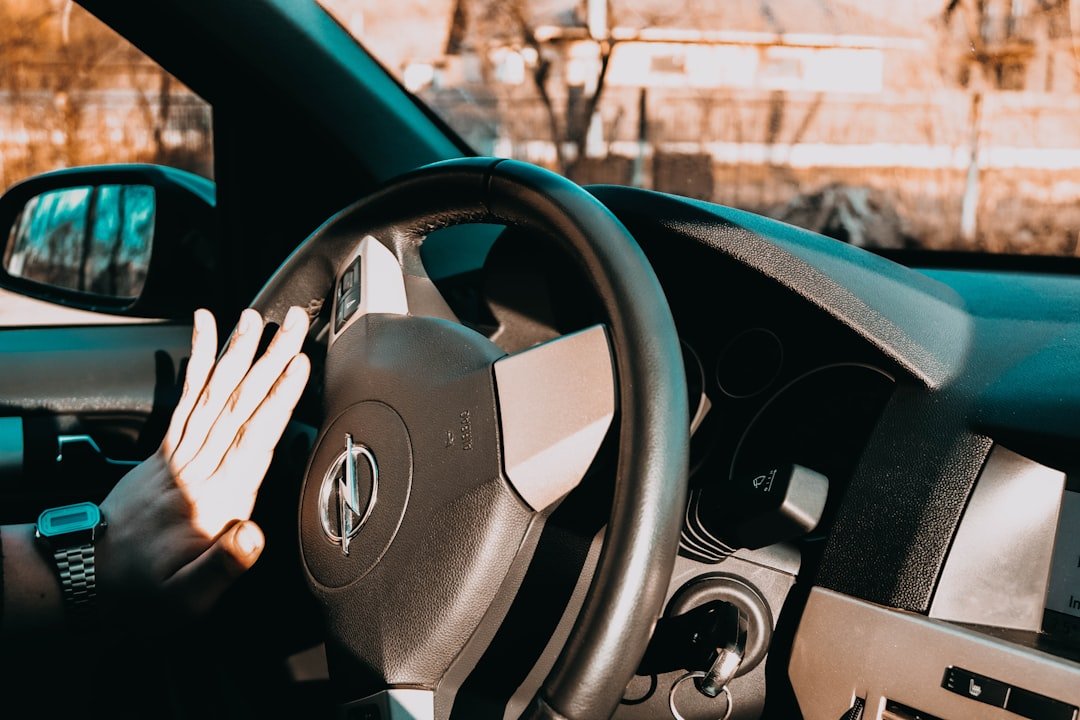
When you take your hands off the wheel, it sends a powerful psychological signal to your brain that it’s okay to relax and disengage. And what do we do when we disengage?
- We glance at that text message we just heard come in.
- We try to find the perfect playlist on the giant center screen.
- We get lost in thought about our meeting later that day.
The NTSB found that drivers using these systems are far more likely to be distracted. They’re physically in the car, but mentally, they’re somewhere else entirely. And a distracted driver, whether their hands are on the wheel or not, is a dangerous driver.
What Does This Mean for Your Insurance?
Okay, let's bring this home to what we all deal with: insurance. This isn't just a safety conversation; it has real-world financial implications.
For a while, the thinking was that these advanced safety features would lead to fewer accidents and, eventually, lower insurance premiums. And in some cases, features like automatic emergency braking have made a positive impact. But this issue of driver inattention throws a major wrench in the works.
If hands-free systems lead to a new kind of distracted driving accident, you can bet that insurance companies are taking notice. Here’s what you need to keep in mind:
- You are still 100% liable. If your car, while in a hands-free mode, is involved in an accident, the fault is not going to fall on the car manufacturer. It’s going to fall on you, the driver. You are legally required to be in control of your vehicle at all times.
- Claims could get complicated. Proving what happened in an accident involving a semi-autonomous system can be tricky. Data from the car's computer might be needed, and determining the level of driver engagement at the moment of impact can be a real challenge for adjusters.
- Rates may not drop as expected. If these systems don't lead to a clear and significant reduction in claims, you won't see the premium discounts we were all hoping for. In fact, if they lead to more high-speed highway accidents due to inattention, they could even put upward pressure on rates in the long run.
Ultimately, this technology is still new, and the insurance industry is adapting. But one thing is crystal clear: technology is not a substitute for responsibility.
These features can be great tools for reducing fatigue on a long road trip, but they aren't a green light to zone out. The best safety feature in any car is, and always will be, an alert, engaged, and responsible driver. So next time you switch on that fancy feature, remember you're still the chef in the kitchen. Keep your eyes on the road.