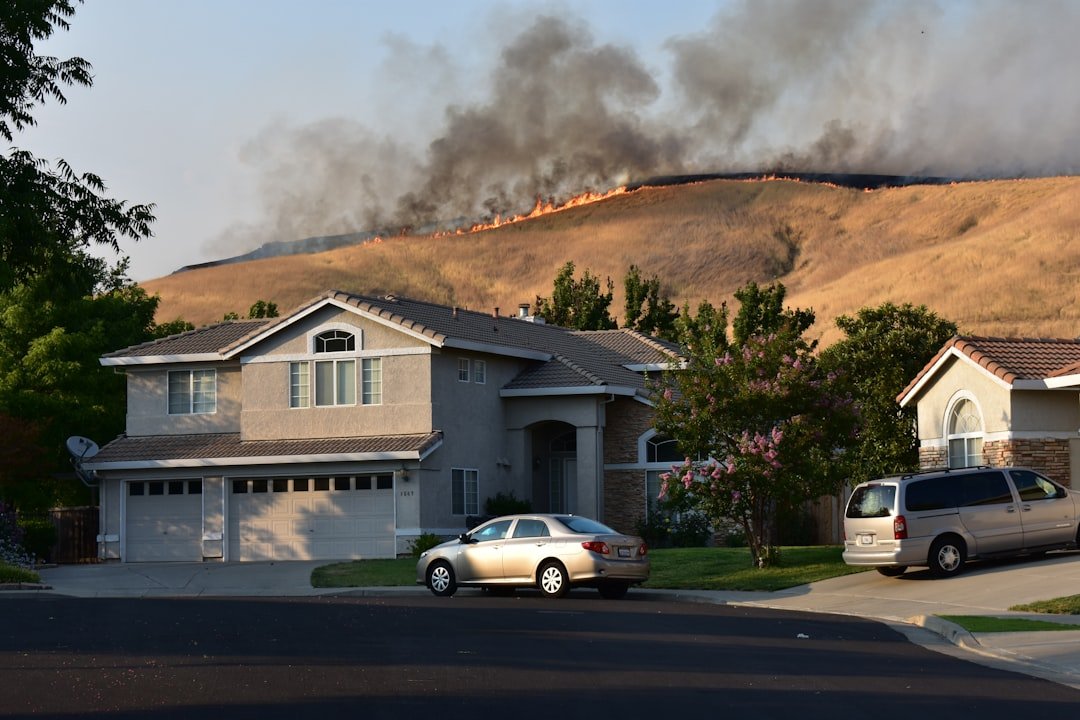
When you think of natural disasters in Florida, your mind probably jumps straight to hurricanes, right? We’re all experts at tracking cones of uncertainty, stocking up on water, and debating whether to put up the shutters. It’s practically a state pastime.
But there’s another threat that’s been quietly growing, especially lately. Wildfires.
With the widespread drought conditions we’ve been seeing, things are getting dangerously dry. State officials are on high alert, and for good reason. It doesn’t take much for a small spark to turn into a huge problem when the landscape is thirsty for rain.
The good news? A really smart, insurance-backed program designed to help homeowners fight back against wildfires has just expanded into Florida. And honestly, the timing couldn’t be better. Let’s break down what this is and what it means for you.
So, What Is This Wildfire Program All About?
Think of it like getting a "seal of approval" for your home's wildfire safety.
This isn't just some pamphlet with a few tips. It’s a formal designation program that recognizes homeowners who take specific, proven steps to make their property more resistant to catching fire. It’s a national initiative that’s already been successful in other areas and is now rolling out in 10 more high-risk states, including ours.
The whole idea is to be proactive, not reactive. Instead of just hoping a fire doesn't reach your neighborhood, this program gives you a clear roadmap to harden your home against the threat. It’s about creating a buffer, a defense, that can make all the difference if a wildfire does break out nearby.
Why This Matters More Than Ever in Florida
Let’s be real for a second. Florida has always had wildfires, but the risk feels different now. The combination of more people moving into areas that border wildlands (what experts call the Wildland-Urban Interface) and the increasingly dry, hot weather is a recipe for trouble.
When everything is bone-dry, a wildfire can move with terrifying speed. Embers can travel a mile or more in the wind, landing on roofs, in gutters, or on dry mulch right next to your house. It’s often these flying embers, not the giant wall of flames itself, that are responsible for homes catching fire.
This is where the mitigation program comes in. It focuses on the little things that make a huge difference in preventing those embers from finding a place to ignite. State officials are worried, and this program is a direct, tangible response to that growing concern.
The Big Question: How Does This Affect Your Insurance?
Okay, let's get to the part everyone wants to know about. A safer home is great, but does it help your wallet?
The answer is a resounding yes. Or at least, it’s designed to.
Because this program is supported by the insurance industry, completing the steps and earning the designation makes your home a much better risk from a carrier’s perspective. You’ve actively lowered the chance of them having to pay out a massive claim.
And how do they reward you for being a lower risk? You guessed it: potential discounts on your homeowner's insurance premium.
It’s a true win-win situation:
- You get: A safer home, incredible peace of mind, and the possibility of a lower insurance bill.
- Your insurer gets: A client who is actively managing their risk, which reduces the insurer's potential for loss across the board.
In a state where insurance costs are a constant topic of conversation, any opportunity to gain some control over your rates is a welcome one. This program empowers you to do just that.
What Does It Take to Get a "Wildfire Mitigated" Designation?
You might be picturing having to do a massive, expensive overhaul of your entire property, but it’s not necessarily like that. The program focuses on practical, achievable actions.
While the specifics can vary, the core principles revolve around a few key areas:
Creating Defensible Space
This is one of the most important concepts. It’s all about creating a buffer zone around your house that is free of flammable materials.
- The Immediate Zone (0-5 feet): This is the most critical area. The goal here is to have nothing flammable. Think gravel or rock beds instead of mulch right up against the house. Keep this area clear of dead leaves, pine needles, and overhanging tree branches.
- The Intermediate Zone (5-30 feet): In this zone, you want to "break up the fuel." This means trimming trees so the canopies aren’t touching, clearing out dead shrubs, and keeping the grass mowed low.
Hardening Your Home Itself
This part focuses on the structure of your house and its vulnerability to embers.
- Your Roof: Is it made of a fire-resistant material like asphalt shingles, metal, or tile? Wood-shake roofs are a major hazard. Also, keeping your roof and gutters completely clean of pine needles and leaves is non-negotiable.
- Vents: Attics and crawlspace vents are like open doors for embers. Covering them with a fine metal mesh (1/8-inch) can stop embers from getting inside your home.
- Windows and Siding: Dual-pane tempered glass windows are much more resistant to breaking from heat. And siding made of stucco, brick, or fiber-cement is far better than wood siding.
Taking these steps one by one can make your home dramatically safer. The program provides the checklist and the verification, and you provide the elbow grease.
A Smart Move for Florida Homeowners
Look, we can't control the weather, and we can't stop every fire from starting. But we're not helpless.
This new wildfire mitigation program is a powerful tool. It’s a chance to take a clear-eyed look at your home’s vulnerabilities and fix them before they become a catastrophe. The fact that the insurance industry is backing it with potential discounts just makes it an even smarter decision.
If you live in an area of Florida that feels a little too close to wildlands, or if you're just looking for ways to be more prepared, I’d seriously encourage you to look into this. It's one of the most tangible things you can do to protect your biggest investment and, more importantly, your family.