If you live anywhere in the western half of the country, you know the feeling. That hazy sky in August, the faint smell of smoke on the wind, the low-grade anxiety that comes with wildfire season. It feels like an unstoppable force of nature, and for a long time, it pretty much has been. We’ve relied on people in watchtowers or calls from concerned citizens to get the first word.
But what if we could have eyes on the forest that never sleep, never blink, and can tell the difference between a puff of dust and the first wisp of a real threat? It sounds like science fiction, but it’s happening right now. And for those of us in the insurance world, it’s one of the most significant developments in risk management I’ve seen in years.
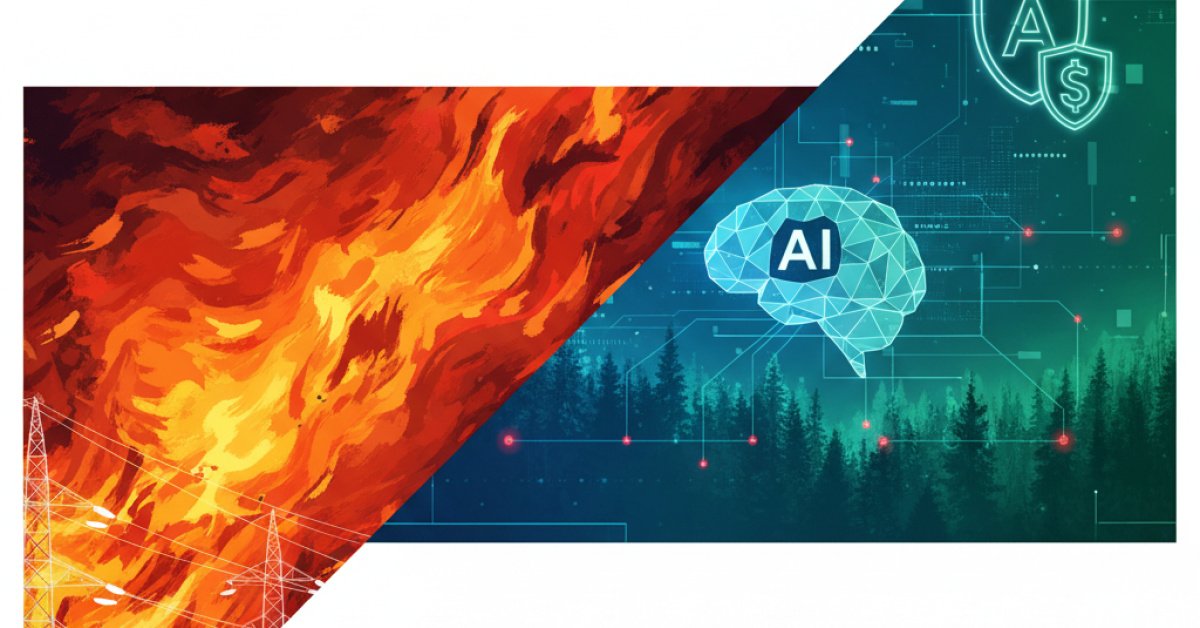
States across the West are starting to use artificial intelligence to spot wildfires the moment they start. Think of it as a super-intelligent, digital forest ranger, and it’s changing the game.
So, How Does This AI Smoke Detector Actually Work?
Let me give you a real-world example. On a March afternoon in Arizona’s Coconino National Forest, a camera feed picked up something. To you or me, it might have just looked like a weird cloud or a bit of dust kicked up by the wind. But an AI system, trained on thousands of hours of footage, flagged it as a potential column of smoke.
This is where the magic happens. It’s not just about a robot raising an alarm. The alert immediately went to a team of human analysts. Their job? To take a quick look and say, "Yep, that's smoke," or "Nope, false alarm."
In this case, it was real. Because of that AI-powered heads-up, the analysts were able to verify the threat in minutes and instantly alert the state’s forest service and the local electric utility.
Think of it like a home security system for an entire forest. The AI is the motion detector that notices something is wrong, and the human analyst is the person at the monitoring company who checks the camera to see if it’s a burglar or just the cat knocking over a lamp. It’s the perfect blend of machine speed and human judgment.
Why This is a Massive Deal for Everyone (Especially Insurers)
Okay, so we can spot fires faster. That’s great. But what does it really mean? For us, it means everything.
The difference between a small fire and a catastrophic one is often just a matter of hours. A fire that’s caught when it’s only a few acres is a manageable problem. A crew can get there, contain it, and put it out. The insurance claim might be for some damaged timber or equipment. It's a blip.
But a fire that burns undetected for even half a day, especially with high winds, can become an unstoppable monster. That’s when you get the devastating headlines. That’s when entire towns are evacuated, thousands of homes are destroyed, and the insurance claims run into the billions. We’re talking about a scale of loss that can destabilize insurance markets in entire states.
Early detection flips that script. It’s the ultimate form of loss prevention.
When we, as insurers, can see that a region has this kind of proactive technology, it changes how we assess risk.
- Better Underwriting: We can make smarter decisions about where and what to insure.
- Reduced Claims: Fewer catastrophic fires mean fewer massive, complex claims to process.
- More Stable Premiums: In the long run, managing risk effectively is the only way to keep insurance available and affordable in high-risk areas.
This isn’t just about saving money, either. It’s about saving homes, businesses, and lives. And it gives utilities a fighting chance to de-energize power lines in the immediate area to prevent them from making the fire worse—a huge source of liability.
This Isn't Just a One-Off Experiment
The story out of Arizona isn’t an isolated case. This is a trend that’s picking up steam all over the wildfire-prone West. Forestry departments and major utilities are realizing that the old ways just aren’t enough to handle the "new normal" of longer, more intense fire seasons.
They’re forming these crucial partnerships—tech companies providing the AI, human analysts providing the verification, and fire agencies providing the on-the-ground response. It’s a collaborative defense system.
And frankly, it has to be. The financial and human cost of doing nothing is just too high. We’ve seen insurers pull out of entire states because the risk of wildfire has become simply uninsurable. Technology like this offers a glimmer of hope that we can get a handle on the risk and keep these communities protected.
Let's Be Real: It's a Tool, Not a Magic Wand
Now, I don't want to make it sound like AI is going to solve the wildfire crisis overnight. It’s a powerful new tool in the toolbox, but it’s not a silver bullet.
There are still challenges. What about areas without camera coverage? Can the AI be tricked by fog or industrial steam? Of course. False positives are a real thing, and you need a robust human verification process to make the system work without sending fire crews on wild goose chases.
Plus, there’s the cost of setting up and maintaining these networks of high-tech cameras and the software to run them. But when you compare that cost to the multi-billion-dollar price tag of a single catastrophic fire, the investment starts to look like a bargain.
What we’re seeing is the beginning of a major shift in how we approach wildfire risk. It’s moving from a purely reactive model—waiting for a fire to be reported—to a proactive one. It’s about using technology to get ahead of the threat. For anyone who owns a home, runs a business, or writes an insurance policy in the West, that’s a shift we desperately need. It’s a smart, necessary evolution in our long and difficult relationship with fire.