Let's be honest. For years, "fast" and "insurance" weren't exactly words you'd use in the same sentence. You’d picture an underwriter’s desk buried in paper, long phone calls, and a whole lot of waiting. It was a process built on careful, deliberate, and sometimes painfully slow, human judgment.
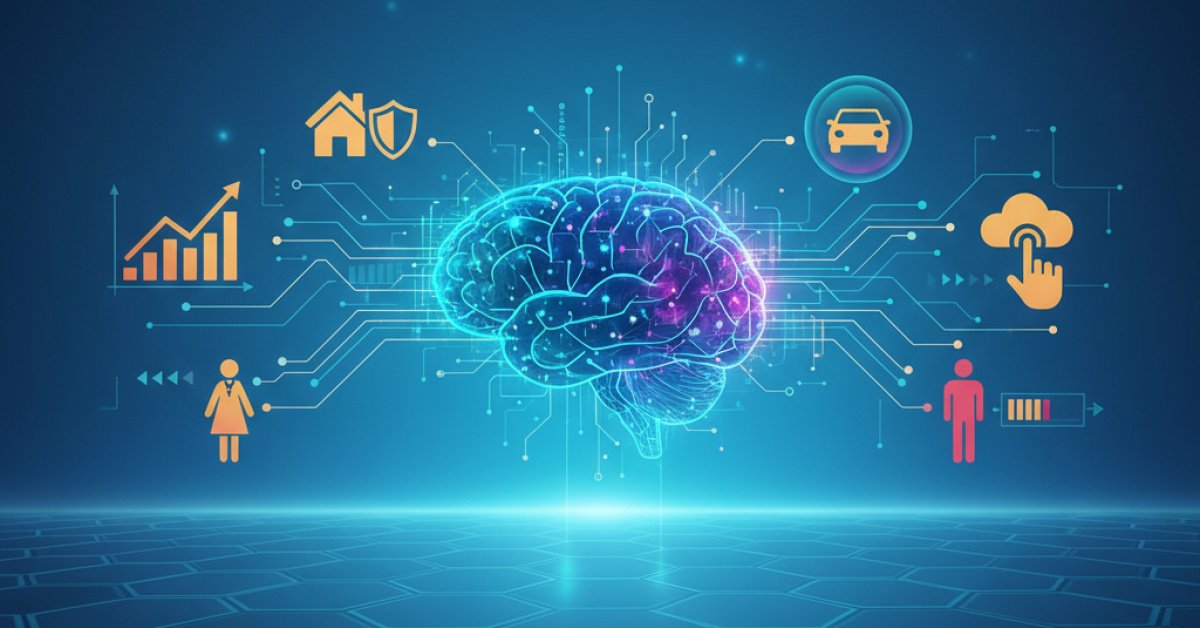
But now, everything’s changing. You hear about AI everywhere, and our industry is no exception. We're told it's making everything quicker, smoother, and more automated. And it is. You can get a car insurance quote in minutes or file a claim by just uploading a photo from your phone.
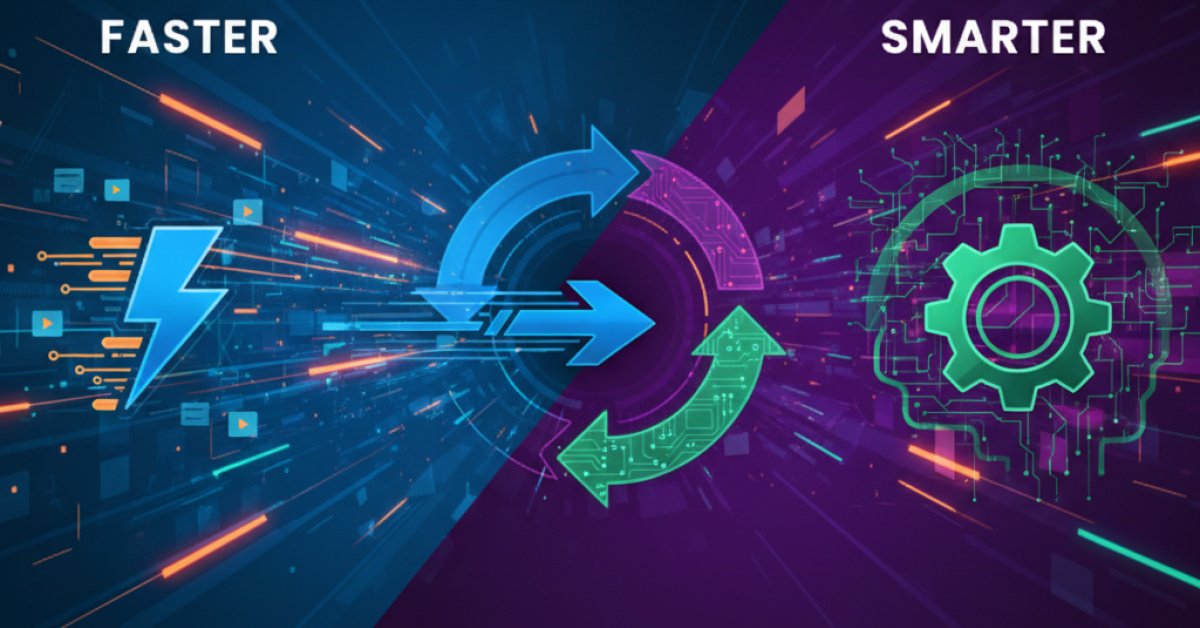
Here’s the million-dollar question, though: Is all this speed making insurance better? Or is it just making us faster at doing the same old things? This is where we need to have a real chat about two words that sound similar but are worlds apart: efficiency and effectiveness.
First, Let's Talk Speed vs. Smarts
It’s easy to get these two mixed up, but the difference is everything.
Think of it like making dinner. Efficiency is the fast-food drive-thru. The goal is to get as many burgers out the door as quickly and cheaply as possible. It's all about process, volume, and speed.
Effectiveness, on the other hand, is the master chef in a high-end restaurant. They’re not focused on speed; they're focused on the quality of the final dish. They’re sourcing the best ingredients, using their expert judgment, and creating something perfect. The goal is the best possible outcome, not the fastest one.
In insurance, we're seeing AI play both of these roles. And where it fits best depends entirely on the type of insurance we're talking about.
Standard Insurance: Where AI Hits the Accelerator
When you think about standard insurance—things like your personal auto or homeowner's policy—you're in high-volume territory. Insurers handle millions of these policies. They're relatively straightforward, and the data is pretty consistent.
This is the perfect playground for AI to be the super-efficient fast-food cook.
Here’s how you’re already seeing it in action:
- Instant Quotes: You pop your details into a website, and an algorithm crunches the numbers instantly. No more waiting for an agent to call you back in a few days. That’s AI-driven efficiency.
- Lightning-Fast Claims: Had a minor fender-bender? Many carriers now let you upload photos of the damage. An AI model analyzes the images, estimates the repair cost, and can approve the payment in minutes. It’s mind-blowingly fast.
- Chatbots That Actually Help: Instead of waiting on hold, you can often get your basic questions answered by a chatbot, 24/7. It frees up human agents to handle the more complex stuff.
For these standard, repeatable tasks, AI is a massive win. It strips out time and cost, which is great for both the insurer and for you. It’s all about making the process as frictionless as possible.
Specialty Lines: When You Need a Brain, Not Just a Bot
Now, let's switch gears completely. Let's talk about specialty insurance. We're talking about insuring a new satellite launch, a blockbuster movie production, or providing cyber liability for a major tech company.
You can't use a fast-food approach here. Every single policy is unique, complex, and carries enormous risk. The data is often sparse or "unstructured"—meaning it's not in neat little boxes.
This is where AI shifts from being the speedy cook to being the master chef’s indispensable assistant, a "sous-chef" if you will. The goal here isn't speed; it's effectiveness. It's about making the absolute best underwriting decision possible.
So how does AI help a specialty underwriter?
It's not about replacing their judgment; it's about supercharging it. Think of it as giving them superpowers. AI can:
- Read Everything, Instantly: An underwriter assessing political risk for a company expanding overseas can't possibly read every news article, social media post, and economic report from that region. But an AI can. It can scan millions of data points and flag emerging trends or risks a human would never have time to find.
- Connect the Dots: AI is brilliant at finding subtle patterns in massive datasets. For a Directors & Officers (D&O) policy, it might analyze years of financial statements and corporate communications to spot red flags that signal a higher risk of lawsuits. It’s finding the needle in the haystack.
- Model the Un-modelable: How do you price insurance for a brand-new type of risk that has no historical data? AI can run complex simulations to model potential outcomes, giving the underwriter a much more sophisticated starting point for their analysis.
In the specialty world, AI isn't making the final call. The human expert is still firmly in charge. But AI is providing them with insights and intelligence that are deeper and broader than ever before, leading to a much more effective, accurate decision.
Finding the Perfect Balance: The Real Goal of AI in Insurance
So, is it a battle between efficiency and effectiveness? Not at all. The smartest companies are figuring out how to make them work together.
The real magic happens when you use AI to handle the efficient, repetitive work, which frees up your best people to focus on the effective, high-judgment work.
Imagine an underwriter’s workflow. AI can instantly pull all the necessary data, pre-fill the forms, and flag any standard issues (efficiency). This saves them hours of tedious administrative work. Now, they can spend their time actually underwriting—analyzing the tricky parts of the risk, talking to the broker, and using their years of experience to make a smart decision (effectiveness).
It’s about creating a partnership. The machine does what it does best (processing huge amounts of data at incredible speed), and the human does what they do best (critical thinking, creativity, and nuanced judgment).
Ultimately, the rise of AI in our industry isn't about replacing people. It's about elevating them. It’s about taking the robot out of the human’s job. The roles are changing, for sure. An insurance professional today needs to be more of a data interpreter and a strategic advisor than a paper-pusher.
And that’s a good thing. By blending the lightning speed of efficiency with the deep wisdom of effectiveness, we’re not just building a faster insurance industry—we're building a smarter one. And that’s a future that’s better for everyone.