You know that feeling when your phone buzzes with a severe weather alert? That little ping that says a thunderstorm or hailstorm is heading your way. Most of us glance at it, maybe move the car into the garage, and then get on with our day.
But what if I told you that your insurance company is looking at a version of that same alert, but on steroids? And they’re not just looking at your city or even your zip code. They’re looking at your specific street, your house, and they’re doing it with incredible precision.
It sounds a little bit like science fiction, I know. For decades, the insurance model was pretty straightforward: something bad happens, you call your agent, you file a claim, and eventually, you get a check. It was always a reaction. A response to a disaster that had already occurred.
Well, that whole playbook is being tossed out the window. And the reason is simple: the weather isn't playing by the old rules anymore. With climate change fueling more frequent and intense storms, floods, and fires, insurers realized they couldn't just sit back and pay the bills. They’d go broke. So, they had to get smarter. They had to get proactive.
From "React and Pay" to "Predict and Prevent"
Let’s quickly talk about the old way of doing things, because it helps to understand just how big this change is.
Think of it like this: In the past, insurance was like a firefighter who only shows up after the house has already burned down. They’re there to help you sort through the ashes and rebuild, which is incredibly important. But they couldn’t do anything to stop the fire in the first place.
This "react and pay" model worked for a long time. A hailstorm would roll through, damage a few thousand roofs, and insurers would process the claims. It was a numbers game they understood.
But now, we're seeing hailstorms with baseball-sized hail. Wildfires that wipe out entire towns. Hurricanes that intensify in a matter of hours. The sheer scale and cost of these events started to break the old model. Insurers knew they had to find a way to get ahead of the storm, both literally and figuratively.
So, What is This "Hyperlocal" Weather Data, Anyway?
When we talk about “hyperlocal,” we’re not just talking about the forecast you see on the evening news. That’s a regional forecast, painting a broad picture. It might tell you there’s a 60% chance of rain in your county. Helpful, but not exactly precise.
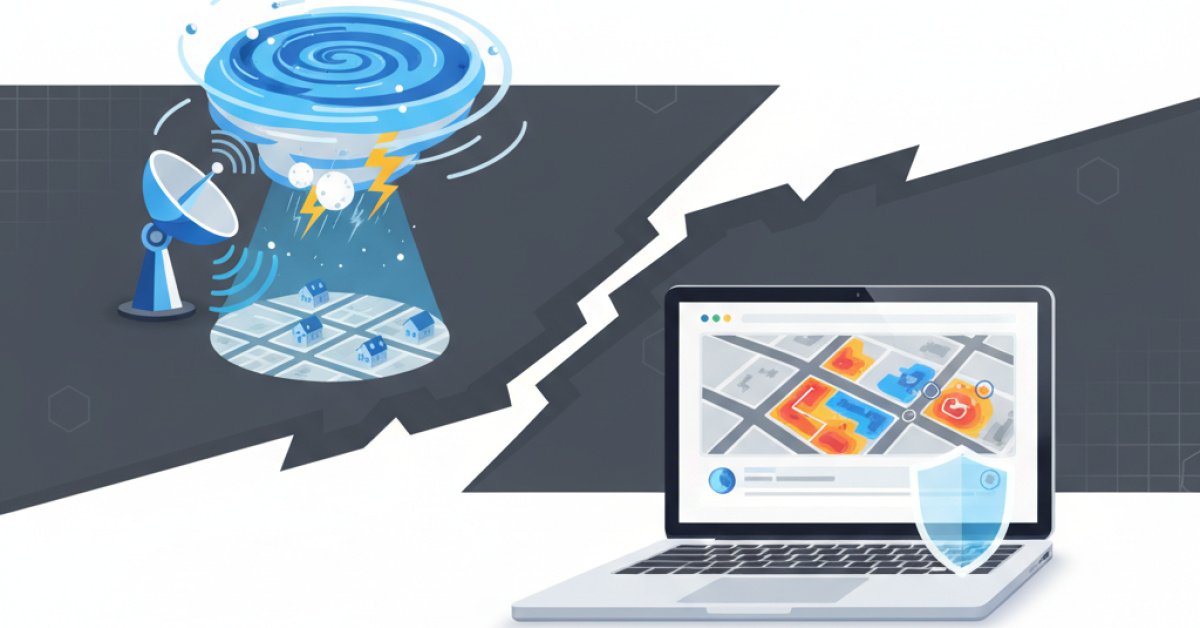
Hyperlocal weather intelligence is like going from a blurry, pixelated map to Google Street View. It's incredibly granular data that can pinpoint weather events down to a single address.
Instead of just knowing a hailstorm passed over a city, insurers can now know:
- The exact path of the storm, block by block.
- The size of the hail that fell on your roof versus your neighbor's roof a mile away.
- The wind speed at your specific location during the storm.
- The precise moment a lightning strike occurred near your property.
It’s a firehose of information from satellites, radar, ground sensors, and even aerial imagery. And honestly, it’s completely changing how insurance works from the inside out.
How Your Insurer Is Actually Using This Super-Detailed Data
Okay, this is where it gets really interesting. This isn’t just about a bunch of data sitting on a server somewhere. Insurers are actively using it to change how they interact with you and manage risk.
Here are a few real-world ways this is playing out:
1. Sending You a Heads-Up Before Disaster Strikes
This is one of the most powerful and positive changes. Instead of just waiting for your claim, your insurer might send you a text message that says: “Heads up! Our data shows a storm with potentially damaging hail is projected to be over your home in the next 45 minutes. Please take precautions and move vehicles to a covered location if possible.”
Think about that. That one simple alert could save you from having to pay a $1,000 deductible and deal with the headache of car repairs. It’s a win for you (no damage) and a win for them (no claim to pay). They are shifting from being a financial backstop to being a partner in preventing the loss from ever happening.
2. Getting Help to You Faster After a Storm
Imagine a hurricane is barreling toward the coast. In the old days, insurers would have to wait until after the storm passed to send in their claims adjusters and resources. The roads might be flooded, power could be out for days—it was a logistical nightmare.
Now, using hyperlocal storm-track and damage-prediction models, they can pre-deploy their resources. They can stage teams of adjusters, roofers, and water mitigation crews just outside the storm's projected path. The moment it’s safe to go in, they’re already there, ready to help customers immediately. This can shave days, or even weeks, off the recovery process for affected families.
3. Smarter and Fairer Pricing (Hopefully)
This one’s a bit more complex, but it has huge potential. When insurers set your home insurance rates, they look at risk. Traditionally, this was based on broad data, like your ZIP code. But what if your house is on a hill, while another house in the same ZIP code is in a low-lying area prone to flash floods? Should you both pay the same risk-based premium?
With hyperlocal data, insurers can assess the actual risk to your specific property. They can see historical flood patterns, wind exposure, wildfire risk, and more, right down to your address. The hope is that this leads to fairer pricing, where your premium more accurately reflects your individual risk, not just the general risk of your neighborhood. Of course, this can also mean higher rates for those in demonstrably riskier spots, but it’s a much more accurate way of pricing insurance.
Is This a Good Thing for You?
I get it. The idea of your insurance company knowing that much about your property can feel a little… weird. A little "Big Brother." And that’s a totally valid feeling.
But I truly believe the benefits here far outweigh the concerns. This isn't about spying on you; it's about managing massive, growing risks in a world with increasingly volatile weather.
When you boil it down, this shift to proactive, data-driven insurance helps you by:
- Preventing Damage: An alert that helps you avoid a loss is always better than getting a check after the fact.
- Speeding Up Recovery: Getting help faster after a major event is a huge relief when you’re trying to put your life back together.
- Keeping Insurance Affordable and Available: By managing their own risk better and reducing the number of massive payouts, insurers can remain financially stable. That stability is what allows them to keep offering coverage, even in high-risk areas.
Ultimately, this isn’t just a fancy new tech trend. It’s a fundamental evolution of the entire concept of insurance. We're moving away from a simple financial transaction to more of a real-time partnership. Your insurer has a vested interest in helping you protect your property, and now, they finally have the tools to do it.
So the next time you get a weather alert on your phone, just know that your insurance company is likely looking at an even more detailed picture, working behind the scenes to get ready, just in case. And in a world where the weather is more unpredictable than ever, that’s a pretty reassuring thought.