Ever feel like your insurance bill just keeps creeping up, and you have no idea why? You’re not just imagining it. And honestly, it’s not some big secret plot to charge you more. The truth is, the entire insurance world is navigating some seriously choppy waters right now, and a huge part of it comes down to something we all became experts on over the last few years: the global supply chain.
Remember when you couldn't find toilet paper, or when getting a new car meant waiting for months? That same chaos is hitting businesses ten times harder. And when businesses get hit, their insurance claims follow.
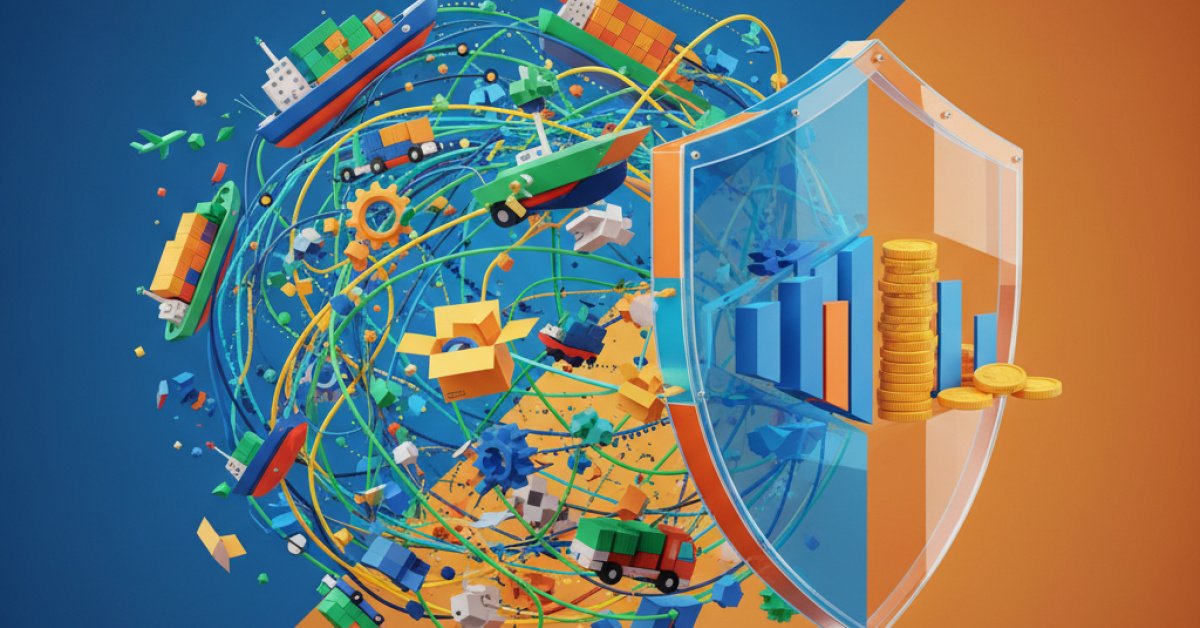
Think of it like this: an insurer’s job is to price the risk of something bad happening. For decades, that was a relatively predictable game. But now, it feels like we’re trying to predict the weather in a hurricane. A single factory fire in Asia, a ship stuck in a canal, or a regional conflict can send shockwaves across the globe, causing delays and losses that are incredibly difficult to forecast. And that unpredictability is what’s making everyone in the insurance industry a little bit nervous.
What Does a Stuck Ship Have to Do With Your Policy?
It might seem like a world away, but the fragility of our global supply network has a direct line to the insurance policy for your business, and sometimes even your personal lines. It's all connected.
When a key supplier for a manufacturing plant has to shut down because of a flood, that’s not just their problem. It’s a problem for the plant that can’t get its parts, which means they can’t make their products. This triggers a business interruption claim. Now, multiply that scenario by thousands, all over the world, all the time.
We're seeing a massive spike in what we call "contingent business interruption" (CBI) claims. This is coverage for when your supplier’s problem becomes your problem. For a long time, this was a fairly low-risk area. Not anymore. Now, insurers are looking at a business’s supply chain and seeing a dozen potential points of failure they never had to worry about before.
The result? The cost of these claims is skyrocketing. A small delay used to be a minor inconvenience. Today, with just-in-time manufacturing and lean inventories, a small delay can shut down an entire operation for weeks, leading to a multi-million dollar claim.
Welcome to the "Hard Market" – It's a Tough Time for Everyone
When claims costs go up and unpredictability reigns, the insurance world enters what we call a “hard market.” And let me tell you, it’s not a fun place to be, for you or for us.
So, what does a hard market actually feel like?
- Higher Premiums: This is the most obvious one. To cover the higher potential for massive losses, insurers have to charge more. It’s simple math, but it’s painful.
- Less Availability (Capacity): Insurers get more cautious. They might decide they only want to take on a certain amount of risk in a specific industry or region. This means there’s less insurance to go around, and businesses might have to scramble to find the coverage they need.
- Stricter Underwriting: Getting a policy isn’t as easy as it used to be. Underwriters are now digging deep, asking some really tough questions.
Think of it like trying to get a home loan when the economy is shaky. The bank is going to scrutinize every single detail of your finances before they lend you a dime. That's what's happening in insurance right now. We're not just asking if you have a fire suppression system anymore. We want to know everything about your supply chain.
The New Underwriting Playbook
Underwriters are basically risk detectives. And their investigation has gotten a lot more intense. They’re asking questions like:
- "Who are your top three critical suppliers? Where are they located?"
- "What’s your backup plan if one of them goes offline?"
- "Do you have alternate sources for your raw materials?"
- "How much inventory do you keep on hand as a buffer?"
A few years ago, a business might not have even had answers to these questions. Today, not having a solid, well-documented plan for supply chain resilience can be a deal-breaker for getting coverage. It’s a huge shift. We’re moving from just covering the loss to actively demanding that businesses prove they’re doing everything they can to prevent the loss in the first place.
How Insurers Are Changing the Game (and Your Coverage)
Because the old rulebook has been thrown out the window, we’re having to write a new one. Insurers are getting creative and, frankly, a lot more defensive in how they structure policies.
You might start to see some changes in the fine print of your policy renewals. Things like higher deductibles are common—meaning you’ll have to pay more out-of-pocket before your insurance kicks in. You might also see lower coverage limits, where an insurer is only willing to cover, say, $1 million for a specific risk instead of the $5 million they offered before.
We’re also seeing more specific exclusions. A policy might explicitly state that it won't cover interruptions caused by a pandemic or a specific type of cyber-attack on a supplier. It’s all about trying to define the boundaries of these massive, sprawling new risks.
The goal isn't to leave you high and dry. The goal is to create a sustainable system where we can still provide meaningful coverage without going bankrupt from a single global event. It’s a delicate balancing act.
It's Not All Doom and Gloom: This is About Getting Smarter, Together
I know this all sounds pretty grim. Higher prices, tougher questions, less coverage—it’s a lot to take in. But here’s the upside: this crisis is forcing everyone to get a whole lot smarter about risk.
Businesses are finally taking supply chain resilience seriously, not just as an insurance requirement, but as a core business strategy. They're diversifying their suppliers, using technology to get better visibility into their logistics, and building buffer stocks. In the long run, this makes them stronger and more robust.
And for us in the insurance industry, it’s pushing us to innovate. We're investing heavily in data analytics and predictive modeling to better understand these tangled global risks. The more we understand, the better we can price risk fairly and offer products that actually meet the needs of this new reality.
So, what’s the takeaway here? The world has become a more volatile place, and the insurance industry is adjusting in real-time. It can be frustrating, for sure. But it’s also a necessary evolution. The next time you look at your insurance renewal, I hope you have a better understanding of the global forces at play. It’s not just a piece of paper; it’s a reflection of the interconnected, and sometimes chaotic, world we all live in. And navigating it successfully is something we’re all going to have to do together.