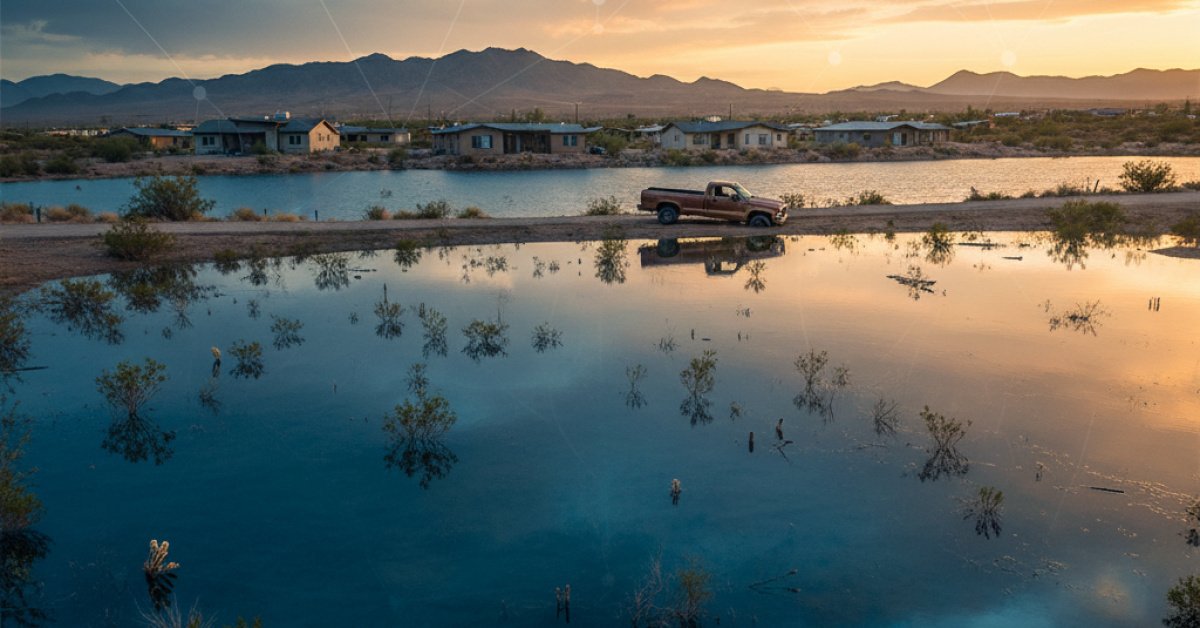
You probably don't think "flood" when you picture West Texas. You think of tumbleweeds, oil rigs, and vast, dry landscapes under a blazing sun. But for the folks in places like Ector County, a forecast of rain brings a knot to their stomachs.
When it rains out there, it really, truly pours. And on that flat, desert terrain, the water has absolutely nowhere to go. Imagine pouring water onto a massive, perfectly level dinner plate. It just spreads out, covering everything. That’s what happens here. Sidewalks, roads, even major highways disappear under a sudden, murky lake.
It’s a bizarre and dangerous situation. But what’s even more frustrating for the people living there is that local officials are fighting an uphill battle, not just against the water, but against the bureaucracy to get the money they need to actually do something about it.
This isn't just a local news story about infrastructure. It's a massive, flashing red light when it comes to insurance and understanding risk.
Why is a Desert County Dealing with Floods Anyway?
It sounds like a paradox, right? A desert that floods. But it’s all about the geography. The land in Ector County is incredibly flat, and the soil is dense. It doesn't absorb water quickly like a sponge.
So when a big storm system moves through and dumps a few inches of rain in a short period, the water can't soak in and it can't run off. It just pools. This is what’s known as flash flooding, and it’s incredibly destructive. One minute you’re driving down a dry road, and the next, your car is stalling in two feet of water.
This creates a constant, nagging risk for every single homeowner and business in the area. Every time dark clouds gather, they’re rolling the dice. Will this be the storm that sends water creeping into the living room?
The Real Problem: A Fight for Funding
Here’s the thing that gets me. The local officials in Ector County aren't just shrugging their shoulders. They know what the problem is, and they have plans to address it. They need to build better drainage systems, retention ponds, and other infrastructure to give that water a place to go.
The problem is money. Big infrastructure projects cost big money, and a local county often doesn't have that kind of cash just lying around. They have to apply for state and federal grants, and that’s where things get stuck.
It’s a frustrating cycle of applying for funds, getting denied, waiting for the next opportunity, and hoping a major flood doesn't happen in the meantime. While the paperwork gets shuffled around in some far-off office, the people on the ground are left holding their breath every time it rains.
So, What Does This Have to Do With Your Insurance?
Everything. This situation is a perfect, real-world example of what we in the insurance world call "unmitigated risk."
Insurers base their prices—your premiums—on risk. The higher the chance of something bad happening (like a flood), the more expensive the insurance is going to be. When a community has known, recurring flood problems and no concrete, funded plan to fix them, that’s a huge red flag for an insurance company.
Here’s how it breaks down for the people living there:
- Sky-High Flood Insurance: First, let's get this straight: your standard homeowners policy does not cover flood damage. You need a separate flood insurance policy, usually from the National Flood Insurance Program (NFIP) or a private insurer. In a high-risk area like this, those policies can be painfully expensive.
- Availability Issues: In some extreme cases, private insurers might look at the situation and decide the risk is just too high. They might limit the number of policies they’ll write in the area or pull out altogether, leaving the NFIP as the only option.
- The Uninsured Gamble: Because of the cost, many people choose to roll the dice and go without flood insurance. This is a terrifying gamble. A few inches of water can cause tens of thousands of dollars in damage, and without insurance, you’re paying for all of that out of your own pocket.
This isn’t just a Texas problem. We see this all over the country. Communities that can't or don't invest in mitigation—whether it's for floods, wildfires, or hurricanes—end up putting their residents in an incredibly tough spot. You’re left paying for the risk, either through high insurance premiums or through devastating out-of-pocket costs after a disaster.
You Have to Be Your Own First Line of Defense
When you're living in a place where the community-level solution is stuck in limbo, the responsibility unfortunately falls back on you, the homeowner. You can't just wait for the county to build a new drainage system that might be years away.
So, what can you do?
Think about personal mitigation. This means taking steps to make your own property more resilient to flooding. It could be things like:
- Installing flood vents in your foundation.
- Moving your HVAC unit, water heater, and electrical panel to a higher level.
- Grading your yard so water flows away from your house.
- Making sure your gutters and downspouts are clear and directing water far from your foundation.
These steps might not stop a massive flood, but they can make a huge difference in a typical flash flood scenario, potentially saving you thousands in damages. And guess what? Sometimes, these mitigation efforts can even help lower your flood insurance premiums.
The situation in Ector County is a tough one, and it’s a powerful reminder that water is a force to be reckoned with, even in the most unlikely of places. It shows us that the battle against natural disasters is often fought not just with sandbags and pumps, but with grant applications and budget meetings.
And for all of us, it’s a wake-up call. Know your real risk, understand what your insurance does and doesn’t cover, and never assume that someone else is going to solve the problem for you. Sometimes, you’ve got to be ready to protect your own castle when the waters start to rise.