If you’ve ever worked in or around the oil and gas industry, you know that operating in certain parts of the world is a high-stakes game. You plan for everything. Political instability, supply chain disruptions, security threats—it’s all part of the daily risk assessment.
But every now and then, a single government announcement from thousands of miles away can change the entire board overnight. And that’s exactly what just happened for any company with a footprint in Venezuela.
The Trump administration recently designated a group called the "Cartel de los Soles" as a foreign terrorist organization. On the surface, it sounds like another geopolitical chess move aimed at isolating Nicolás Maduro’s government. But for the risk managers, lawyers, and insurers involved with foreign oil companies there, this one announcement is a five-alarm fire. Why? Because it strikes at the heart of the one thing that makes these operations possible: their insurance coverage.
So, What Exactly Just Happened?
Let’s quickly break this down. The U.S. government has officially labeled the Cartel de los Soles a terrorist group. They’ve linked it directly to high-ranking officials within the Maduro regime, essentially saying it’s a state-sponsored narco-terrorist operation.
Now, you might be thinking, "Okay, that's politics. What does it have to do with insurance?"
Everything.
In the world of insurance, words have very specific, legally-binding meanings. And the word "terrorism" is one of the most loaded terms you can find in a policy document. By officially designating this group, the U.S. government has flipped a switch. An act of violence that might have been considered "political violence," "sabotage," or "civil unrest" yesterday could be classified as an "act of terrorism" today.
And that, my friends, is where the nightmare begins.
The Real Problem: Your Insurance Policy Just Got Complicated
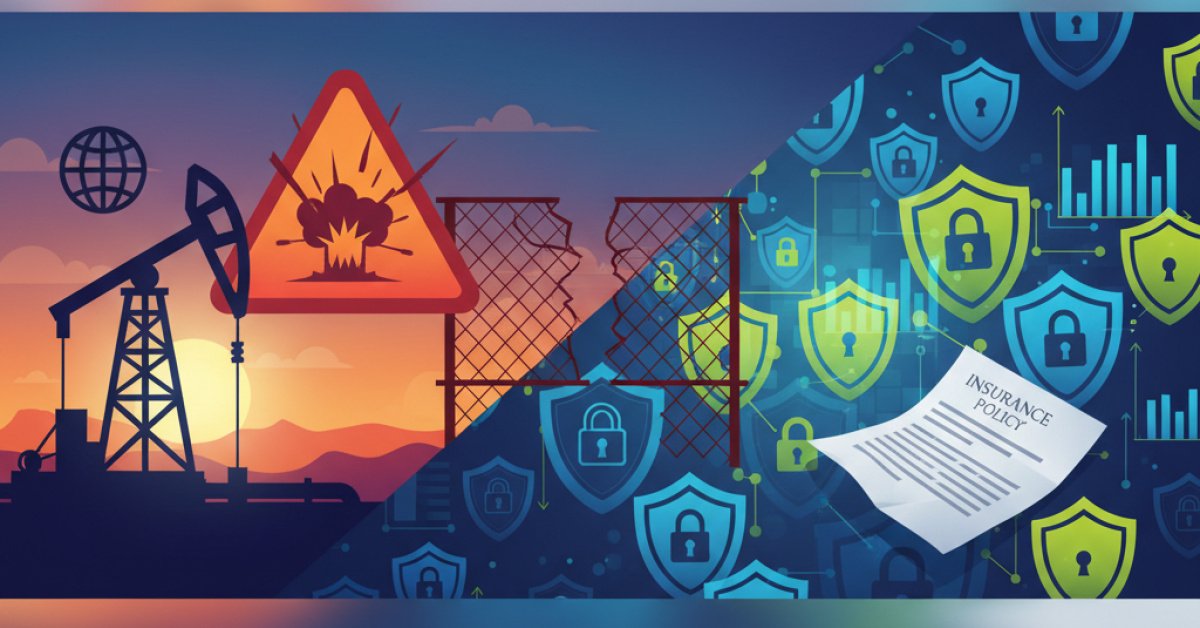
Think of it like this. You have a comprehensive insurance policy for your operations. It’s designed to protect your assets, your people, and your business from the unique dangers of operating in a volatile country. But almost every standard property and liability policy has something called a "terrorism exclusion."
It’s a clause that basically says, "We cover a lot of things, but we don’t cover losses caused by a declared act of terrorism."
The Fine Print Just Came to Life
For years, this exclusion was a somewhat abstract concept in Venezuela. The risks were real, but they didn't have this specific, official label. Now they do.
Any damage to a pipeline, a refinery, or an office building caused by the Cartel de los Soles? Your insurer might now point to that terrorism exclusion and deny the claim. An attack on your personnel? Same problem. The risk hasn't changed, but the definition of the risk has, and that changes the insurance game completely.
You might be thinking, "But what about specialized Political Risk Insurance (PRI)?"
That's the right question to ask. PRI is specifically designed to cover losses from things like expropriation, political violence, and currency issues. Many of these policies do offer some form of terrorism coverage, but it’s not a given.
Here’s the thing: everyone with a policy covering Venezuelan operations is now in a mad scramble. They’re pulling out their documents and having their lawyers read every single line of the "terrorism" definition.
- Does the policy use the U.S. government's list of designated terrorist organizations?
- Is the coverage broad enough to include actions by a group so closely tied to the ruling government?
- Are there sub-limits or special conditions that kick in now that this designation is official?
Suddenly, the "what ifs" are very, very real. An insurer could argue that since the group is now officially a terrorist organization, any loss related to their activities falls under the exclusion, leaving the oil company holding the bag for millions, or even billions, in damages.
What This Means for Day-to-Day Operations
This isn't just a paperwork problem. The ripple effects hit the ground hard and fast.
First, you have to think about the people. The risk profile for every single employee in the country just went up. Kidnapping for ransom is already a serious threat, but if it’s perpetrated by a designated terrorist group, it complicates everything from security protocols to the validity of a Kidnap & Ransom (K&R) insurance policy.
Then there are the physical assets. Imagine you're a facility manager. You now have to worry if that local unrest near your pipeline is just a protest, or if it's an action by a group that could void your insurance coverage if things go wrong. It forces companies to make incredibly difficult decisions about when to halt operations or evacuate staff.
And finally, there's the domino effect on the entire business. Any disruption caused by the Cartel—whether it’s a direct attack or just creating an environment so hostile that you can't operate—could lead to a massive business interruption claim. But if the root cause is deemed "terrorism," that claim could be dead on arrival.
The Scramble is On: What Happens Now?
Right now, it’s all about assessment and clarification.
For Oil Companies: Risk managers are in crisis mode. They are on the phone with their brokers and legal teams, trying to get a definitive answer on where their coverage stands. They're likely looking for ways to plug any gaps, which could mean trying to buy expensive, standalone terrorism coverage—if they can even find an underwriter willing to take on that risk in Venezuela today.
For Insurers: The underwriters are doing their own math. They are re-evaluating their entire book of business in Venezuela. You can bet they're reviewing their exposure and potentially preparing to issue new endorsements that specifically exclude the Cartel de los Soles. Premiums for any coverage in the region are almost certain to spike, and some insurers might simply decide the risk is too high and stop writing new policies altogether.
This single designation has thrown a thick layer of uncertainty over an already incredibly complex operating environment. It shows just how quickly political decisions made in one country can create massive financial and operational risks in another.
For anyone in this business, it’s a powerful, real-time lesson. You can’t just buy an insurance policy and stick it in a drawer. You have to constantly monitor the geopolitical landscape and understand how a headline on Monday can fundamentally change the value of your coverage on Tuesday. It’s a tough reminder that in the world of global energy, the fine print matters—sometimes, it matters more than anything else.