Let’s be honest, nobody gets excited about their insurance renewal notice dropping on the doormat. More often than not, it’s a reminder that another one of our essential bills has probably gone up. We sigh, we pay it, and we wonder why it feels like we’re paying more every single year.
Well, I want to talk about one of the biggest, and frankly most infuriating, reasons behind those rising costs: insurance fraud.
This isn't some victimless, white-collar crime happening in a boardroom. It’s a massive problem that affects every single person who pays for an insurance policy. And the latest numbers are, to put it mildly, pretty eye-watering. The Association of British Insurers (the ABI) just revealed that in 2024, insurers sniffed out a whopping £1.16 billion worth of fraudulent claims.
Yes, you read that right. Billion. With a 'B'.
So, Just How Big is This Problem?
Let's put that £1.16 billion figure into perspective. It’s a slight increase of 2% from the year before, which tells us this isn't a problem that's going away. In fact, it's slowly growing.
This isn't just one or two big heists, either. The ABI found that insurers uncovered at least 98,400 individual bogus or exaggerated claims. That’s nearly 100,000 times that someone, somewhere, tried to pull a fast one on their insurer.
Think about it this way: for every single hour of every single day last year, insurers were uncovering more than £132,000 in fraudulent claims. It’s a constant, relentless battle being fought behind the scenes.
The Main Culprit? Your Car Insurance.
Now, here’s where it gets really interesting. When you hear about insurance fraud, you might picture all sorts of elaborate schemes. But the data shows one area is a much bigger problem than all the others combined.
Motor insurance.
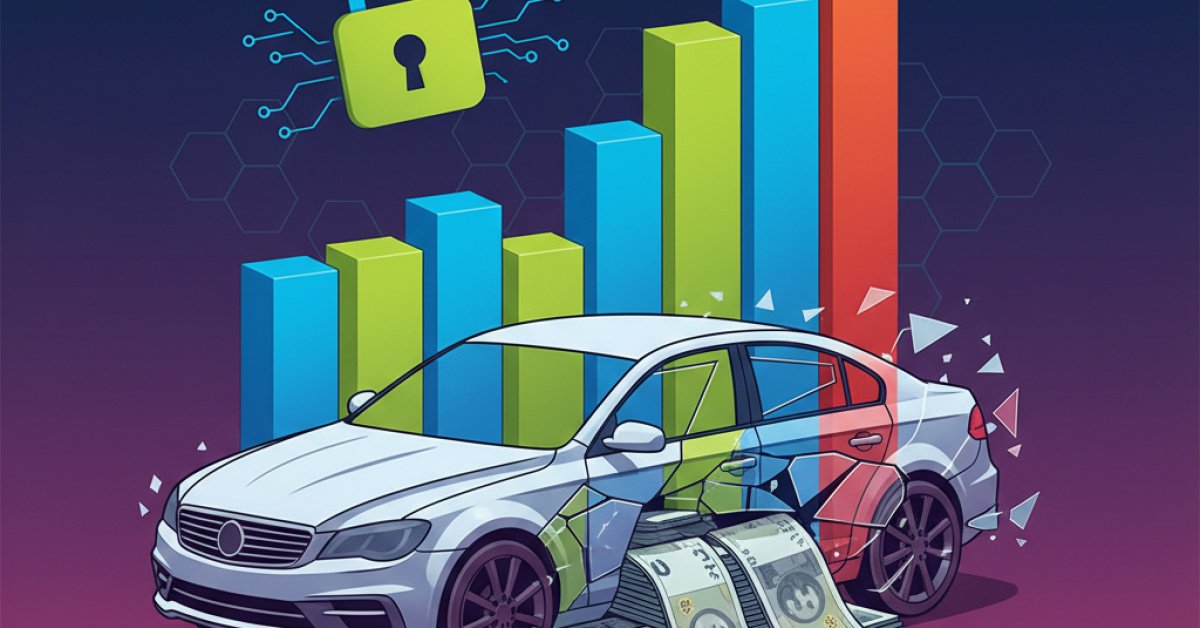
Believe it or not, car insurance scams accounted for 53% of the total value of all fraudulent claims last year. More than half of that £1.16 billion came from scams related to our cars.
What kind of scams are we talking about? It’s a whole range of things, from the highly organized to the simply opportunistic.
- "Crash for Cash" Scams: This is the classic. A fraudster will deliberately cause an accident, often by slamming on their brakes in front of an innocent driver, to make a claim.
- Exaggerated Damage: After a real fender-bender, someone might claim for damage that was already there or wasn't caused by the accident at all.
- Faked Injuries: Whiplash claims that are either completely made up or wildly exaggerated are a huge issue.
- Ghost Broking: This is where fraudsters sell fake, worthless insurance policies to unsuspecting drivers, often online.
It seems our roads have become the primary playground for insurance fraudsters, and it’s a massive part of this billion-pound headache.
Okay, But Why Should This Matter to Me?
This is the most important part. It’s easy to see a number like £1.16 billion and think, "Well, that's the insurance companies' problem, right? They're huge, they can afford it."
But that’s not how it works. At all.
Think of it like a local shop. If people are constantly shoplifting, the owner doesn't just absorb the loss. They have to raise the prices on all their products to cover the cost of the stolen goods. The honest customers end up paying for the actions of the dishonest ones.
Insurance works in the exact same way. The pool of money that insurers use to pay out genuine claims comes from the premiums we all pay. When fraudsters dip into that pool, it leaves less for everyone else.
To make up for the shortfall and to cover the immense cost of investigating all this fraud, insurers have to adjust their prices. That means higher premiums for you, for me, for your neighbour, for all of us. We are all paying a "fraud tax" every time we renew our policy, whether we realize it or not.
So, while it’s great that insurers are getting better at catching these criminals—and uncovering nearly 100,000 bogus claims is a testament to that—the fight is far from over. It’s a constant cat-and-mouse game, and as long as it continues, it will continue to put pressure on the price we all pay for peace of mind.