Ever see a headline about a state supreme court election or a big, splashy lawsuit and think, "What does that have to do with me?" I get it. It can all feel a bit distant and, let's be honest, a little boring.
But I'm going to let you in on a secret we talk about all the time in the insurance world. What happens in those courtrooms has a massive, direct impact on the insurance premiums you pay every single year. For your car, your home, your business—all of it.
It's one of the biggest, yet least-talked-about, drivers of rising insurance costs. So, let's pull back the curtain and connect the dots. Because when you understand what’s happening behind the scenes, you become a much smarter consumer.
What in the World is "Social Inflation"?
Okay, "social inflation" sounds like a term an economist made up to sound smart. But the concept is actually pretty simple.
Think of it this way: For decades, if you had a car accident, the process was fairly predictable. We’d look at the car damage, medical bills, and lost wages to figure out a fair settlement. The rules were pretty clear.
But over the last 10-15 years, something has shifted. We're seeing a change in how society—and by extension, juries and judges—views blame and compensation. There's a growing sentiment to award massive payouts, often far beyond the actual economic damages of an incident. This shift in attitude is what we call social inflation.
It's driven by a few key things:
- A general erosion of trust in corporations.
- Aggressive advertising from plaintiff's attorneys (you've seen the "Call me!" billboards).
- The rise of third-party litigation funding, where outside investors fund lawsuits in exchange for a cut of the settlement.
This creates an environment where lawsuits become more like a lottery ticket than a tool for fair compensation. And that has some serious consequences for the insurance system we all rely on.
The Gavel's Impact: How Judges Can Rewrite the Rules
This is where the courts come in. Judges are like the referees of the legal system. They interpret the rules, decide what evidence is allowed, and ultimately have a huge influence on the outcome of a case.
When a state’s courts start to lean in a more plaintiff-friendly direction, it can completely change the game for insurance claims. It’s not about politics in a red vs. blue sense, but about judicial philosophy. Some judges interpret laws very strictly as they are written. Others believe in a more expansive interpretation, which can create new avenues for lawsuits that didn't exist before.
Let me give you an example. Imagine a state law says a business isn't responsible for an injury if they weren't directly negligent. A few key rulings from that state's high court could reinterpret that law, making it easier to sue a business even if they did very little wrong.
Suddenly, the risk of operating a business in that state skyrockets. And when risk goes up for insurance companies, what do you think happens to premiums? You guessed it. They go up, too.
The Rise of "Nuclear Verdicts"
One of the most visible signs of this trend is something we call "nuclear verdicts." These are jury awards of $10 million or more. And they are becoming shockingly common.
We're not talking about a complex medical malpractice case with lifelong injuries, either. We're seeing routine commercial auto accidents—the kind that might have settled for $500,000 a decade ago—result in verdicts of $20 million, $50 million, or even $100 million.
When a jury hands down a verdict that high, it sends a shockwave through the entire insurance industry. That one verdict doesn't just affect the company involved; it resets the bar for every similar case in the future. Attorneys for plaintiffs now see that massive number as the new starting point for negotiations.
Insurance companies have to price their policies based on potential risk. When the potential for a simple fender-bender to turn into an eight-figure payout exists, they have no choice but to build that massive new risk into their pricing models.
And who pays for that? We all do. It gets baked into the cost of everything, from the shipping price of the products you buy online (because trucking insurance just got more expensive) to the liability insurance your favorite local restaurant has to carry.
So, What Does This Mean for You?
Look, I know this can feel a bit abstract. You just want to know why your auto insurance bill went up again, right? Well, this is a huge piece of that puzzle.
When you see news about judicial appointments or court elections in your state, it's not just political noise. The people sitting on those benches are making decisions every day that influence the "rules of the road" for insurance claims.
A state that becomes known for being a difficult legal environment will see insurance costs climb faster than others. Some insurers might even decide to stop writing certain types of policies in that state altogether, which reduces competition and drives prices up even further.
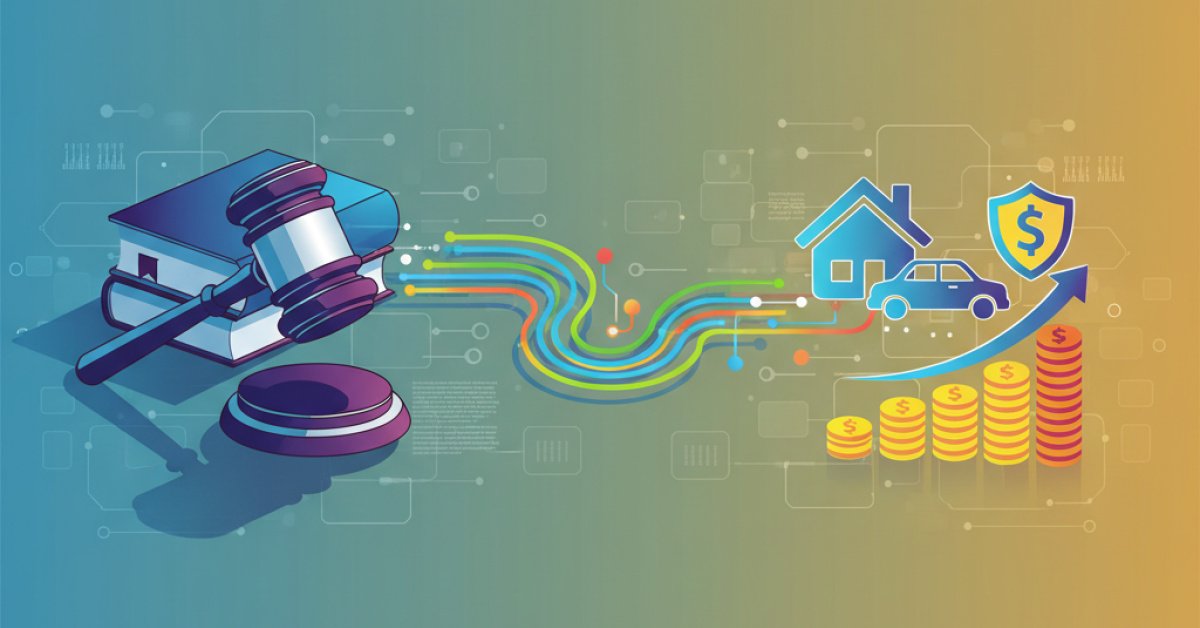
It’s a chain reaction:
- A shift in legal philosophy or public sentiment makes larger lawsuits more common.
- Juries hand down "nuclear verdicts," setting a new, higher standard for settlements.
- Insurance companies have to pay out these massive claims and reserve more money for future ones.
- To cover these new, astronomical costs, they have to raise premiums for everyone.
It's a tough situation, and honestly, there are no easy answers. But the first step is just understanding what's happening. The next time you see a headline about a court case or a judicial election, take a second look. It might have a bigger impact on your wallet than you ever imagined.