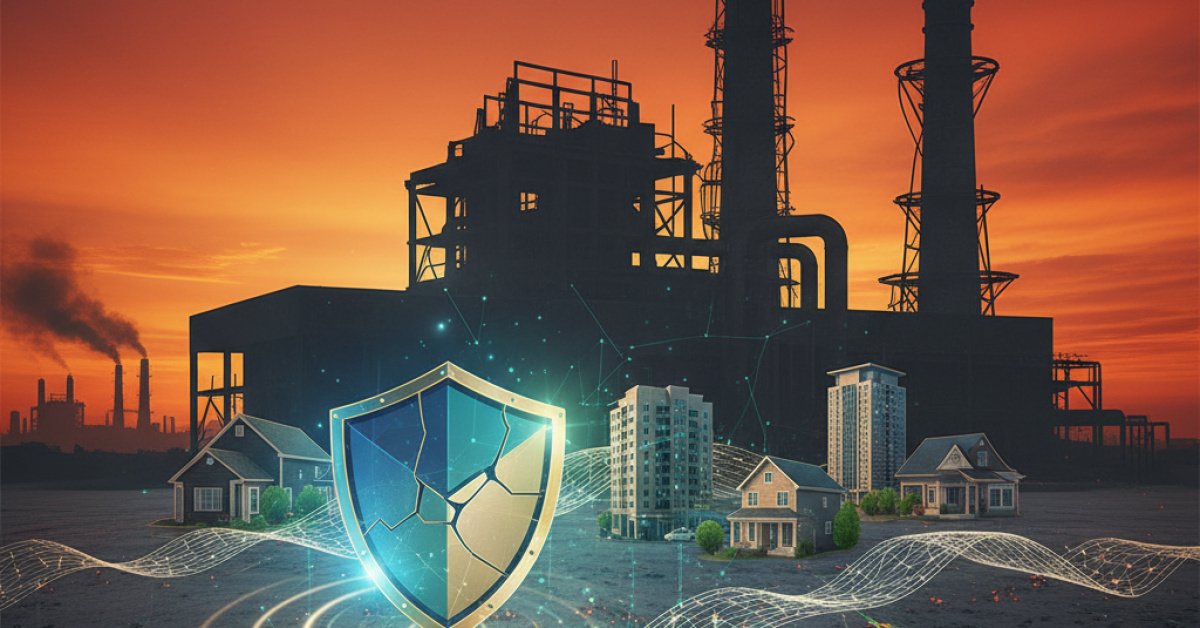
You probably saw the headlines or the pictures. A massive fire at an old, decommissioned power plant in Texas, sending thick, black smoke billowing into the sky. It’s a dramatic scene, and the first thought for most people is about the firefighters and the immediate danger.
But for those of us in the insurance world, a story like this makes our minds go in a completely different direction. We see those plumes of smoke and we don't just see a fire. We see a massive, complicated web of liability and risk that’s about to unfold.
It’s easy to look at a closed-down factory or an empty power plant and think, "Well, it's not operational, so what's the risk?" But honestly, these "sleeping giants" can be some of the most challenging properties to insure correctly. This fire is a perfect, real-world example of why.
First Off, Who Covers the Building Itself?
Let’s start with the most obvious question. The plant is on fire, so who pays to clean up the mess?
You’d think it’s a simple property insurance claim, right? Not so fast. When a commercial property goes from active to vacant or "decommissioned," the insurance game changes completely. A standard commercial property policy is written for an active, operating business. The insurer prices it based on the assumption that people are there, systems are maintained, and security is in place.
Once you shut the doors, the risk profile skyrockets.
- Vandalism and Arson: Empty buildings are magnets for trouble.
- Undetected Problems: A small leak can turn into a major flood because no one is there to catch it. A small electrical issue can spark a fire that burns for hours before anyone notices.
- Maintenance Drops: Things just fall into disrepair, creating new hazards.
Because of this, most standard policies have a "Vacancy Clause." If a building is vacant for a certain period (usually 60 days), coverage can be drastically reduced or even voided for things like fire, vandalism, and water damage.
For a place like a decommissioned power plant, the owner would need a very specific type of policy, often called Vacant Property Insurance. It’s more expensive and might offer less coverage, but it’s absolutely critical. Without it, the owner could be looking at a multi-million dollar cleanup bill with zero help from their insurer.
The Real Problem: When the Smoke Leaves the Property
Okay, so the building itself is a challenge. But honestly, that might be the smallest part of the financial fallout here.
The real nightmare begins when the problem spreads beyond the property lines. Local officials warned residents to stay inside and avoid the smoke. Think about what that really means from a liability standpoint.
That smoke isn't just burnt wood. In an old industrial site, it could be a toxic cocktail of everything from asbestos and lead to old chemicals and PCBs that have been dormant for years.
So, who pays when:
- A nearby resident with asthma has a severe attack and ends up in the hospital?
- The soot and ash coat an entire neighborhood, requiring professional cleaning for hundreds of homes, cars, and businesses?
- A local farm’s crops are contaminated and can no longer be sold?
This is where the owner’s Commercial General Liability (CGL) policy is supposed to step in. It’s designed to cover third-party bodily injury and property damage. But again, we have a major problem.
The Pollution Exclusion Trap
Almost every standard CGL policy written today contains what’s known as an "Absolute Pollution Exclusion." It’s pretty much exactly what it sounds like. The policy states, in no uncertain terms, that it will not cover claims arising from the release of pollutants.
And you can bet the first thing a claimant’s attorney will argue is that the smoke and soot from an industrial fire are pollutants.
Suddenly, the business owner’s primary liability shield is gone. They are facing potentially thousands of claims from affected residents and businesses, with no insurance to back them up. It’s the kind of thing that can bankrupt a company overnight.
The Coverage You Actually Need: Environmental Insurance
This is where we get into the really specialized stuff. For any property with a potential environmental risk—and let’s be honest, that includes almost any former industrial site—a separate Environmental Impairment Liability (EIL) or Pollution Liability policy is essential.
Think of it like this: Your CGL policy is for the classic "slip and fall." Your EIL policy is for the "toxic smoke and ash."
These policies are specifically designed to cover the gaps left by the pollution exclusion. They can help pay for:
- Cleanup costs: Both on your property and anywhere the pollution has spread.
- Bodily injury claims: From people who get sick from exposure.
- Property damage claims: For things like cleaning soot off of neighboring homes.
- Legal defense costs: Which, as you can imagine, can be astronomical in these cases.
For the owners of that Texas plant, whether or not they had a robust EIL policy will likely be the single biggest factor determining their financial future.
Don't Forget the First Responders
There’s one more piece to this puzzle: the people running into the danger. Firefighters battling a blaze at an old industrial site are exposed to incredible risks, far beyond a typical house fire.
If a firefighter gets injured or, worse, develops a long-term illness from inhaling toxic fumes, that falls under Workers’ Compensation. It’s a crucial safety net that ensures they get the care they need without having to sue. It’s a reminder that the ripple effects of an event like this are wide-reaching and impact so many different people and the insurance policies designed to protect them.
So, the next time you see a story about a fire at an old, forgotten building, look past the flames. See it for what it is: a complex and costly lesson in risk management. "Decommissioned" never means "risk-free." It just means the risks have changed, and your insurance coverage had better have changed with them.