It’s funny how we think about resources. We flick a switch, and the lights come on. We turn a tap, and clean water flows out. It’s just… there. We don’t spend much time thinking about the complex systems that make it all happen, at least not until it stops working.
Well, it seems like we might need to start thinking a lot more about water here in Ohio.
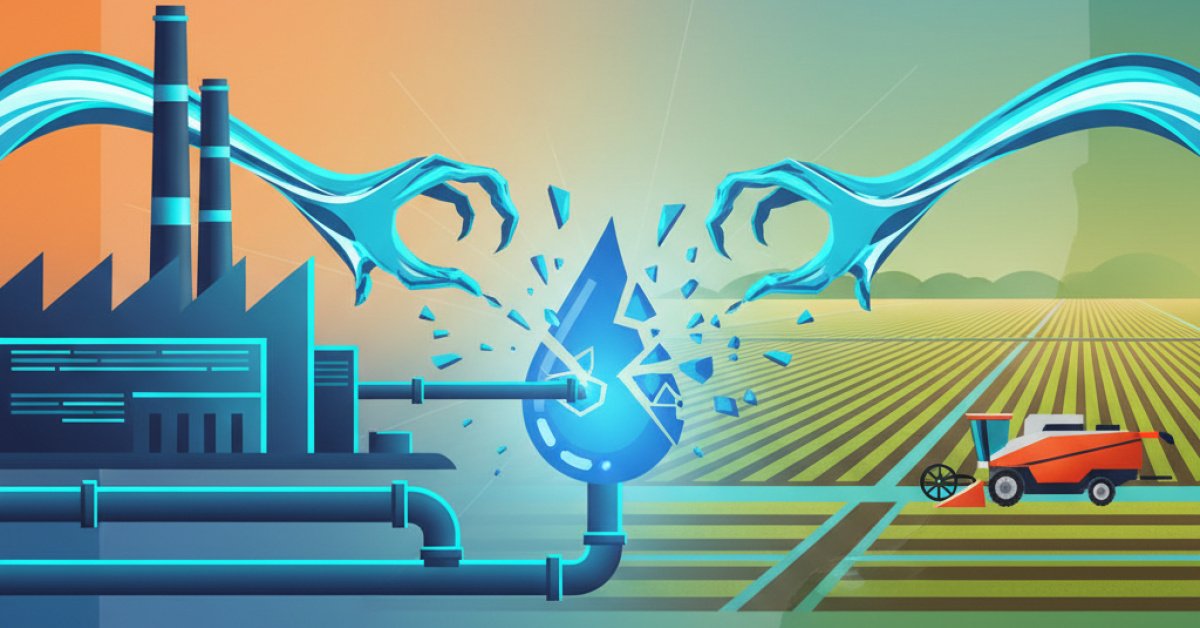
Buried deep in a recent report about the future of water in the central part of the state is a warning that should get every business owner and farmer to sit up and pay attention. It paints a picture of a not-so-distant future where two massive, thirsty giants are heading straight for the same well, and it’s not clear if there will be enough for both.
On one side, you have booming industrial demand. On the other, you have our farmers, who are increasingly likely to need more water to get their crops through the summer. It’s a classic story of a limited resource and growing demand, and it’s setting us up for a serious collision.
So, What’s Really Going On with Ohio’s Water?
Let’s break it down. The report basically lays out a perfect storm scenario.
First, you have a surge in industrial and commercial water needs. Think about the massive new developments, data centers, and manufacturing plants setting up shop in central Ohio. These operations are fantastic for the economy, but they are incredibly thirsty. We’re talking about a demand for water that is projected to "skyrocket."
At the exact same time, our climate is changing. Summers are getting hotter and drier. For farmers, this means the days of relying solely on rainfall to get a healthy crop are becoming a riskier bet. The experts in this report expect that farmers will need to start irrigating their fields regularly, especially during that critical summer growing season when a few dry weeks can be devastating.
You see the problem, right? We have two major sectors of our economy whose need for water is set to peak at the exact same time. It’s a recipe for conflict and, more importantly, a massive business risk.
A Tale of Two Thirsts: Industry vs. Agriculture
It helps to think about just how different, yet equally critical, these water needs are.
For an industrial facility, water isn't just a convenience; it's a core part of the production process. It’s used for cooling, processing, cleaning—you name it. If the water supply is cut back or rationed, production can grind to a halt. No water means no product, which means no revenue. It’s that simple.
For a farmer, water is life itself. During those hot, dry spells in July and August, irrigation can be the difference between a bumper crop and a total loss. A healthy corn or soybean field needs a steady supply of moisture to thrive. When that doesn’t come from the sky, it has to come from a pump. As irrigation becomes less of a backup plan and more of a standard operating procedure, the strain on our water sources is only going to grow.
This isn't about pointing fingers or saying one side is more important than the other. It’s about recognizing a shared vulnerability. When a resource we all depend on becomes scarce, everyone feels the pain.
This Isn't a "Maybe" Problem, It's a "When"
The most chilling part of this report is the sense of inevitability. This isn't some far-off, fifty-years-from-now problem that our grandkids will have to deal with. The pressures are building right now.
The report highlights that this clash will be most intense during the "critical growing period." That’s the window where crops are most vulnerable and industrial output is often at its peak for the year. A water shortage during this specific time isn't just an inconvenience; it's a potential catastrophe for balance sheets.
Imagine a scenario where local authorities have to make a tough choice: Do they prioritize water for the factories to keep people employed, or for the farms to ensure our food supply? It’s a terrible decision to have to make, and the economic fallout, no matter which way it goes, would be immense.
The Ripple Effect: What This Means for Your Insurance and Risk Plan
Okay, so what do we do about this? As an insurance professional, my mind immediately goes to risk management. This looming water issue is a textbook example of an emerging risk that businesses need to get ahead of. Waiting for the taps to run dry is not a strategy.
Here’s how you should be thinking about it, depending on your business:
For Farmers: Is Your Crop Insurance Ready for Drought?
If you're a farmer, this is a direct threat to your livelihood. It’s time to pull out that crop insurance policy and have a serious chat with your agent.
- Review Your Coverage: Does your policy specifically cover losses due to drought or lack of water for irrigation? Don’t assume it does.
- Consider Multi-Peril Crop Insurance (MPCI): This is the workhorse of farm risk management. It typically covers unavoidable losses from natural causes, including drought. But you need to understand the fine print.
- Think Proactively: This is also a signal to start thinking about water conservation strategies on your farm. Investing in more efficient irrigation systems might not just save water; it could be a crucial part of demonstrating you’re managing your risk, which can be important when it comes time to make a claim.
For Industrial and Commercial Businesses: Look Beyond the Obvious
If you run a manufacturing plant, a data center, or any other water-dependent business, your risks are just as real.
- Business Interruption (BI) Insurance: This is the big one. If you’re forced to shut down operations because of a mandatory water curtailment, would your BI policy respond? This is a tricky area. Some policies have specific exclusions for utility service interruptions. You need to know exactly what yours says.
- Contingent Business Interruption (CBI): What if your business is fine, but a critical supplier (maybe a local farm that provides raw materials) is shut down by the water shortage? CBI coverage is designed for this exact scenario, protecting you from losses caused by disruptions in your supply chain.
- Explore Your Options: Are there ways to make your operations more water-efficient? Could you invest in water recycling technology? Taking these steps now not only makes good business sense but also strengthens your risk profile.
Ultimately, this isn't just an "Ohio problem." It's a preview of the kinds of resource challenges businesses everywhere are going to face. Getting ahead of it means treating water not as an infinite commodity, but as a critical asset that needs to be managed and protected.
The first step is simply awareness. Now that you know this is on the horizon, you can start asking the right questions. Talk to your business partners, talk to your industry groups, and most importantly, talk to your insurance advisor. Let’s figure out how to navigate these choppy waters together, before the well runs dry.