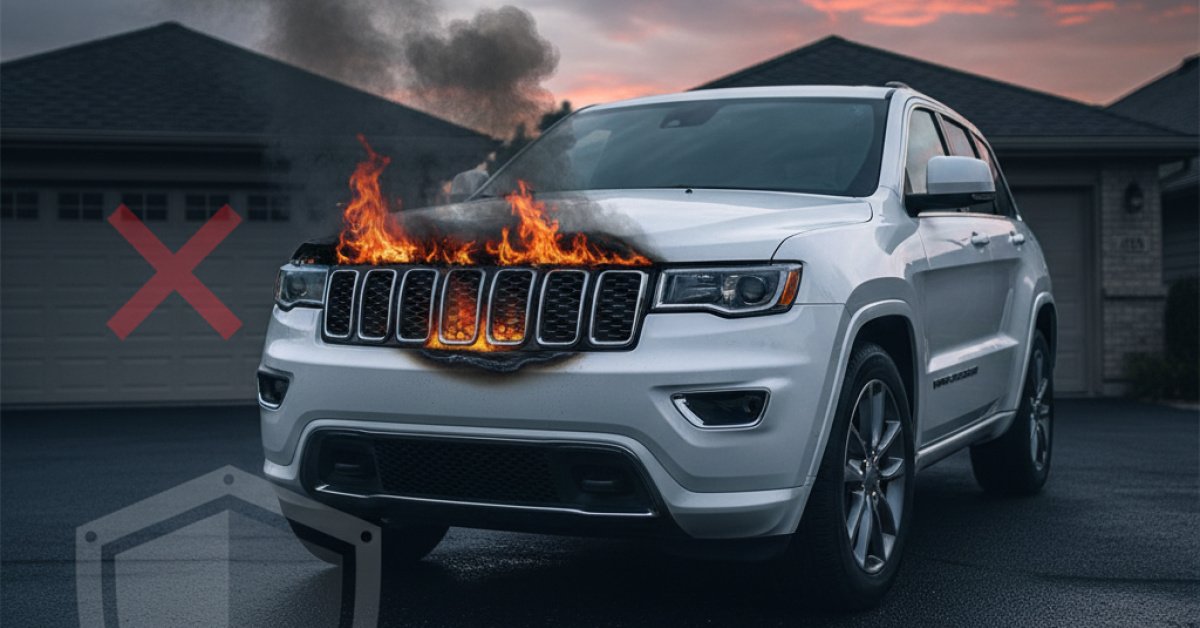
Have you heard the news? Stellantis, the company that owns Jeep, just dropped a bombshell recall, and it’s a scary one. They’re telling hundreds of thousands of Jeep owners to stop parking their vehicles inside their garages or near any structures.
Why? Because they can spontaneously burst into flames. Even when the engine is off.
Let that sink in for a minute. The car you trust to get your family around, the one sitting in your garage right now, could be a fire hazard. It’s the kind of news that makes your stomach drop.
Beyond the immediate shock, my mind—as someone who lives and breathes insurance—immediately jumps to the next question: What happens if it’s your car? What does this mean for your insurance? Let's walk through it, because understanding your coverage right now is more important than ever.
So, What’s Actually Going On with This Recall?
First, let's get the facts straight. This isn't some minor issue with a faulty radio. We're talking about a serious defect that poses a real danger.
Stellantis has identified a problem in certain Jeep models that can cause the vehicle to catch fire. The company has been blunt with its warning: until the fix is made, park outside and away from buildings.
This is pretty much a worst-case scenario for a car owner. It’s one thing to worry about a breakdown on the highway; it’s another thing entirely to worry about your car torching your house while you sleep.
If you own a Jeep, the very first thing you need to do is check if your vehicle is part of this recall. You can usually do this by entering your Vehicle Identification Number (VIN) on the National Highway Traffic Safety Administration (NHTSA) website or on the manufacturer's own recall portal. Don't put this off.
If My Recalled Jeep Catches Fire, Am I Covered?
Okay, let's talk about the big one. Your car is parked in the driveway, and the worst happens. It catches fire. You call 911, the fire is put out, and you're left with a charred mess. Is your auto insurance going to step up?
The answer is yes, if you have the right kind of coverage.
This is where so many people get tripped up. The standard liability insurance that’s required by law won’t help you here. That only covers damage you cause to other people or their property. Collision coverage won't help either—that’s for damage from, well, a collision.
The hero of this story is comprehensive coverage.
Think of comprehensive as the "life happens" part of your auto policy. It covers damage to your car from things other than a crash. This includes:
- Theft
- Vandalism
- Falling objects (like a tree branch)
- Floods and storms
- And you guessed it… fire.
If your recalled Jeep catches fire due to this defect, your comprehensive coverage is what would pay to repair or replace your vehicle (up to its actual cash value), after you pay your deductible. If you don't have comprehensive coverage, you could be on your own to cover the cost of a new car, and that’s a terrifying thought.
But What If the Fire Spreads to My House?
This is the real nightmare scenario behind the "don't park inside" warning. A car fire is bad. A car fire that takes your garage and part of your house with it is a catastrophe.
So what happens then?
Here’s where your insurance policies would have to work together. Your homeowners insurance is what would cover the damage to the structure of your home and your personal belongings inside.
Your auto policy’s job ends with the car. Your home policy’s job begins with the house.
You’d likely have to file two separate claims: one with your auto insurer for the vehicle and one with your home insurer for the house. Yes, that means paying two separate deductibles, which is a tough pill to swallow. But it’s infinitely better than paying for a new car and major home repairs entirely out of your own pocket.
This is a perfect, if unfortunate, example of why having a good relationship with your insurance agent is so valuable. They can help you navigate the chaos of managing two major claims at once.
Will My Insurance Company Go After Jeep?
Now, you might be thinking, "Wait a minute. This isn't my fault! This is a known defect. Shouldn't Jeep be paying for all of this?"
And you're absolutely right. They should.
This is where a fascinating insurance process called subrogation comes into play. It sounds like a complicated legal term, but the concept is pretty simple.
Think of it like this: Your insurance company’s first job is to get you back on your feet as quickly as possible. So, they'll pay for your car and your home repairs first. They make you whole.
But the story doesn't end there.
After they've paid your claim, they're going to turn around and go after the party that was actually at fault—in this case, the manufacturer, Stellantis. Your insurer will essentially say, "Hey, we had to pay out all this money because your product was defective. You owe us."
This is a huge benefit for you. Instead of you having to hire a lawyer and fight a massive corporation on your own, your insurance company, with its teams of lawyers and deep pockets, does the fighting for you behind the scenes. If they're successful in recovering the money, they may even be able to refund you your deductible.
What You Need to Do Right Now
Okay, let's get practical. If you're a Jeep owner, or just want to be prepared, here’s a simple checklist of what to do.
- Check Your VIN: Immediately. Go to the NHTSA website and see if your car is on the recall list. Knowledge is power.
- Follow the Manufacturer's Advice: I can't stress this enough. If they say park outside, park outside. It might be inconvenient, but it’s not as inconvenient as a house fire.
- Schedule the Fix: As soon as a remedy is available, get your vehicle to the dealership to have the recall work done. It’s free of charge.
- Review Your Insurance Policies: Pull out your auto and home insurance documents. Right now. Look for "Comprehensive Coverage" on your auto policy. Check the coverage limits on your home policy. If you’re unsure about what you have, call your agent and ask them to walk you through it. Ask them, "If my car caught fire in the garage, what would happen?"
This recall is a stark reminder that we can do everything right as drivers and still face incredible risks. It’s also a powerful lesson in why insurance isn't just a piece of paper you're forced to buy. It's a financial safety net for when things go horribly, unexpectedly wrong. Take a few minutes today to make sure your net is strong enough to catch you.