Let’s be honest, construction sites are inherently risky places. You've got heavy machinery, work happening at great heights, and a million moving parts. For anyone managing a construction business, keeping your team safe is priority number one, but workers' compensation claims can still feel like an unavoidable cost of doing business.
But what if you could spot an accident before it happened? What if you could see a risky behavior and correct it in a positive, helpful way, preventing an injury and a claim down the line?
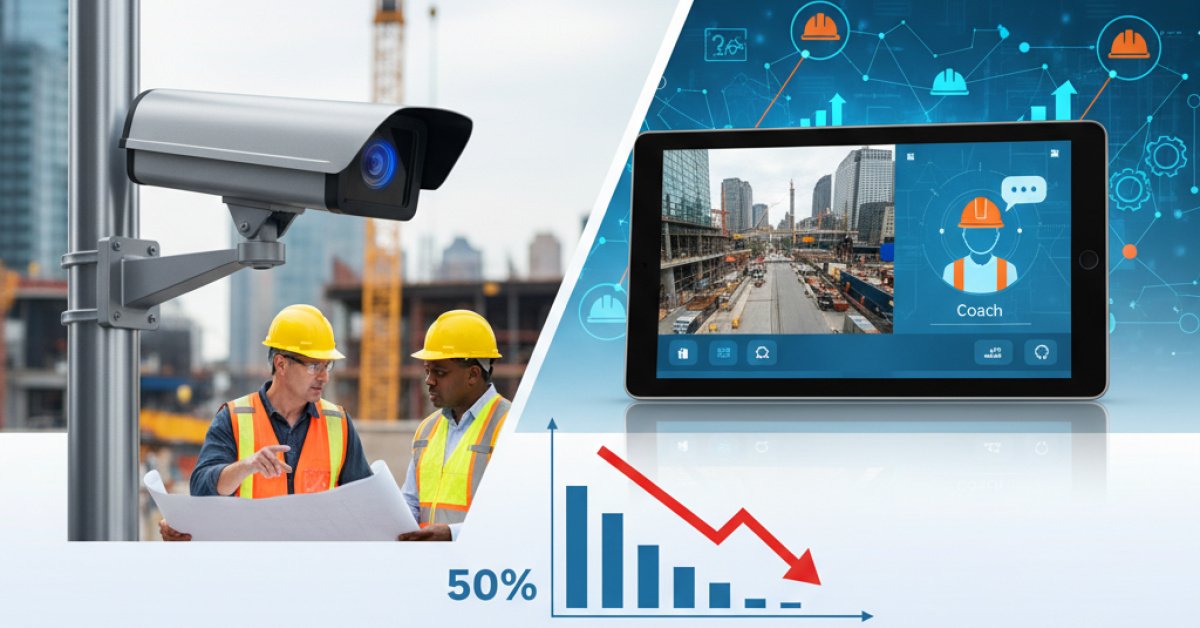
It sounds a bit like science fiction, but that’s exactly what happened in a recent three-year pilot program in New York City. Insurer Zurich North America teamed up with a company called Arrowsight, and the results were, frankly, stunning. They managed to cut the frequency of workers' comp claims by more than half. Yes, you read that right—over 50%.
So, How Did They Pull This Off?
This wasn't some complicated, futuristic tech. The idea was actually pretty simple and brilliant. They combined two things: video cameras and human coaching.
Think of it like a sports team reviewing game footage. The coach doesn't just show the quarterback the interception he threw. They sit down together, watch the play, and the coach points out, "See, right here? If you'd shifted your weight a little differently, you would have had a clear shot." It’s not about blame; it’s about getting better.
That’s the approach Zurich and Arrowsight took. They installed cameras at various construction sites around NYC. But here's the key: these weren't just for passive surveillance.
A team of remote safety experts from Zurich Resilience Solutions would watch the video feeds. They were trained to spot unsafe practices—things that even the best on-site safety manager might miss in the chaos of a busy day. Maybe it was a worker not wearing the right protective gear, someone standing in a risky spot, or a piece of equipment being used improperly.
This Isn't Just 'Big Brother' on the Job Site
Now, I know what you might be thinking. "Cameras watching my every move? No, thank you." And that's a fair reaction. Nobody wants to feel like they're being spied on.
But what made this program so successful is that it was built on coaching, not punishment.
When the remote experts spotted something, they didn't call the boss to get someone in trouble. Instead, they would flag the event and work with an on-site safety manager or coach. That coach would then have a private, positive conversation with the worker.
It was more like, "Hey, John, I noticed you were standing a little close to that excavation. Let's talk about the safest way to approach that area." It became a tool for learning and continuous improvement. The goal was to build a culture of safety, not a culture of fear.
And by focusing on these "leading indicators"—the small, risky behaviors that often lead to accidents—they were able to prevent the accidents from ever happening in the first place.
The Numbers Don't Lie: A 50% Drop is Huge
Let's talk about that result again, because it's a big deal. A more than 50% reduction in the frequency of workers' compensation claims.
For any business, especially in a high-risk industry like construction, that kind of drop is massive. It's not just about the direct cost of the claims, either. Think about everything else that comes with a workplace injury:
- Lost productivity while a team member is out.
- The potential for project delays.
- The administrative headache of managing the claim.
- The impact on team morale.
When you start adding all that up, preventing even a single serious claim can save a company an incredible amount of money, time, and stress. This program proved that investing in proactive safety isn't just a cost center; it's one of the smartest financial decisions a business can make.
What Can We All Learn From This?
You might not be running a multi-million dollar construction project in New York City, but there's a powerful lesson here for any business owner or manager.
The old way of thinking about safety was reactive. An accident happens, we investigate, and then we try to make sure it doesn't happen again. This Zurich program flips that on its head. It’s about being proactive. It's about using technology as a tool to help our people, not just to monitor them.
It shows that the most effective safety programs are the ones that empower employees with knowledge and coaching. It’s about creating an environment where everyone is looking out for each other and constantly learning how to do their jobs more safely.
Ultimately, technology is just a tool. A camera can record an event, but it can't build trust or teach a new skill. It was the human element—the expert coaching and the positive reinforcement—that truly made the difference here. And that's a lesson that can make any workplace, in any industry, a whole lot safer.