Have you ever stopped to think about what powers our digital world? Every time you stream a movie, join a video call, or ask an AI chatbot a question, you’re tapping into a massive, power-hungry data center somewhere.
And here’s the thing: those data centers need an unbelievable amount of electricity. To get it, and to meet their own green energy goals, they’re increasingly building their own renewable power plants—think sprawling solar farms and huge wind turbines—right alongside their server racks.
On the surface, it sounds great. Green energy powering our digital lives. But for those of us in the insurance world, this mashup is creating some incredibly complex and high-stakes challenges. It’s a whole new ballgame, and frankly, we’re all learning the rules as we go.
Let’s pull back the curtain on what’s really going on.
Is the Market Hard or Soft? Honestly, It's Complicated.
For a while there, getting insurance for any kind of energy project, especially renewables, was tough. The market was "hard," which is industry-speak for expensive and difficult to find.
Now, things are shifting. If you talk to brokers, they'll tell you the market is softening. New insurance companies and MGAs have jumped into the renewable energy space, drawn in by the higher prices of the last few years. More players means more competition, which usually means better deals for buyers.
But if you ask the underwriters—the folks who actually take on the risk—they might give you a slightly different story. Todd Wilson from The Hartford describes the market as "balanced, leaning firm." While there might be more capacity, the risks themselves are getting bigger and scarier.
So, what gives? It’s both. There’s more money and appetite to insure these projects, but the projects themselves are becoming mind-bogglingly complex.
This Isn't Your Grandfather's Power Plant
A big part of the challenge is that insuring a solar farm is fundamentally different from insuring a traditional oil refinery.
Kimberly Rafuse, an energy risk engineer at AXA XL, explained it perfectly. Think about an offshore oil rig. Its biggest threat is a massive hurricane—a huge, catastrophic event. But an onshore solar farm? It can be seriously damaged by a "normal" thunderstorm with a bit of hail and lightning.
The last brand-new oil refinery in the U.S. was built back in 1977. We’ve had decades to understand those risks. But wind and solar projects are booming right now.
"That means that there are a lot of actors involved," Rafuse pointed out, "including financial and construction companies as well as equipment manufacturers." It’s not just one established energy company; it’s a whole ecosystem of players, each bringing their own piece of the puzzle—and their own potential for risk.
This is why people like Chris Fasser at AXA XL are pushing for risk managers and insurers to get involved way earlier in the process. "We are trying to move to the left of the schedule as much as possible," he said. The goal is to be a partner from the beginning, not a gatekeeper who shows up at the end to say "no."
The Data Center Dilemma: When Two Giants Collide
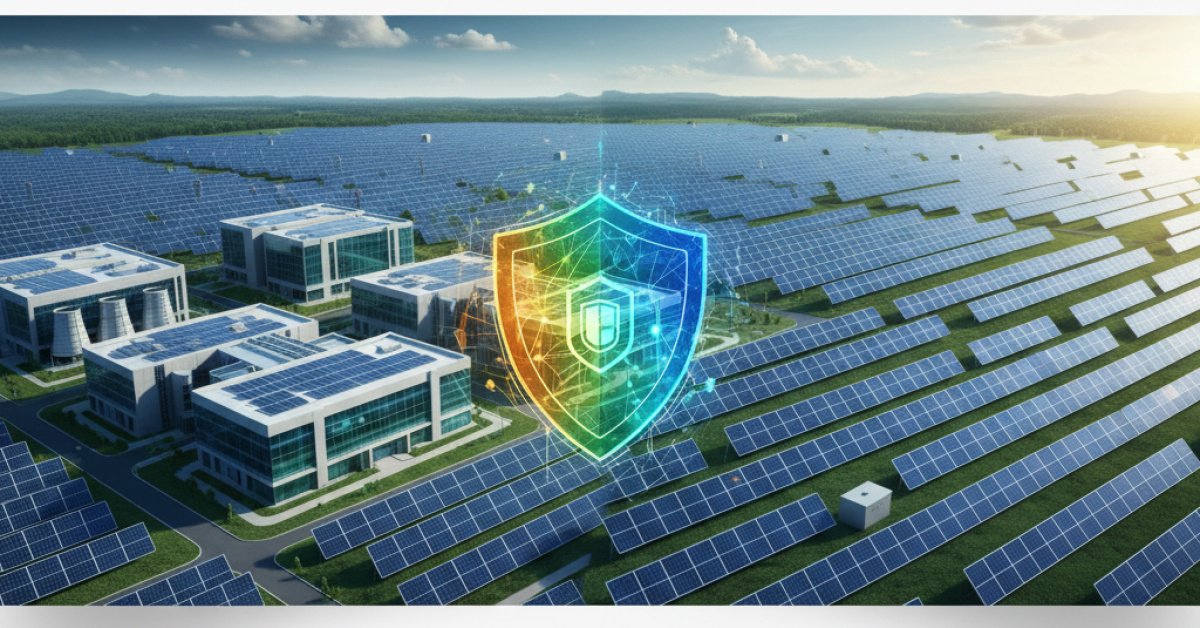
Here’s where it gets really interesting. We’re not just insuring a standalone solar farm anymore. We're insuring a billion-dollar data center that is completely dependent on that solar farm to operate.
This creates a tangled web of risk. Let’s imagine a scenario:
A tech giant is building a new hyperscale data center. The project includes a massive solar array and battery storage system. The whole thing is one giant construction site.
What happens if a tornado damages the solar panels while they’re waiting to be installed? That’s a project cargo and builder’s risk issue.
What if the solar farm construction gets delayed by six months? The multi-billion dollar data center can’t open on time. That’s a massive "delay in startup" claim.
And what if, after it’s all built, a hail storm knocks the solar farm offline? The data center can’t operate, losing millions of dollars a day. Who is responsible for that business interruption? Is it the data center’s policy or the energy provider’s? This is the world of "contingent business interruption," and it's a legal and financial minefield.
"There have been some struggles about who is responsible for what," admitted Molly Lovelette, a VP at Alliant Power. "We have had to get creative with manuscripting policies." In other words, they’re often writing insurance policies from scratch to try and cover these unique situations.
Getting Smarter: How the Industry Is Fighting Back
The good news is, the industry isn't just sitting back and watching the claims pile up. Renewable energy operators are getting much, much smarter about managing their own risks.
I was talking with Amanda Lania at CAC Specialty, who lives and breathes this stuff, and she’s seeing it firsthand.
"Operators are steadily improving their design standards, technology choices, and equipment selection," she said. For example, they’re using thicker glass on solar panels to make them more resilient to hail. They’re also investing in sophisticated weather monitoring and creating detailed plans for what to do when a storm is coming.
Some newer solar panels can even be rotated to a steep "stow" position, almost like closing an umbrella, to minimize damage from hail. And it works. Lovelette mentioned clients whose facilities were hit with 2-inch hail and suffered no damage because their panels were stowed properly.
Naturally, these clients are turning to their brokers and saying, "Hey, we're investing a ton of money to be safer. We should be rewarded for that."
And they're right. As Lania noted, that reward doesn't always have to be a lower premium. It could be a lower deductible for hail damage or higher sub-limits for specific types of losses. "It’s not always just about pricing," she said. It’s about creating a smarter, more customized policy.
The AI Twist: The Problem Might Also Be the Solution
Here’s the final, fascinating twist. The very technology driving this insatiable demand for power—Artificial Intelligence—is also providing some of the tools to help us manage the risk.
Think about weather forecasting. Standard models are pretty good for the next three days. After that, it gets a lot fuzzier. But what if you could get a reliable forecast for the next few weeks?
A company called Planette AI is doing just that. They’ve built a high-resolution forecasting platform, Joro, specifically for insurers and others with weather exposure. As their CEO Hansi Singh explained, traditional models focus on the atmosphere, which "forgets" after about a week. Their model incorporates the "longer memories" of oceans, land, and ice to predict weather patterns weeks and even months out.
Imagine what you could do with that information.
An insurer could see that a wet period will be followed by a long dry spell in a certain region—perfect conditions for a wildfire. They can work with clients to clear brush proactively. A utility could anticipate an extreme heatwave and prepare the grid for a massive spike in electricity demand.
It’s about moving from being reactive to being proactive. This kind of long-term insight can give insurers and reinsurers the comfort they need to continue providing coverage in high-risk zones, even as climate change makes weather more unpredictable.
So, as you can see, the world of renewable energy insurance is anything but boring right now. It's a dynamic, challenging, and incredibly important field. We're insuring the very infrastructure of our digital future, and it requires a new level of creativity, partnership, and technological savvy. It's a big job, but someone's got to do it.