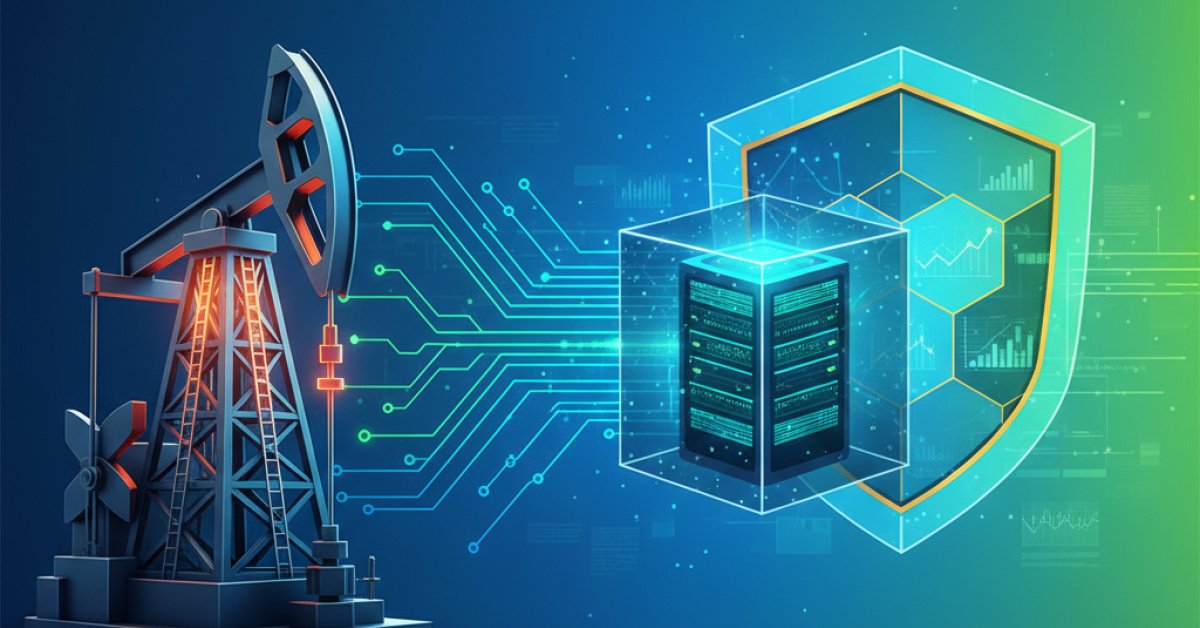
I saw a headline the other day that made me stop and read it twice. It said Chevron, the oil and gas giant, is building its first natural gas-fired power project in West Texas. Okay, nothing too surprising there. But the customer for that power plant? An AI data center.
Now, you might be thinking, "Okay, interesting, but what does that have to do with insurance?" And honestly, that's the million-dollar question we all need to be asking. Because this isn't just a quirky business pivot. It's a perfect example of how the lines between industries are blurring, creating brand-new risks that most of us haven't even thought about yet.
This is one of those little news stories that’s actually a huge signal for the future of risk. Let's unpack what's going on and why it matters to anyone who touches a policy, from brokers to underwriters to risk managers.
First Off, What's Actually Happening in Texas?
Let's get the basic facts straight. Chevron is setting up a project to provide power to a data center. The twist is that instead of just selling natural gas to a utility company, which then sells the power, Chevron is basically becoming the utility company for this one specific, high-stakes customer.
Why? Because artificial intelligence takes an unbelievable amount of electricity. These massive data centers are power hogs like we've never seen before. The tech world is so desperate for reliable, massive amounts of energy that they're now looking to oil and gas companies to become their direct power suppliers.
So, Chevron sees a new line of business. Instead of just selling the raw material (gas), they're selling the finished product (electricity). It’s a smart move for them, but for us in the insurance world, it’s like two puzzles just got dumped on the table and mixed together.
The Big Question: Who’s Insuring What Here?
Think about it like this. Imagine your favorite local bakery decides to start its own delivery service. One day, they’re just worried about oven fires and slip-and-falls in the shop. The next day, they suddenly have to worry about commercial auto accidents, delivery driver liability, and goods-in-transit coverage for all those cupcakes. Their risk profile completely changes overnight.
That's exactly what's happening here, but on a much, much larger scale.
Chevron is no longer just an energy company in this deal. They're also a critical infrastructure provider for a technology company. This creates a fascinating, and frankly, a bit of a scary, blend of risks.
We’re looking at a mashup of:
- Energy & Power Risks: Everything that can go wrong at a natural gas plant. Equipment breakdown, explosions, pipeline issues, commodity price fluctuations. This is stuff the insurance industry knows how to handle.
- Technology & Infrastructure Risks: Everything that can go wrong with powering a data center. Power surges, brownouts, inconsistent voltage—any of which could fry millions of dollars’ worth of sensitive servers.
- Business Interruption Risks: This is the big one. What happens if Chevron's plant goes down? That AI data center isn't just dimmed; it’s off. The financial losses for the data center operator—and potentially all of their clients—could be astronomical.
So, when something goes wrong, whose policy responds? Is it the energy policy? The tech E&O policy? A property policy? It’s a tangled mess that could keep claims adjusters and lawyers busy for years.
An Underwriter's Worst Nightmare (Or Greatest Challenge)
If you're an underwriter, your job is to predict the future based on the past. You look at historical data to figure out how likely something is to go wrong and how much it will cost if it does.
Now, put yourself in the shoes of the underwriter looking at this Chevron project. What historical data do you have for an oil and gas major acting as a dedicated power source for a cutting-edge AI facility?
The answer is zero. None. Nada.
You're flying blind. You have to ask some really tough questions:
- What’s the real value of "uptime"? For a data center, every second of downtime costs a fortune. How do we even begin to calculate the Business Interruption (BI) value here?
- Who is liable for a power surge? If Chevron's plant sends a jolt of "dirty" power that damages servers, is that an equipment failure (their problem) or a professional error in service delivery (a different kind of problem with a different policy)?
- What about contingent risks? Let’s say the data center hosts a critical AI for a major bank. If the power goes out and the bank can't run its fraud-detection algorithms, the bank suffers a loss. They could then sue the data center, who would then turn around and point the finger at Chevron. This chain of liability is incredibly complex.
This isn't just filling out a standard application. This requires a whole new level of technical expertise, blending knowledge from the energy, technology, and financial sectors. It's a massive challenge.
Let’s Game Out the Potential Claims
To really understand the risk, let's think about what could actually go wrong. This isn't just theoretical stuff; these are real scenarios that a risk manager for this project has to be losing sleep over.
A cyberattack is a perfect example. What if a hacker doesn't target the data center's servers, but instead targets the industrial control systems at Chevron's power plant? They could shut the whole thing down, effectively holding the data center hostage without ever touching a line of their code. Is that a cyber claim? A property claim? An act of terrorism?
Or what about a simple contractual dispute? Most power agreements have guarantees for "power quality." If Chevron’s electricity isn't stable enough and the data center’s performance suffers, they could be on the hook for massive damages based on a breach of contract. That falls under a professional liability or Errors & Omissions (E&O) policy—a type of coverage an oil company might not typically have for this kind of service.
And we haven't even touched on the environmental liabilities of running a gas-fired plant or the construction risks of building the thing in the first place.
So, Why Does This Story Matter to You?
Okay, so maybe you don't insure multinational oil giants or AI data centers. But this story is a sign of a much bigger trend. Companies are no longer staying in their neat, tidy little boxes.
Tech companies are getting into banking. Retailers are becoming healthcare providers. And now, energy companies are becoming tech infrastructure companies.
For those of us in the insurance world, this means we can't rely on old assumptions. We have to get curious. We have to ask our clients not just what they do, but what they are becoming. A client you’ve insured for 20 years might be launching a new venture that completely changes their risk profile, and if you're not asking the right questions, you (and they) are going to be left exposed.
This Chevron project is a wake-up call. It tells us that the future of risk is blended, it's complex, and it requires us to be more creative and collaborative than ever before. The simple, single-policy solutions of the past just aren't going to cut it in a world where an oil company powers the future of artificial intelligence. And that's a change we all need to be ready for.