Let’s be honest for a second. When you think of the insurance world, what words come to mind? "Stable," "traditional," maybe even "a little slow to change"? I get it. For a long time, our industry has been built on predictability and avoiding risk, not necessarily embracing it.
But the world isn't predictable anymore, is it? Things are moving faster than ever, and the risks our clients face are getting more complex by the day. Sticking to the old playbook just doesn’t cut it.
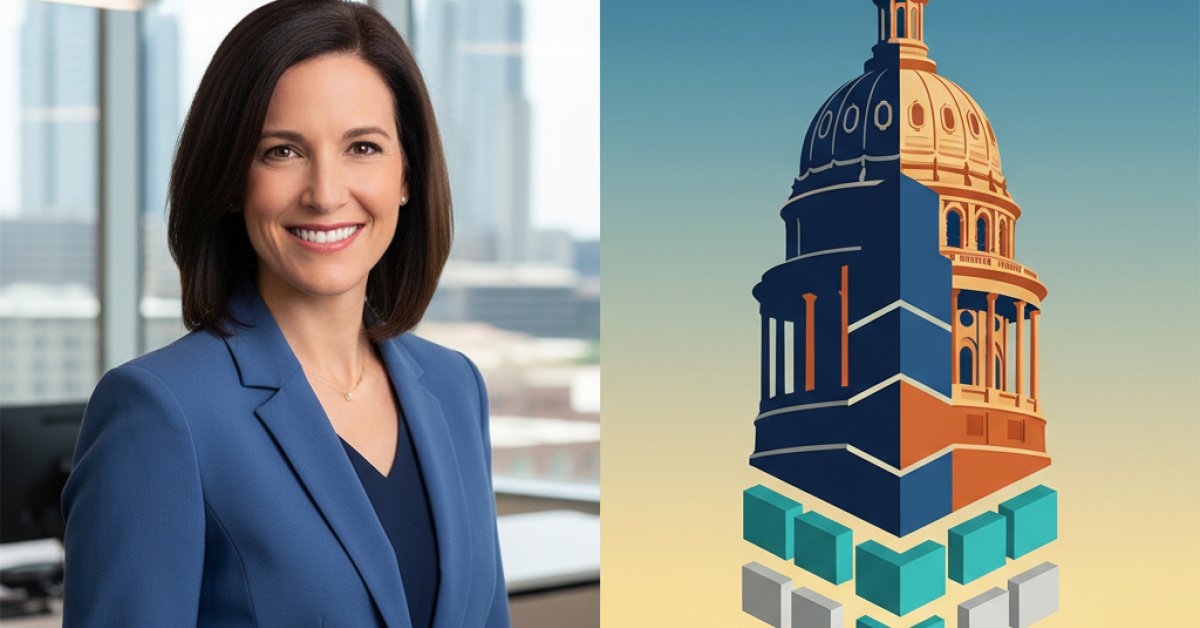
That’s why I was so genuinely excited to sit down and chat with Bri Allen, a broker and director over at AIG. She’s one of those people who has a reputation for not just thinking outside the box, but for redesigning the box entirely. We talked all about what it really means to "stretch the boundaries" in a field that sometimes feels walled-in. And let me tell you, her perspective is a breath of fresh air.
So, What Does "Stretching the Boundaries" Actually Mean?
When I asked Bri this, she laughed. It's not about being reckless or throwing caution to the wind, which is a common misconception. For her, it’s about one simple thing: curiosity.
"It starts by asking 'why not?' instead of just accepting 'that's how it's always been done,'" she explained.
Think of it like this: a traditional insurance approach is like following a recipe word-for-word. You know you'll get a decent cake at the end, but it'll be the same cake every single time. Bri’s approach is more like being a creative chef. She understands the fundamentals—the flour, the sugar, the heat—but she’s not afraid to add a new ingredient or try a different technique to create something truly special and perfectly suited to the person she's cooking for.
In insurance terms, this means looking beyond the standard policy language and getting to the heart of a client's problem. It's about building solutions from the ground up instead of just pulling one off the shelf.
It’s Not Just About Products, It’s About People
Here’s something that really stood out to me during our conversation. For Bri, pushing boundaries has less to do with financial products and more to do with relationships and mindset.
She shared a story about a client in a rapidly evolving tech sector. Their risks were so new that there wasn't a pre-packaged policy that fit. The "by-the-book" answer would have been to offer a patchwork of existing coverages that didn't quite do the job.
But that wasn't good enough.
Bri and her team spent weeks truly embedding themselves with the client, understanding their operations, their fears, and their ambitious goals. They brought underwriters, risk engineers, and claims specialists into the conversation early on. It became a collaborative workshop, not a sales transaction.
The result? They crafted a completely bespoke risk management program that didn't just protect the client; it actually enabled their growth. They could take bigger swings knowing they had a true safety net. That’s the magic. It’s moving from being a vendor of a product to being a genuine partner in a client’s success.
Why Your Comfort Zone is a Risky Place to Be
We all have that internal voice that tells us to play it safe. It’s human nature. But Bri argues that in today's market, standing still is actually the biggest risk you can take.
"Your clients' worlds are changing every single day," she said. "If you're not changing and learning right alongside them, you're not just failing to add value—you're becoming irrelevant."
That hit home for me. It’s easy to get comfortable with the products we know and the processes we’ve mastered. But that comfort can quickly turn into complacency. Bri believes the key is to foster a culture of "healthy dissatisfaction." This means constantly asking:
- Could we be doing this better?
- What are we missing?
- What new risk is just around the corner that our clients haven't even thought of yet?
This isn't about creating anxiety; it's about sparking innovation. It’s about giving your team the psychological safety to propose wild ideas, to fail, and to learn from it. Because the biggest breakthroughs rarely happen when you’re playing it safe.
A Look Ahead: The Future is Flexible
So, what’s next? According to Bri, the future of our industry belongs to the adaptable. The brokers and carriers who succeed will be the ones who are fluid, tech-savvy, and deeply, deeply client-centric.
She sees a world where data analytics don’t just price risk, but predict it. A world where policies are dynamic and can be adjusted in real-time based on new information. And most importantly, a world where the human element—the advisory, the partnership, the creative problem-solving—is more valuable than ever.
Technology can handle the repetitive stuff, but it can’t replicate the trust and ingenuity that comes from a real human connection. That’s our superpower, and stretching the boundaries is all about learning how to use it in new and exciting ways.
Talking with Bri was a powerful reminder that insurance doesn't have to be a rigid, one-size-fits-all industry. At its best, it's a dynamic and creative field that empowers people and businesses to achieve incredible things. It’s up to us to be the ones who are brave enough to ask "why not?" and build what comes next.