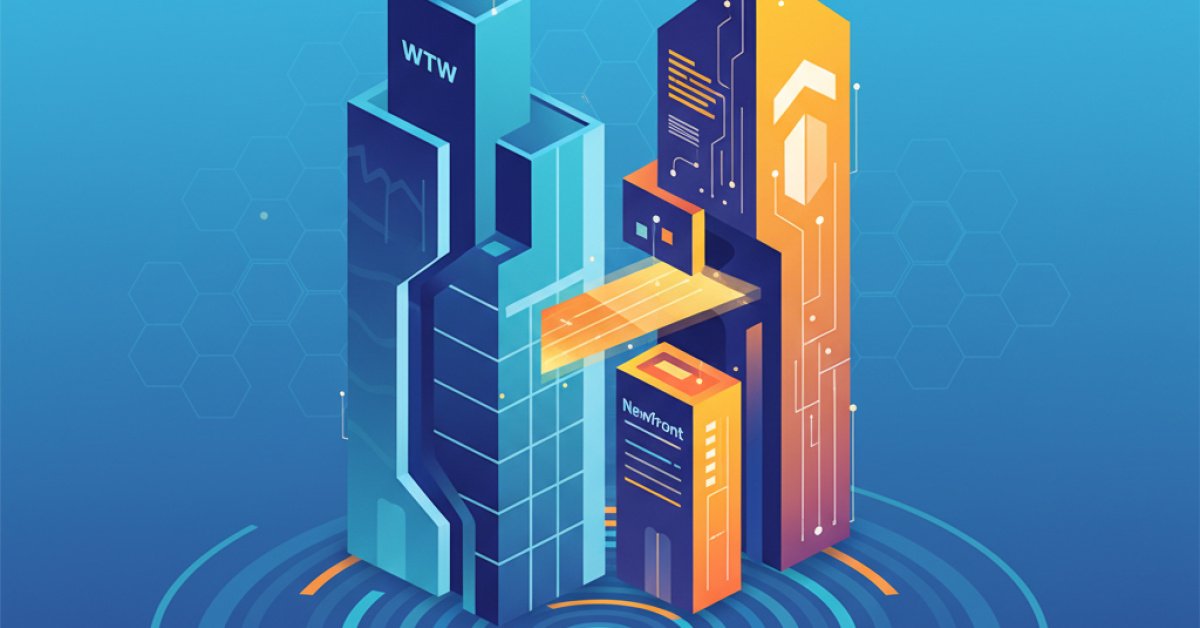
Well, the news dropped, and it’s one of those headlines that makes you sit up and pay attention. WTW—one of the absolute giants in our industry—is acquiring Newfront for $1.3 billion.
At first glance, it might seem like just another Tuesday in the world of corporate mergers. Big fish eats a smaller, faster fish. We’ve seen it before, right?
But I think this one is different. This isn't just about market share or adding another logo to the letterhead. This is a story about the old guard shaking hands with the new school. It’s about tradition meeting technology, and it gives us a real peek into what the future of insurance brokerage is going to look like. So, let’s grab a coffee and actually talk about what’s going on here.
First Off, Who Are We Even Talking About?
To really get why this is such a big deal, you have to understand the two companies involved. They come from pretty different worlds.
The Global Powerhouse: WTW
Think of WTW (Willis Towers Watson) as the seasoned, respected veteran. They’re a global behemoth. They have offices everywhere, deep relationships that go back decades, and a reputation built on stability and comprehensive expertise. They are the definition of a legacy brokerage. They handle incredibly complex risks for some of the biggest companies in the world.
When you work with WTW, you’re tapping into a massive brain trust and a global network. But let’s be honest, giants aren’t always known for being nimble. Sometimes, that size and history can make it harder to pivot and adopt new technology quickly.
The Tech-Savvy Challenger: Newfront
Now, think of Newfront as the energetic, tech-forward upstart that’s been making waves. They built their brokerage from the ground up with technology at its core. Their whole model is about using software to make the insurance process smoother, faster, and more transparent for clients.
They’ve combined the human element of experienced brokers with a slick, modern platform. For a lot of businesses, especially those in the tech space, this approach feels like a breath of fresh air. They’re the ones who proved that you don’t have to be a hundred years old to be a serious player in the brokerage game.
So, Why the $1.3 Billion Handshake?
When you see a deal like this, the big question is always "why?" Why would a giant like WTW spend over a billion dollars on a younger, tech-focused competitor? And why would a fast-growing company like Newfront agree to be acquired?
It really comes down to a classic "you complete me" scenario. Each company has something the other desperately wants.
What WTW Gets from the Deal:
- A Tech Injection, Fast: Building a modern, intuitive tech platform from scratch is incredibly hard, expensive, and slow. By acquiring Newfront, WTW essentially gets to leapfrog years of development. They’re buying a proven, client-facing technology stack and the talent that built it.
- A Culture of Innovation: Big companies can sometimes get stuck in their ways. Bringing in the Newfront team is a way to inject a dose of that agile, startup-like energy into the massive WTW ecosystem.
- Access to a New Client Base: Newfront has been incredibly successful with high-growth, modern companies. This deal gives WTW a much stronger foothold in that market.
What Newfront Gets from the Deal:
- Global Scale, Overnight: Newfront has been growing fast, but competing on a global scale is a whole different ballgame. Plugging into WTW’s network gives them instant access to international markets, resources, and expertise they couldn’t have built on their own for years.
- Deeper Resources: Let's face it, $1.3 billion provides a massive war chest. They now have the financial backing of one of the world's largest brokers to invest even more in their technology and people.
- Access to the Big Leagues: Now, Newfront’s brokers can go after the largest, most complex accounts in the world, backed by the credibility and balance sheet of WTW.
Think of it like a legendary, world-class orchestra acquiring a brilliant young DJ. The orchestra has the history, the reputation, and the ability to fill any concert hall in the world. The DJ has the modern tools, the fresh perspective, and an audience that the orchestra was struggling to reach. Together, they can create something entirely new that neither could have done alone.
What Does This Mean for Insurance Clients?
Okay, this is the part that really matters. How does this billion-dollar deal actually affect the businesses and people buying insurance?
Honestly, it could go one of two ways, and the success of the integration will be key.
In a perfect world, clients get the best of both worlds. Imagine getting the deep, specialized expertise and global reach of WTW delivered through Newfront’s intuitive, easy-to-use technology platform. That’s the dream, right? A seamless, transparent process backed by world-class brainpower. It could mean faster service, better data and analytics, and a much less painful renewal process.
But we have to be realistic. Mergers are messy. The big risk here is a culture clash. Can the nimble, fast-moving culture of Newfront survive inside the corporate structure of WTW? Or will bureaucracy slow things down and frustrate the very innovators they just paid a fortune for?
For clients of Newfront, there might be a worry that they’ll lose that personal, high-touch service they loved. For clients of WTW, the concern could be a forced transition to new technology they aren't ready for. The execution over the next couple of years is everything.
The Clock is Ticking: The Road to Q1 2026
The press release says the deal is set to close in the first quarter of 2026. That might seem like a long way away, but for a merger of this size, it makes sense.
There are regulatory hurdles to clear around the world, which takes time. More importantly, this gives them a runway to figure out the single most important piece of the puzzle: integration.
They have to decide which systems to keep, how to merge the teams without losing key people, and how to communicate a unified vision to clients and employees. This is where mergers either succeed brilliantly or fail spectacularly.
Over the next 18 months, we should all be watching for a few key signals:
- Leadership announcements: Who from Newfront will be taking on senior roles in the combined company? This will tell us a lot about how much influence their tech-first vision will have.
- Technology roadmap: Will they roll out the Newfront platform to all WTW clients? Or will they keep them separate? The answer will signal their long-term strategy.
- Client communication: How they talk to their clients during this transition will be a huge indicator of how much they value the relationships they've built.
This acquisition is more than just a financial transaction. It's a bold statement from WTW that the future of broking is tech-enabled, and it's a validation for Newfront that their model is the one to beat. It puts every other major broker on notice: you either build, buy, or risk being left behind. It’s going to be fascinating to watch how it all plays out.