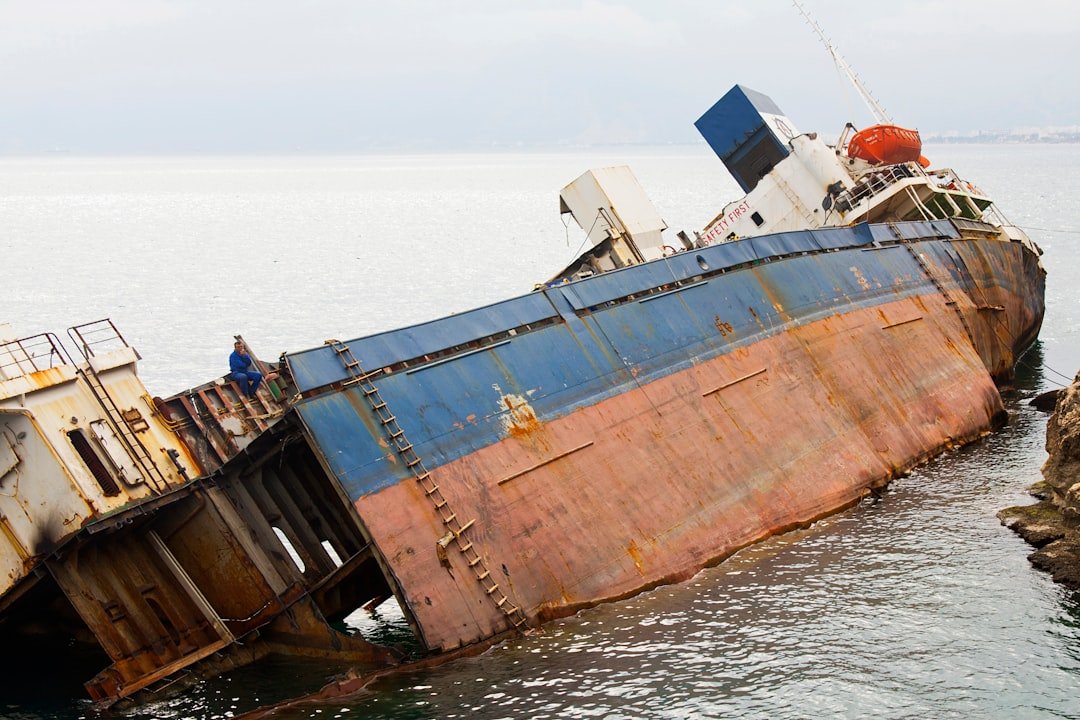
Every now and then, a headline pops up that just makes you pause. You read it, and for a moment, the world kind of stops. That’s how I felt when I saw the news about the commercial fishing vessel that sank off the coast of Massachusetts. The Coast Guard had to suspend its search for seven crew members in those rough, freezing waters. It’s just heartbreaking.
When you work in insurance as long as I have, you see these stories a little differently. Beyond the immediate human tragedy, you can’t help but think about the aftermath—for the families, for the business owner, for everyone whose lives were just turned completely upside down.
These aren't just abstract risks we talk about in boardrooms. They are real, and they have devastating consequences. So, I wanted to take a moment to walk through what happens behind the scenes in a situation like this, from an insurance perspective. Because understanding this stuff is the first step to making sure people are protected when the absolute worst happens.
What Happens to the Boat Itself?
First, let's talk about the most obvious loss: the vessel. A commercial fishing boat isn't a small investment. We're talking hundreds of thousands, sometimes millions, of dollars of specialized equipment, electronics, and engineering. It's the primary asset of the business.
When a vessel is lost at sea, this is where Hull & Machinery (H&M) insurance comes into play.
Think of it as the commercial auto policy for a ship, but on a much more complex scale. It’s designed to cover physical damage to the vessel itself—the hull, the engines, the equipment on board. In a total loss scenario like this one, where the ship sinks and is unrecoverable, the H&M policy is what helps the owner recoup the value of their lost asset. Without it, the business owner would be facing a complete financial wipeout on their biggest investment.
The Human Cost: More Than Just a Policy
This is the part that’s hardest to talk about, but it’s the most important. The news mentioned seven people on board. Seven families waiting for news that will never come. From an insurance standpoint, this is where a very specific, very crucial type of coverage called Protection & Indemnity (P&I) insurance steps in.
P&I is a beast of a policy, and it’s unique to the maritime world. It’s not just one thing; it’s a bundle of liability coverages. For the crew, it’s absolutely vital. It typically covers things like:
- Injury, illness, or loss of life: This is the primary function in a tragedy like this. P&I provides for compensation to the crew members' families. It addresses the financial devastation that follows a personal loss.
- Medical expenses: If a crew member is injured, P&I covers their medical care.
- Repatriation: It covers the costs of getting crew members back home if they’re left in a foreign port due to illness or injury.
Honestly, you can think of P&I as the workers' comp, general liability, and HR support system for a vessel, all rolled into one powerful policy. It protects the shipowner from crippling liability claims, but more importantly, it provides a critical financial safety net for the crew and their loved ones. In the face of an unthinkable loss, it's the mechanism that ensures families aren't left with nothing.
What About the Lost Cargo?
A fishing vessel isn't just carrying a crew; it's carrying its product. The entire purpose of the voyage is to bring back a haul of fish. When the ship goes down, the catch goes down with it.
That represents a huge loss of revenue. This is where cargo insurance can be so important. While sometimes integrated into other policies, it specifically protects the value of the goods being transported. For a fishing company, losing a full catch can be a major financial hit, and this coverage helps soften that blow, allowing the business to weather the financial storm on top of the operational one.
Why Your Standard Business Policy Won't Do
I talk to business owners all the time, and one thing I always stress is that your insurance needs to match your actual risk. A standard Business Owner's Policy (BOP) you'd get for a retail shop or a small office is completely, utterly useless for a high-risk operation like commercial fishing.
The maritime world is governed by its own set of laws, risks, and regulations. Things like the Jones Act, a federal law that governs maritime commerce, create a unique legal environment for crew injuries. The risks are different, too. You're not worried about a slip-and-fall in an aisle; you're worried about rogue waves, equipment failure in the middle of the ocean, and the very real dangers of working on a moving deck in icy conditions.
That’s why marine insurance is a specialty all its own. It’s built from the ground up to address these unique perils. Trying to run a maritime business without specialized coverages like H&M and P&I is like trying to navigate the North Atlantic in a rowboat. You’re just not equipped for the reality of the journey.
Stories like the one from off the coast of Massachusetts are a sobering, painful reminder of the stakes. Insurance can feel complicated and, let's be honest, a little dry sometimes. But it's never been about just policies and premiums. It's about people. It's about providing a path forward when every other path seems to be gone. It can’t bring anyone back, but it can make sure that a tragedy doesn't have to mean complete financial ruin for the families and businesses left behind. And in the darkest of times, that little bit of stability can make all the difference.