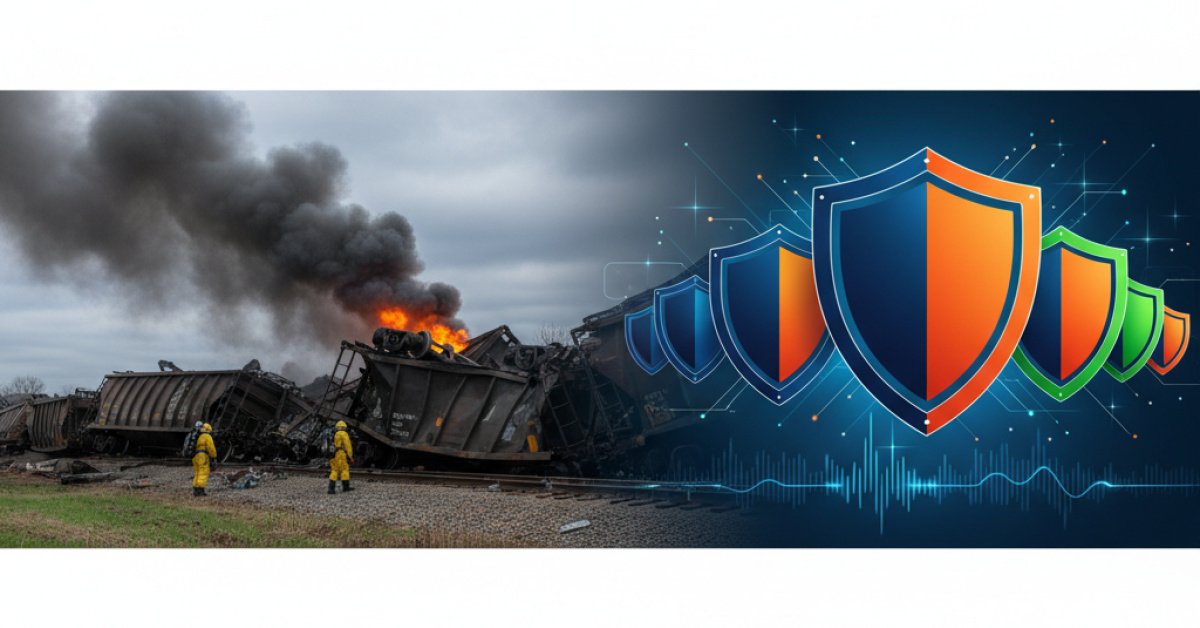
You probably saw the headlines a while back about that CSX train derailment in a rural part of Kentucky. It’s the kind of story that flashes across your screen—a chemical leak, a fire, a shelter-in-place order—and you think, "Wow, that's terrible for those people," before scrolling to the next thing.
But for me, as someone who spends their days in the world of insurance, my brain immediately starts connecting the dots. I don't just see a news story; I see a massive, real-world stress test for dozens of different insurance policies. It’s a stark reminder that insurance isn't just a piece of paper you file away. It’s a financial first responder for when things go horribly, unexpectedly wrong.
Let’s peel back the layers of this incident, because it’s a perfect (and scary) example of how one single event can trigger a tidal wave of claims and financial fallout.
So, What Exactly Happened Out There?
First, a quick recap of the situation. A CSX train went off the tracks in a remote area of southern Kentucky. That's bad enough, right? But it gets worse. Some of the derailed cars were carrying a flammable chemical, which started leaking and then caught fire.
Authorities, doing exactly what they should, issued a shelter-in-place order for everyone in the immediate area. Thankfully, reports said no one was injured, which is the best news you can hope for in a situation like this.
But the event itself is just the first domino to fall. The financial and logistical cleanup is where the insurance story really begins. And trust me, it’s a complicated one.
The Insurance Domino Effect: Who Pays for All This?
When something like this happens, it’s not one single insurance policy that kicks in. It’s a whole web of them. Think of it less like a single safety net and more like an entire system of nets, each designed to catch a different part of the problem.
The Big One: The Railroad's Liability
Let's start with the owner of the train, CSX. A massive corporation like that carries equally massive liability insurance. We’re talking policies with eye-watering limits, designed to cover catastrophic events. This is their first line of defense.
This coverage would be on the hook for a whole host of things:
- Environmental Cleanup: This is the giant. Cleaning up a chemical spill is incredibly complex and expensive. You have soil testing, water contamination checks, and the physical removal of hazardous materials. Environmental liability and pollution policies are specifically designed for these nightmare scenarios.
- Third-Party Property Damage: Did the fire spread to a nearby farm? Did the chemical runoff damage someone’s land? The railroad’s liability insurance has to respond to those claims from other people and businesses.
- Emergency Response Costs: The fire departments, hazmat teams, and police that respond don’t work for free. The responsible party (and their insurer) is typically billed for the cost of the emergency response.
This is the kind of claim that can run into the millions, or even tens of millions, of dollars very, very quickly.
But What About the Little Guy?
It’s easy to focus on the big corporation, but what about the local businesses and residents who were just trying to live their lives when a train derailed in their backyard? This is where the story gets personal, and where you can see how your own insurance might come into play.
Imagine you own a small diner or a retail shop a mile from the derailment. The authorities issue a shelter-in-place, and then maybe an evacuation order. You have to close your doors for two, three, maybe even five days. You’re not making any money, but you still have to pay your rent, your utilities, and your employees.
This is exactly what Business Interruption Insurance is for.
It's a part of your business owner's policy that so many people overlook. It’s designed to replace the income you lose when your business has to shut down due to a covered event. In this case, the fire and chemical spill would almost certainly qualify as a peril that forces a civil authority (the police or fire department) to block access to your business. Without this coverage, you’d just be out of luck.
Thinking Beyond the Obvious Damage
The fallout from an event like this isn't just about what you can see. It's not just the burned ground or the twisted metal. The invisible risks are just as important.
What if you're a farmer whose crops are now in a contaminated zone? What if you're a homeowner who has to pay for a hotel for a few nights because you were evacuated? These are all potential claims that need a path to resolution.
For homeowners, your standard policy might include coverage for Additional Living Expenses (ALE) if a mandatory evacuation forces you from your home. It’s another one of those coverages that seems minor until you desperately need it.
This incident in Kentucky is a powerful lesson. It shows us that risk is interconnected. A transportation issue becomes a hazardous material issue, which becomes a public safety issue, which becomes a business and personal finance issue.
It’s a reminder to look at your own insurance policies—whether for your business or your home—and ask yourself some tough questions. Don't just think about a fire in your own building. What happens if the road to your business is closed for a week? What happens if an event down the street forces you to evacuate?
These aren't just hypotheticals. They happen. And when they do, having the right insurance isn't just helpful; it’s the only thing standing between a manageable disruption and a financial disaster.