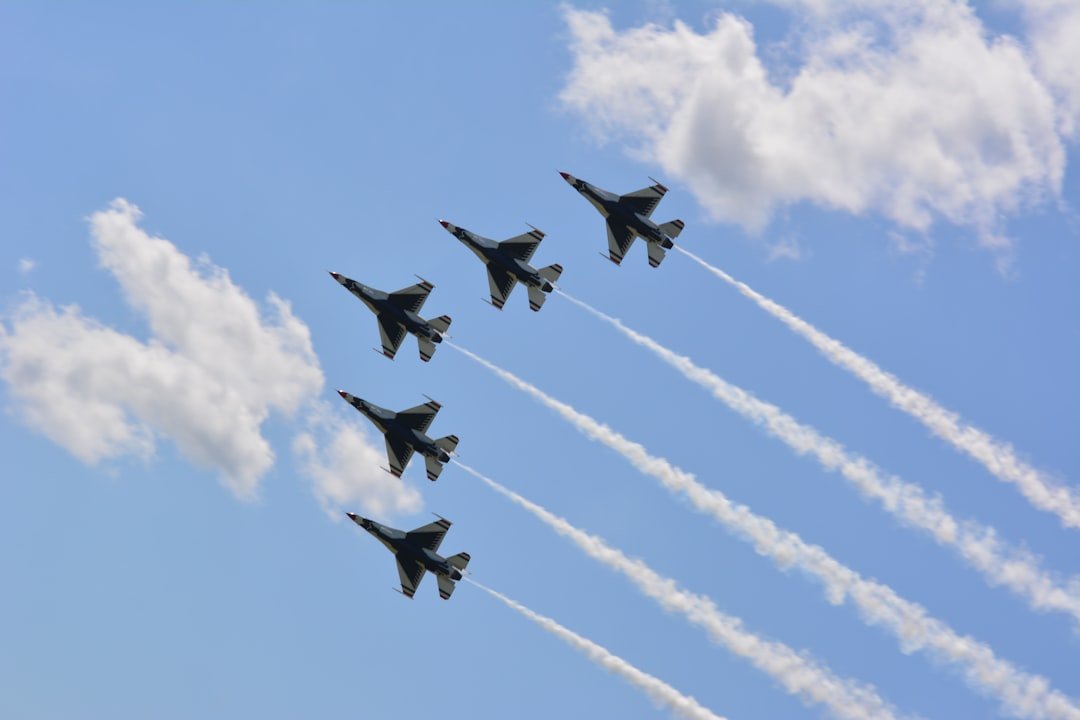
It sounds like something straight out of a Hollywood blockbuster. You’re at an air show in Idaho, the sun is shining, and the roar of Navy jets fills the sky. Then, the unthinkable happens. Two of the jets collide in midair.
In a split second, the sleek machines are a tangle of metal. But then, a small miracle: all four crew members eject. You watch as four parachutes blossom against the blue sky, carrying the pilots safely to the ground. Meanwhile, the fused wreckage of the planes careens into an empty field, exploding in a massive fireball.
Everyone is safe. It’s an incredible story of training, technology, and honestly, a whole lot of luck.
But as an insurance writer, my brain immediately goes to a different place. After the initial wave of relief, the questions start bubbling up. Who pays for this? We’re talking about two incredibly expensive, highly specialized military aircraft, not to mention the potential for damage on the ground. You can’t just call up your local agent and file a claim for a fighter jet.
So, let's pull back the curtain. When a catastrophe like this happens in front of thousands of people, a whole complex web of insurance and liability kicks into gear that most people never even think about.
First Off, What About the Pilots?
This is always the most important question. Thankfully, in this case, they all walked away. But what if they hadn't? What if they were seriously injured?
Military personnel, especially those in high-risk jobs like naval aviation, aren't covered by traditional workers' compensation. Instead, their coverage comes from a combination of government programs.
Think of it this way: The U.S. government is essentially the employer and the insurer. If a service member is injured or killed in the line of duty, their medical care is handled by the military health system and the Department of Veterans Affairs (VA). There are also disability benefits and life insurance policies specifically for them.
The main life insurance program is the Servicemembers' Group Life Insurance (SGLI). It provides low-cost term life insurance, and members are automatically enrolled. It’s a crucial piece of the puzzle, giving families a financial safety net in the worst-case scenario. For pilots in incredibly dangerous situations, this isn't just a "nice-to-have" benefit; it's an absolute necessity.
Okay, But Who Pays for the Jets?
This is where things get really interesting. You’re looking at aircraft that can cost tens of millions of dollars. An F/A-18 Hornet, a common Navy jet, can run anywhere from $29 million to over $70 million depending on the model and equipment. You just watched two of them turn into a smoldering crater.
So who writes that check?
The short answer: we do. The U.S. government is self-insured.
It’s just not practical or financially feasible for the government to buy commercial insurance policies for every single tank, ship, and fighter jet it owns. Can you imagine the premium on a fleet of aircraft carriers? The cost would be astronomical.
Instead, the government assumes the risk itself. When an asset like a jet is destroyed, the replacement cost comes out of the military's budget, which is funded by taxpayers. It's a loss, for sure, but it's a calculated and accepted cost of maintaining a powerful military. There's no claims adjuster, no paperwork to file with an insurance company. It's an internal accounting matter handled within the vast machinery of the Department of Defense.
What If the Wreckage Had Hit a House?
This is the scenario that keeps event organizers up at night. The planes in the Idaho incident luckily crashed in an open field. But what if they had come down in a nearby neighborhood? Or on a parking lot full of cars?
Now we’re talking about liability, and this is where the insurance picture gets a lot more complicated. Several layers of protection would (or should) be in place.
1. The Air Show Organizer's Insurance
Any organization hosting an event like this is required to carry massive liability insurance policies. We're talking about aviation liability coverage specifically designed for air shows. This policy is meant to cover property damage and bodily injury to third parties—namely, the spectators and the surrounding community. Insurers who specialize in this field know the risks are huge, and the premiums reflect that. They’ll look at everything from the types of maneuvers being performed to the layout of the event and the "safety box" around the performance area.
2. The Government's Role (Sovereign Immunity)
Here’s a legal concept that plays a huge part: sovereign immunity. Historically, you couldn't sue the government without its permission. The Federal Tort Claims Act (FTCA) changed that, creating a process for private citizens to file claims against the United States for damages caused by the negligence of federal employees.
So, if military negligence was proven to be the cause of the crash and it destroyed private property, people could file a claim under the FTCA. However, it's not a simple process. There are a lot of exceptions, especially for activities considered "discretionary" or inherently related to military functions. It can get legally messy, fast.
The bottom line is that a combination of the event's insurance and the government's own liability would likely be in play. Lawyers would be involved for years, sorting out who was responsible and who ultimately had to pay.
It's a Reminder of the Invisible Safety Net
When we watch incredible displays of skill and power like an air show, we’re seeing the very tip of the iceberg. Beneath the surface is a massive, intricate structure of risk management, government policy, and specialized insurance that makes it all possible.
It’s a world away from our own auto or home insurance, but the principle is the same: planning for the worst-case scenario. The story of the Idaho collision is amazing because of the pilots' incredible escape. But the unseen story is just as important—it’s about the financial and legal safety nets designed to catch the fallout when millions of dollars of equipment and public safety are on the line. It's a powerful reminder that behind every thrilling moment, there’s a quiet, careful calculation of risk.