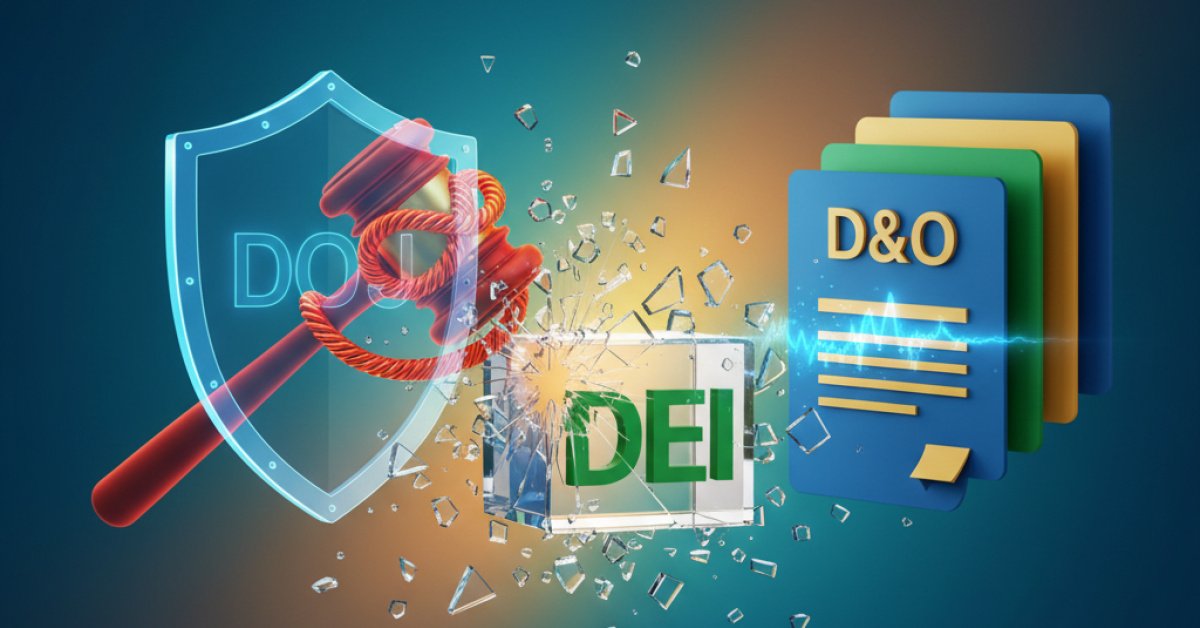
Have you seen this? It’s one of those headlines that makes you do a double-take. The Wall Street Journal is reporting that the Justice Department, under the Trump administration, has started investigating the DEI programs at some major U.S. companies. We’re talking big names, like Google and Verizon.
Now, you might be thinking, "Okay, another headline about DEI." But here's the part that really caught my eye as an insurance person. They aren't using traditional employment law. Instead, they're reportedly dusting off an old fraud statute to do it.
That’s a curveball. And it’s a curveball that could fly right past a company’s typical risk management playbook. When the government starts talking about "fraud," it changes the entire game. It’s no longer just an HR issue; it’s a potential D&O nightmare. Let’s break down what’s going on and what it means for us in the insurance world.
What’s Actually Happening Here?
So, here’s the gist. The DOJ is sending letters to these big companies, demanding information about their diversity, equity, and inclusion initiatives. The core of their argument seems to be that if a company publicly states it's an "equal opportunity employer" but then implements programs that give preference to certain groups in hiring or promotions, that could be considered a misrepresentation—or fraud.
Frankly, it's a pretty surprising legal maneuver. For years, we've seen companies lean into DEI, not just because it's the right thing to do, but because it's seen as good for business. It helps attract talent, foster innovation, and connect with a diverse customer base.
But this new approach from the DOJ flips the script. It suggests that the very programs designed to create a more equitable workplace could, in a strange twist, expose a company and its leaders to federal investigation. This isn't about an employee filing a discrimination suit; this is the federal government knocking on the door. And that’s a whole different level of risk.
The Insurance Angle: Is This an EPLI or D&O Problem?
Whenever we hear about hiring and promotion issues, our brains immediately go to one place: Employment Practices Liability Insurance, or EPLI. And that’s not wrong. But in this specific case, it’s not the whole story.
Think of it this way: EPLI is like your home's security system for disputes inside the family. It's designed to handle claims from employees (or former employees) alleging things like wrongful termination, harassment, or discrimination. If someone sues a company claiming they were passed over for a promotion because of a DEI quota—a "reverse discrimination" claim—EPLI is absolutely the policy you’d look to.
But what’s happening here is different. This isn’t an employee suing. This is the government launching a formal investigation into the company's practices.
This is Where D&O Insurance Steps In
When the authorities show up at the front door with a warrant or a formal demand for information, that’s when you call your Directors & Officers (D&O) liability insurer.
D&O insurance is designed to protect the personal assets of a company's leaders from the financial fallout of "wrongful acts" they commit in their corporate capacity. And guess what often falls under the definition of a "Claim" in a D&O policy? A formal government investigation.
The legal fees alone to respond to a DOJ inquiry can be astronomical. We’re talking about armies of lawyers, forensic accountants, and PR firms working for months, if not years. Those costs can easily run into the millions, and they start racking up from day one. D&O is the policy built to cover those defense costs, protecting the directors who signed off on these DEI strategies.
So, while an EPLI policy might be triggered by individual lawsuits that could result from these DEI programs, the D&O policy is the one that's likely on the hook for the investigation itself. It's a critical distinction that many might miss.
What Should We Be Telling Our Clients Right Now?
This is a developing situation, and honestly, the legal ground is still shaky. But we can’t afford to wait and see. As advisors, we need to be proactive. This is a perfect example of how a social or political trend can suddenly morph into a very real, very expensive insurance risk.
Here’s what I’d be talking to my clients about today:
1. Dust Off Those Policies—Now. It's time for a deep dive into the D&O and EPLI policies. Don't just skim the declarations page. We need to read the fine print.
- What’s the definition of a "Claim"? Does it specifically include formal government investigations? Most modern D&O policies do, but you can't assume.
- What are the exclusions? Is there any language around intentional acts or fraud that could complicate a claim? (The "fraud" language from the DOJ makes this particularly important).
- How do the policies interact? Understand where the EPLI coverage ends and the D&O coverage begins. You don't want to be caught in a gap.
2. Talk to Your Underwriters. This is a new risk, and underwriters are definitely paying attention. We should be having candid conversations with them.
- Are they adding new questions to their applications about DEI programs?
- How are they viewing companies that are very public and aggressive with their diversity goals?
- Are they considering adding exclusions or changing terms at renewal?
Getting ahead of these conversations is key. You don’t want to be surprised with a massive premium hike or a new, scary exclusion at the last minute.
3. Document the "Why" Behind DEI. This might be the most important piece of practical advice. Companies need to be crystal clear about why they have these programs. If the goal is simply to hit a quota, that’s a much harder position to defend.
But if the DEI strategy is tied to a legitimate business purpose—like better reflecting the company's customer base, improving innovation by bringing in diverse perspectives, or competing for top talent in a global market—that creates a much stronger defense. Encourage your clients to document this business case thoroughly. It could be the very thing that helps them prove their actions were a matter of sound business judgment, not fraud.
This whole situation is a stark reminder that the risk landscape is always changing. What was considered a best practice yesterday can become a legal liability tomorrow. For us, it means staying vigilant and ensuring the coverage we put in place for our clients is ready for the unexpected. This is definitely one to keep a close eye on.